Generating a fearless and humanising narrative on Palestine!

Latest

In Valentine’s Day, A celebration of Love And Struggle

The former prisoner Allam Ka'by

I just returned from a wedding, a wedding that I waited for fervently since I met its groom in October, 2011. Oh October, how many nice memories you brought me and how many amazing people you introduced to me. Allam Ka’by, today’s groom, was one of them and has become a close friend. Feeling blessed to meet this person, I want to briefly express my thankfulness for the day that resulted in us meeting. October 18, the day of the first stage of Gilaad Shalit’s swap deal, was a remarkable memory in Palestinian history. It marked victory. This day is printed in my mind like no other day. How could I forget the day that brought freedom to 447 Palestinian’s, of which Allam was one?

In the 20 years I’ve lived in Gaza, I never witnessed a day as happy as this. Festivals were held in every corner. It felt like not only people were celebrating. The sky, the trees, the buildings, everything was celebrating freedom. It was a day of unity, a day of compassion. Happiness was shared all around Gaza. Even those families who weren’t lucky enough to see their relatives in prison that day were so happy; excited to meet the released prisoners to hear news of their relatives. They joined the celebration with a high spirit and greater hope that soon freedom would also be coming to their beloved ones, who are still locked behind the Israeli bars. “My son wasn’t released, but at least this swap deal brought me news about him from his fellows that calmed the fire burning inside me during all nine years I haven’t been allowed to visit him,” said Om Ibrahim Baroud, a mother of a prisoner who’s serving his 26th year in jail.

My first meeting with Allam Ka’by

Allam Ka’by spent aound 15 years in total in Israeli jails, but sadly, the day of his freedom was celebrated away from his family. He is originally from Balata Camp in Nablus, but Israel forced him to separate from where he was raised up, where his family lives and his new wife, Manar, used to live. He didn’t have his own family to receive him but we, residents of Gaza, welcomed him to the bosom of our homes with so much love and admiration that he considers himself as living at home. Since he was set free, the Hamas government has taken care of Allam and his comrades who were deported to Gaza, and they have granted them with good accommodations.

Allam first lived in a hotel overlooking the beautiful beach of Gaza, where we first met. In fact, it was the second, but I like to consider it as the first as the real first time didn’t give any of us a good impression about the other.

By the end of a festival held for the released prisoners, my friend, an American activist living in Gaza, asked me to help him with translation of an interview he had organized with one of them, who was actually Allam. He was in a hurry and Joe wasn’t fully prepared to start the interview as quickly as Allam wished. I kept asking Allam if he could please wait for five minutes. But 5 minutes in reality took maybe 15 minutes that Allam could no longer wait and he left us disappointed. It was almost a fight that turned out to be a sweet memory to laugh at when Allam and I remember it. So the second meeting, which was a coincidence, fixed the wrong impression caused by lack of preparation. It was our first meeting because it was when I first had the honor to get to know him closely.

He recognized me as he met me and then gently started apologizing for the clash we had when we met first. I remember very well how we peacefully sat in the hotel’s lobby and I felt magic about him that made me feel as if I knew him for ages. He had the art of attracting people’s ears to listen to him without any boredom. I lost the track of time while hearing his heroic and inspiring stories from his experience of imprisonment.

Allam started with cherishing his childhood memories in every corner of Balata Camp, which were shorter than any child around the world should enjoy. Israel deprived him from fully living it innocently. At the age of 15, the first Intifada, called the intifada of stones, his childhood’s innocence was brutally killed.  The Israeli Occupation arrested him for being a stone thrower. His harmless stone that could cause armed Israeli soldiers no harm resulted in him being jailed for almost 5 years. They ignored that his detention was a crime against him and is a scandalous crime Israel still commits against children, violating International Law and all humanitarian agreements.

Allam’s experience as a child detainee and then as an administrative one

However, Allam looks back at his raped childhood positively, giving the gratitude for the educated, courageous and dignified man he is now, “they don’t know that they actually created a man of me so early by detaining me at such a young age.” His dark cell witnessed the torment and the humiliation he endured, but it also witnessed his unbreakable strength as he challenged the Israeli jailers’ inhumanity and brutality. He summed up his early struggle as a teenage in a sentence: “my early imprisonment taught me how I should let myself live in a prison but never let the prison live inside me.”

When he was 15, he wasn’t really aware of the situation and he used to question a lot about the occupation and all the crimes endured by Palestinians. Inside prison, everything became clear to him and he realized the significance and the meaning of resistance. He realized how his sacrifice of his years of prime was even worthless in relative to his precious land and his dear people. After his illegal and inhumane detention, he was set free at the age of 20 with a great passion toward his homeland and his people.

Then, he spent two years free on his occupied land before he served more than a year of administrative detention in 1997 with no charge or trial, but under secret evidence that can’t be shared by the detainee or his lawyer, to learn more about the cruelty of the Israeli heartless jailers. Upon his release, he joined the PFLP party as a means of resistance.

Allam met the love of his life amidst struggle

With no previous intention, he fell in love for the first time with a beautiful girl from his camp Manar, and unintentionally made another person involved in his rugged life of struggle. Because the most precious things we own, even our souls, are valueless in comparison to our freedom and dignity, in Palestine, the sacrifice has ended up meaningless and tasteless. All our lives represent a medley of sacrifices that started to feel like a routine we are bound to live with.

The second intifada started, the intifada of Al-Aqsa. Allam got engaged to the love of his life but that didn’t make his life any easier. Between his love for Manar and his love for the land, he got torn. But he couldn’t stand idly by.

"Stick to the Path of resistance" written with Allam's blood

In 2003, Allam and his childhood friend Ameer were trapped in a building in one of Nalus streets by intensive forces of Israeli armed soldiers. They were attacked and in the same time a call for them to succumb and hand over their weapons was spread all around the city through loudspeakers. They chose confrontion and death with dignity rather than surrender making one of the most heroic and epic battles in the history of struggle in occupied Nablus. Their confrontation lasted for 9 hours, proclaiming that “surrender isn’t one of morals, but the sacrifice of souls for the sake of dignity and freedom is.”

Their limited repertory ran out and they got badly injured but never raised the white banner. Before the IOF raided the building, Allam wrote on the wall with his blood “stick to the path of resistance!”

I can’t express how emotional he made me feel after hearing this story right from his mouth. I was looking at him with all admiration feeling thankful for that God was merciful enough to make him survive even though that wasn’t his plan. I felt so grateful that I could see him in a good health and what was more, “FREE”. I knew he would become someone close to me, someone to trust. I wasn’t wrong.

“And what happened with your fiancée?” I interrupted trying to add a cheerful topic. “Who would have ever believed that I’d be free after being sentenced to 9 life sentences?” He said while laughing sarcastically with glittering eyes and continued, “after I got arrested, I never thought of a possibility that I’d ever be free. Thinking that holding one captive is better than two, I decided to set her free. I divorced her.”

Allam and Manar have reunited in Valentine’s Day

Then my face turned sad. I expected that Manar gave up and married another but I was surprised that he was still smiling with hope. “She refused to marry any other person and convicted herself to be either with me, or single forever. We have discussed our reunion since my release!”

Since his release, they have fought the barriers that Israel built in their way to meet at one point. They won over it. She arrived from Balata Camp to Gaza last Saturday and made the Valentine’s Day be the day that witnesses their deep and passionate love that no occupation nor apartheid could kill. Absence diminishes small loves but increases great ones. In their case, over ten years of absence has made their love greater. I can’t tell you how beautiful they were in the wedding, like two love birds. I could tell from their eyes that they were like living a dream. They didn’t pay attention to the crowd of people who came from every part of the Gaza strip to witness their successful love story that has overcome all obstacles. Be happy Allam and Manar forever and bring revolutionary children just like you and keep teaching the world about Palestine, the land of love and struggle.

A 2:30-Minute Video Dedicated to Khader Adnan

Unconsciously, my life has recently centered on Khader Adnan. He is an administrative detainee who has been on hunger strike since December 17 to protest his illegal detention without any trial or charge. He is dying to live. He is calling with his empty stomach and silence for a dignified life, freedom, and justice. His health is deteriorating and the conditions in which he’s held are shocking. The Israeli Prison Service (IPS) continues their indifference and neglect of his situation. Gaza has held many events in solidarity with him and his family, who are terrified that each new dawn could bring news of his death.

His wife Randa Adnan told Ma’an News Agency:

“Adnan is being targeted for a slow process of assassination” she said. She says she was “shocked” at her husband’s condition, and that he told her he feels he’s living the last moments of his life, she said.

“A lot of the hair on his face and head has fallen off. He has not been allowed to shower or wash during all his time in detention, nor is he allowed to wear warm clothes in this cold weather.”

She added that “during my visit, my husband’s heart swelled up and a medical crew neglected him for half an hour.”

Khader Adnan continues to teach us how valueless life is without freedom or dignity. Personally, his strength has become the main inspiration in my life. Every day that passes without bringing news of his release makes me feel that whatever we do is not enough and that we all have to work more, for the sake of humanity and justice.

Dedicating my time for Khader, I created this video that includes three of my talents: singing, drawing and writing. This video celebrates the resistance and the steadfastness of Khader Adnan and all Palestinian political prisoners and encourages the international community to take action and support Khader’s case. I hope that this video gives Randa and her daughters a light of hope that a dawn will come bringing them the news of his victory.

Watch this video and act to help Khader Adnan regain his stolen freedom sooner than later. He needs your support.

Happy Birthday, Dear Vittorio (RIP)

My tribute for Vik in his first anniversary

As I realized today’s date, the 4th of February, a stream of memories flooded into my mind. Today, last year, marked my dear friend Vittorio Arrigoni’s last birthday I spent with him.

I remember it was a nice, rainy Friday. I felt happy to be rich, having just gotten my $1,000 share from YouthSchool for my work on the Gaza 2011 calendar “All I Want Is Peace”. My best friend Adie Mormech, an English activist who spent a year in Gaza working with the International Solidarity Movement (ISM), reminded me that it was Vik’s birthday. That day, Vik missed the Friday lunch, to which he always looked forward. I knew about Vik’s stress regarding his father’s deteriorating health, and that it was a reason he didn’t join us for lunch. He would always say “Zaki”, delicious, as his gentle but funny way of thanking Mum for the food that was fondly ranked by “his majesty” as the best in Gaza.

Having not seen him, and being worried about him, I decided to surprise him by going to the ISM office where he and the other ISMers (Adie, Inge, Vera, and Silvia) were gathering. It was already night when I left home for Mazaj, the cake shop Vik preferred, and it was raining heavily. But it was worth getting wet for the sake of Vik’s smile and the fun I expected to have when I arrived at the office. I got the cake and hurried with excitement to meet Vik and my other friends. I couldn’t wait to tell him about the greetings that his friends from Italy had told me to send him, and to put the smile on his face that always sent warmth and happiness to everyone around him.

Vera, an ISM activist from Germany, welcomed me as I knocked on the door. When she saw the excitement on my face and the cake I carried, she whispered, “It’s not the right time for a party now. Vik is sad.”

My happy features turned sad. I left the bag by the entrance and went to look for Vik. He sat in the living room alone as Vera had told me. The curtain that separated the two sitting rooms, which were open to each other, was pulled down. I felt like even the house looked sad. I wanted to check on Vik, though. After asking him if I could come in, I sat next to him on the purple couch for a couple of minutes of silence. “I hope you’re OK,” I said while pressing his hand. “I’m worried for my father,” he said. “He’s going to have an operation that might reveal a terminal illness.”

He knew that if it did not go well, his father would not have long to live. As I remember this, I think of how ridiculous and unpredictable this life is. Back then, who would have ever expected that Vik would die before his father did?

Vittorio was torn between two concerns at the center of his life: his attachment to Palestine, and his father and family’s need for his support. Each thought was more pressing than the other. Then suddenly, “Strong Vik” could no longer control his tears. I couldn’t believe that I was seeing Vik cry. Vik has been always a symbol of strength, humanity, and inspiration for me. He always will be. At the time, I felt confused and didn’t know how to act. With spontaneity, I hugged him, as I thought getting a hug in such difficult times might help more than my words. I cried along with him, too.

Then Vik learned about the cake I brought. He didn’t want to disappoint me and all my plans. He reached deep inside himself for strength to bring smiles back to the faces of his friends, smiled at me, then shouted to all the others, “Yalla, let’s have some cake”. That’s how caring Vik was; he always wanted to be a reason for everyone to smile, but never for anyone to cry. He could easily shift the atmosphere from gloomy to so happy, so much that I didn’t want to go back home.

I remember my memories from your birthday last year and oh, dear Vittorio, you can’t imagine how much I wish I could tell you how much I miss you and joke with you like we used to do.  I miss you even though I strongly feel your presence with me, like you never left us.  Every Friday that has passed without you, I’ve wished you would come for lunch, your smile lighting the room as you walked through the door.

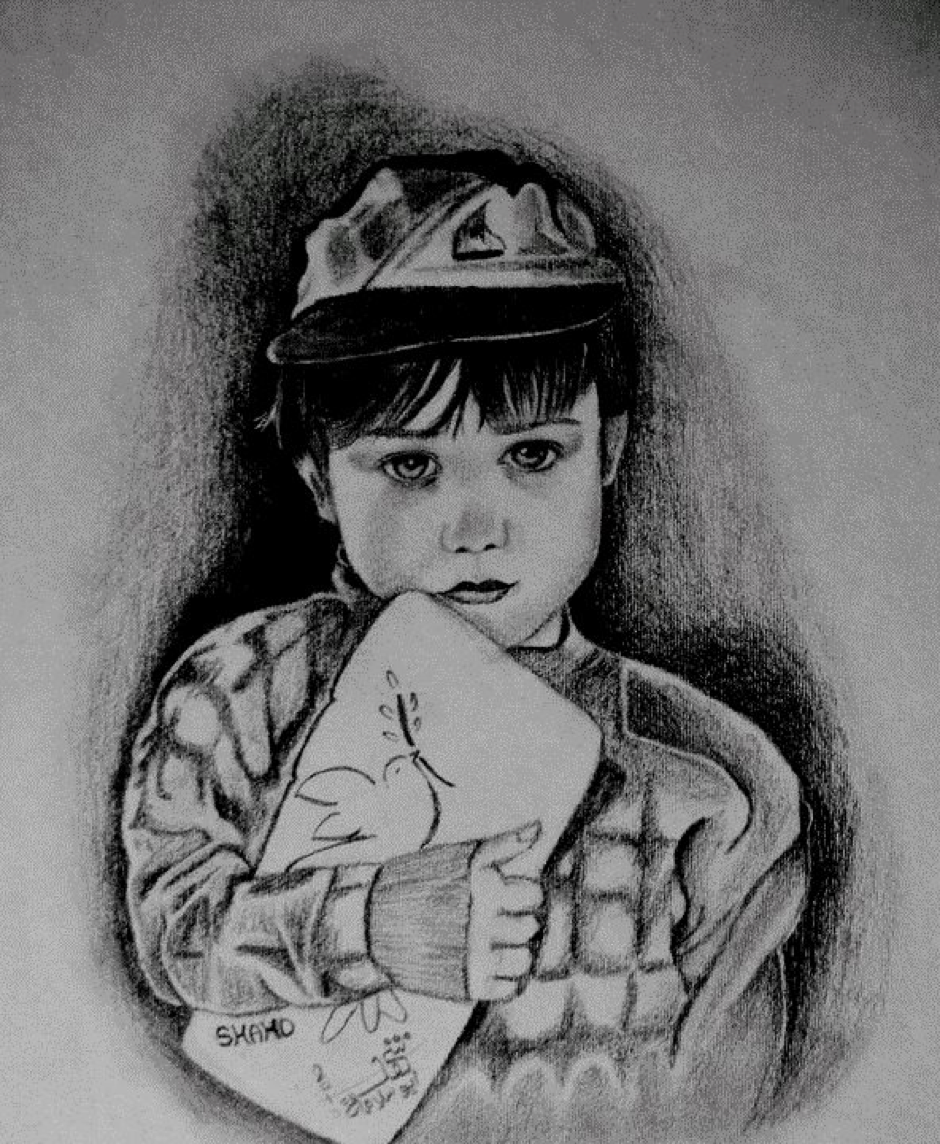
I wish you could see my drawing that’s dearest to me. It’s your portrait that you always nagged me to make, but never got to see. I am certain that no matter how many more drawing I have produced and will produce, yours will be my favorite. Not only because of my skill, and the love that I put into it, but because, somehow, part of your beautiful soul attached itself to this painting.

As you look down from paradise, on all of us here, I offer you this drawing. I hope it brings you as much joy as you always brought us.  I miss you Vittorio. I love you, Vittorio. You will live forever in my heart and in the hearts of all Palestinians, who owe you so much. We’ll keep celebrating your birthday every year and you’ll continue to inspire us, adding more humanity to the world. Rest in Peace, dear Vik. Stay human!

Palestinians’ tribute to Vittorio Arrigoni , Onadekom ( Calling You ) – DARG Team

Palestinians Owe Ban Ki-moon No Apologies

Palestinian political prisoners are not only numbers

Last night, a new friend of mine noticed that I try to highlight the issue of Palestinian political prisoners in my writings. That led to a long chat about my interest in bringing out their stories. I started by describing how being the daughter of a former detainee has inspired a passion toward my homeland and the feeling of having a duty toward my people, especially our forgotten prisoners, within me.

I told him how attending the weekly protest with prisoners’ families in the Red Cross has turned to be a psychological cure for my own pains. It’s true. Sometimes I feel very sad, but as soon as I see a prisoner’s mother, wife, or daughter smiling, my spirit strangely rises. Interacting with the prisoners’ families and listening to their stories, full of suffering and pride, has created a warm relationship between us. They have become an important part of my life, and a reason to live.

I’ve always criticized the way prisoners are presented as numbers. Reports often show them as mere statistics, omitting that behind these figures there are humans desperate for dignified life and justice. Humanizing their issue by making their stories heard has been the main goal of my writings, with faith in humanity preserving my hope that their stories may wake the sleeping to take action.

Unconsciously, my life has recently centered on Khader Adnan. He is an administrative detainee who has been on hunger strike since December 17 to protest his illegal detention without trial. I have followed updates about his continuing hunger strike, his silence, his deteriorating health, the ban on his family visiting him, and the Israeli Prison Service (IPS)’s indifference and neglect of his situation. Gaza has held many events in solidarity with him and his family, who are terrified that each new dawn could bring news of his death.

Ban Ki-moon’s visit to Gaza

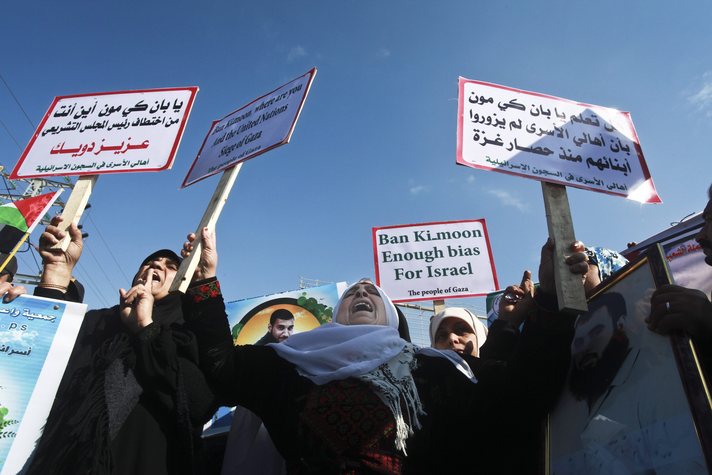
Families of prisoners and martyrs are protesting against Ban Ki_moon for his refusal to meet them.

From Khader Adnan’s story, which has repeated itself thousands of times in Palestine, to news about United Nations Secretary-General Ban Ki-moon’s visit to Gaza, anger and frustration have dominated my mind.

Representatives of families of Palestinian prisoners in Israeli jails and martyrs’ families wanted to join the delegation that would meet Ban. Civil society figures made intensive efforts to ensure that this would happen so he could hear about their demands and long years of suffering. However, Ban simply refused to meet these people, who wanted his support and protection for their violated rights. An angry crowd, having heard of his repeated visits to former Israeli prisoner Gilaad Shalit, hurled shoes and stones at his convoy as it entered Gaza Thursday morning.

I watched the video of the prisoners’ families throwing shoes and stones. Honestly, it filled me with joy and pride in my people. I thought that it might make the Palestinian people look bad in front of the international community. But I would have only one response for those who might define Palestinians as mere throwers of shoes against diplomats: Those shoe throwers included angry relatives of prisoners who have endured terrible conditions at the hands of merciless Israeli jailers. They are frustrated with Ban’s biases toward Israel, and have witnessed more than enough of Israeli brutality, tyranny, and violations of their simplest rights guaranteed by international law and the Geneva Conventions. Those people have been filled with anger by more than five years of living under a closure imposed by Israel, and declared illegal by UN bodies. They haven’t been allowed to visit their relatives in prison since Hamas was democratically elected, boycotted by the UN, and marginalized as a terrorist organization.
Om Ibrahim Baroud joined the angry crowd that welcomed Ban “disrespectfully”

Watching the video, I saw Om Ibrahim Baroud join the crowd that greeted Ban. Baroud is the 75-year-old

Om Ibrahim Baroud, a prisoner’s mother wearing a white scarf, is hitting Ban Ki-moon’s convoy with a stick

mother of a political prisoner who has spent 26 years in Israeli prisons, and for 26 years, she has never stopped calling for the freedom of her son. Despite her age, she has joined every hunger strike prisoners launched since her son was detained, and has never missed a protest for Palestinian political prisoners. She always says, “I am not only the mother of the detainee Ibrahim Baroud, but of all the prisoners and oppressed. I’ll keep calling for their freedom as long as I am alive”. Last Monday at the weekly protest in the Red Cross, she limped because of a pain in her leg, but was still fasting in solidarity with Khader Adnan and all prisoners. She spoke for the prisoners to the media, appealing to every human right organization to witness the suffering of Palestinian detainees and act.

In the video, she was angry as never before, gathering all her physical power to hit Ban’s convoy with a stick. Her strength has always impressed everyone who knows her. “I know I am for Ban, nothing more than a mother of a ‘terrorist’”, she told me on the phone with rage. “Why would he bother to listen to me? He must know that I am the mother of a human being who deserves dignity even in detention. And I am a human who deserves to be heard”.

No one should blame this mother, who has been deprived of wrapping her arms around her son for 26 years. No one should blame her after she witnessed countless Israeli attacks on Gaza, especially the 2008-2009 war. She saw the phosphorous bombs, banned by international law, falling on civilians who took shelter in the Al-Fakhoura UNRWA School after fleeing their homes. She lives near it. Don’t blame her when she explodes with anger after hearing of Ban Ki-moon’s thanks to Israeli Defense Minister Ehud Barak – the architect of the 2008-2009 war – for his “generosity” towards Gaza; his generosity in redeeming the world of 352 children whom, if they hadn’t been killed, would have grown up into terrorists to threaten the holy security of Israel. Don’t blame her or any Palestinian when UN did nothing against Israel for the war crimes Israel committed even at UNRWA sites.  Instead, they are biased toward Israel, while we have been terrorized daily by the Israeli Occupation ever since it was illegally established through ethnic cleansing.

Palestinians owe Ban Ki-moon no apologies

After this “disrespectful welcome” of Ban Ki-moon by the angry families of prisoners and martyrs, the Palestine Liberation Organization (PLO) shamefully sent apologies to him.

But I’ll allow myself to speak on behalf of Palestinians and say proudly: “We make no apologies!” And I add: “The PLO doesn’t represent us.” Palestinians aren’t the ones who should apologize. The one who should apologize is who keeps talking of human rights, yet sees human rights continuingly and openly violated by Israel, but does nothing, instead covering up Israel’s crimes against humanity.  Actually, thousands of apologies wouldn’t suffice to heal the long, bleeding wounds that Palestinians suffer from the long course of Israel’s occupation and existence.

That’s the terrorist who I am

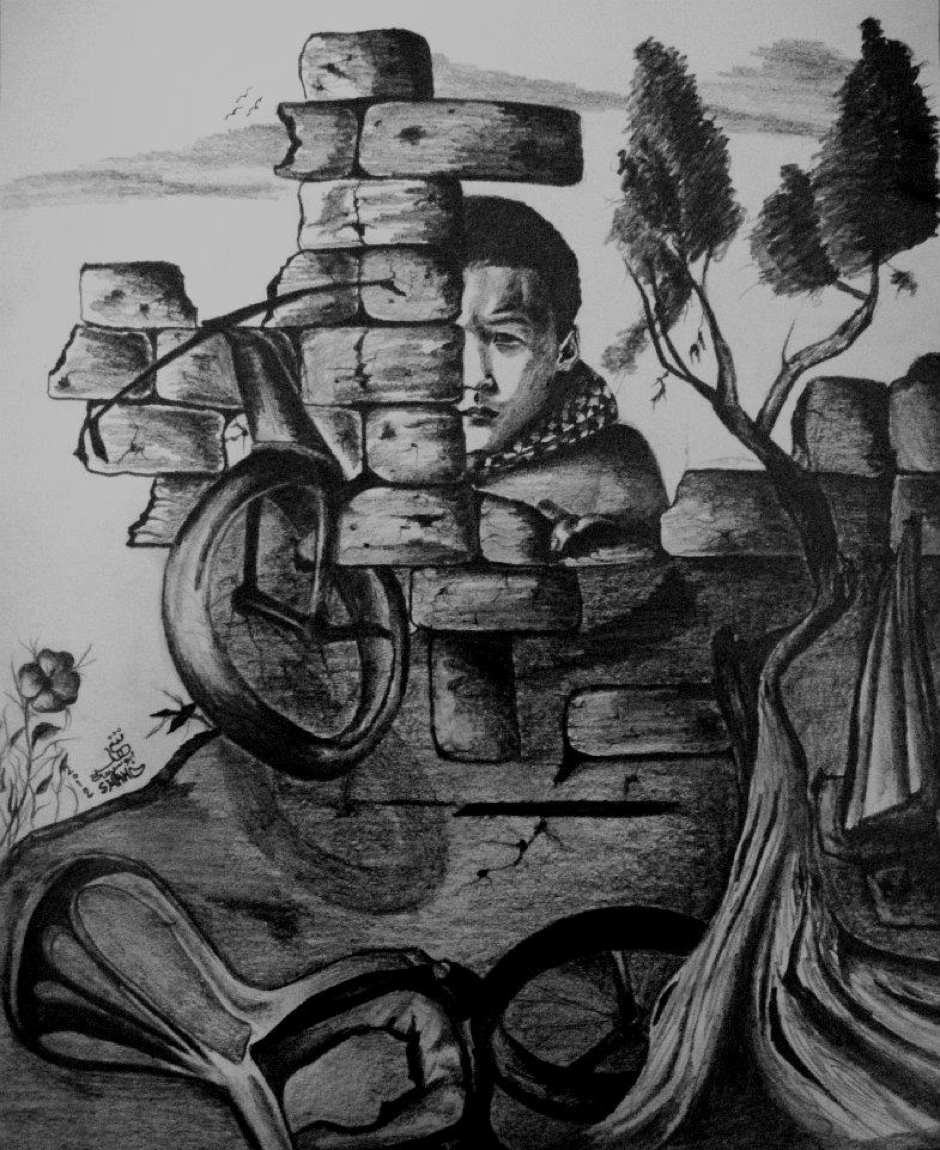
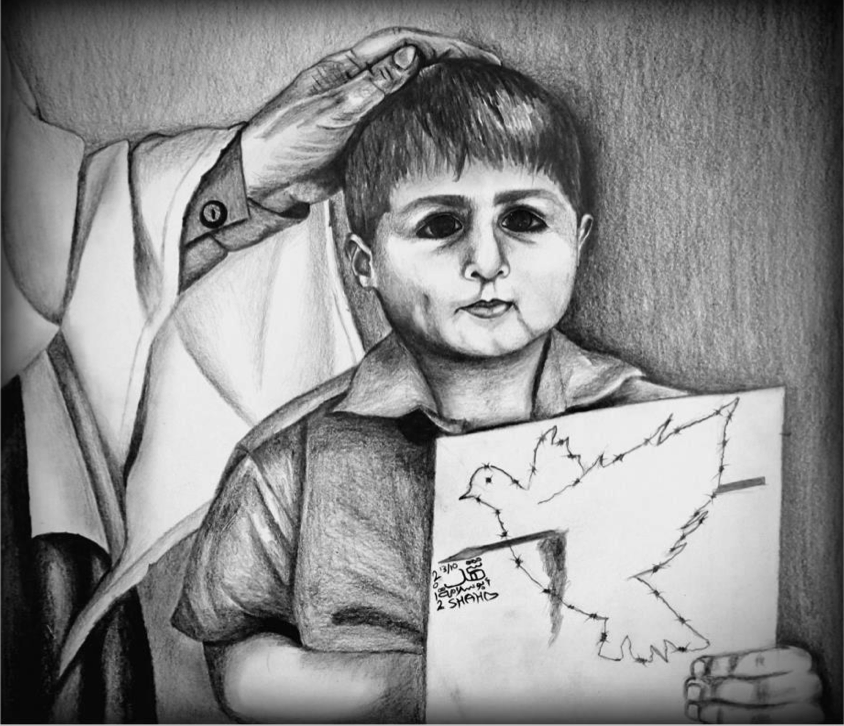
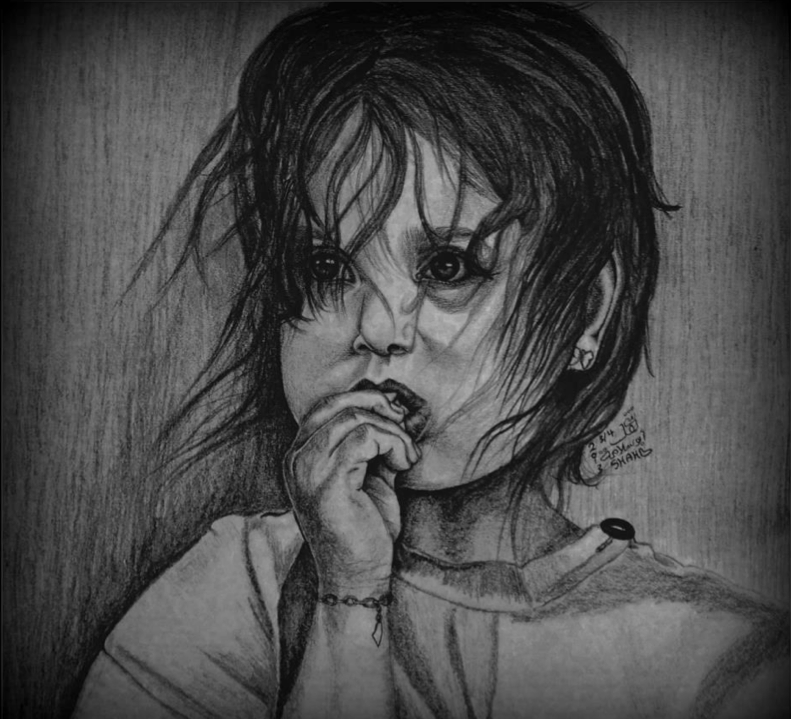
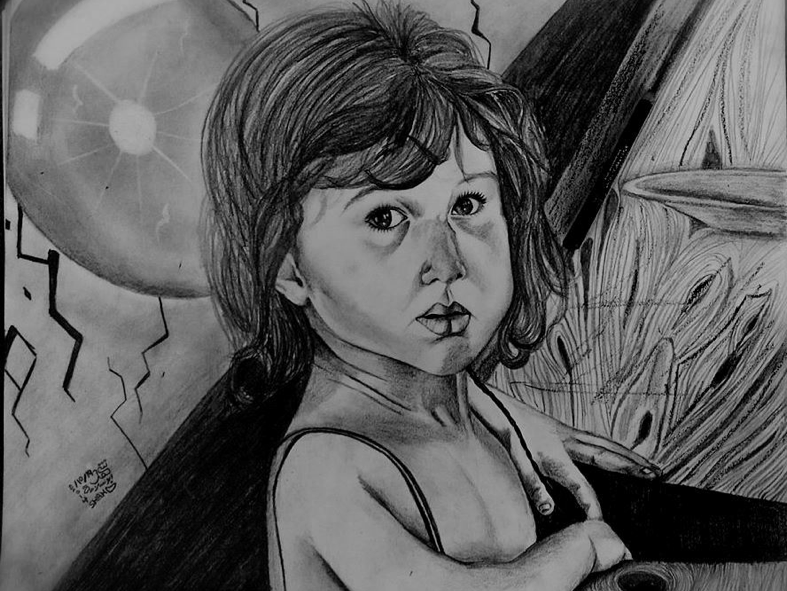
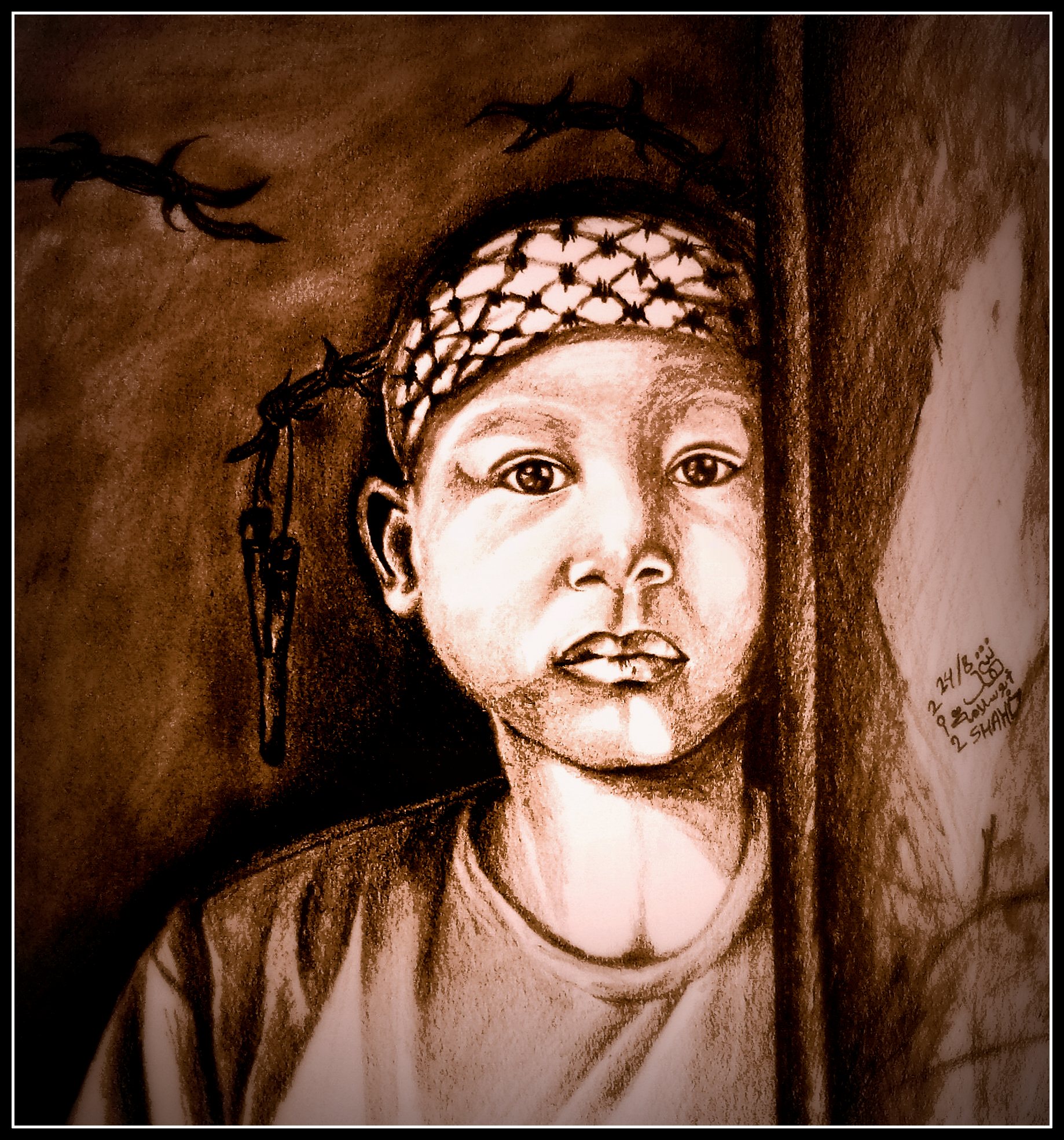
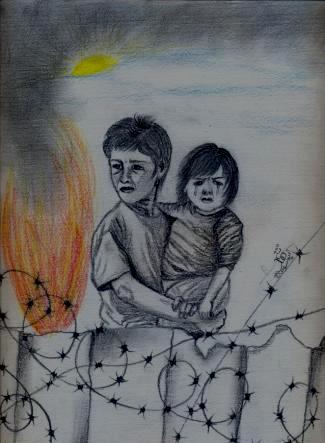
First, I’ll introduce you to a drawing that I didn’t upload in my blog before. It’s actually one of my favorites and I hope you like it. I think it fits with the next section of the entry. Palestinians went through a lot, starting with ethnic cleansing to the series of violations of their rights, to the daily attacks on their land and their people, and so on. However, Palestinians maintain their determination believing in victory, justice and peace. They always have a bright look full of hope towards a better future where humans are treated like humans, even in their crying eyes. I meant to highlight some symbols in the wood “background” such as 48, the key, and the map of historical Palestine, to convey a message that we will not give up. Despite many people thinking that these are only illusions, and that one-state solution is not feasible, I still believe that just peace will inevitably come along.

While preparing my assignment for the translation course at university, and being busy with translating texts from Arabic into English and vice versa, I came across an Arabic poem entitled: “They Asked Me”. I fell in love with this poem and I tried to look up its author, but I found nothing. It describes Palestinians and their long decades of struggle against the Israeli Occupation. I see the strength of Palestinians, especially prisoners, portrayed in this poem very simply. It embodies their dignity, challenge and steadfastness in front of the tyranny, oppression, humiliation, injustices committed by the Israeli Occupation. I think it is worth the time it took me to translate it. Enjoy.

They shut my mouth up and ordered me to “utter”

They hit me and asked me why I suffer

They broke my teeth and demanded to hear “laughter”

They insulted my family and asked me to be, of the situation, “understanding”

They shut my course and told me to “learn”

They set me on fire and told me “move forward”

They have left me homeless and said that I was “fantasizing”.

And as I screamed the truth, they questioned why I was “attacking”,

And invited me to a discussion where I was threatened to be “executed”

And they asked me “steadfast still?”

I held my head high and shouted

“I am Palestinian, so learn, you scoundrel!”

A detainee at Risk: Ongoing Hunger Strike Since December 17

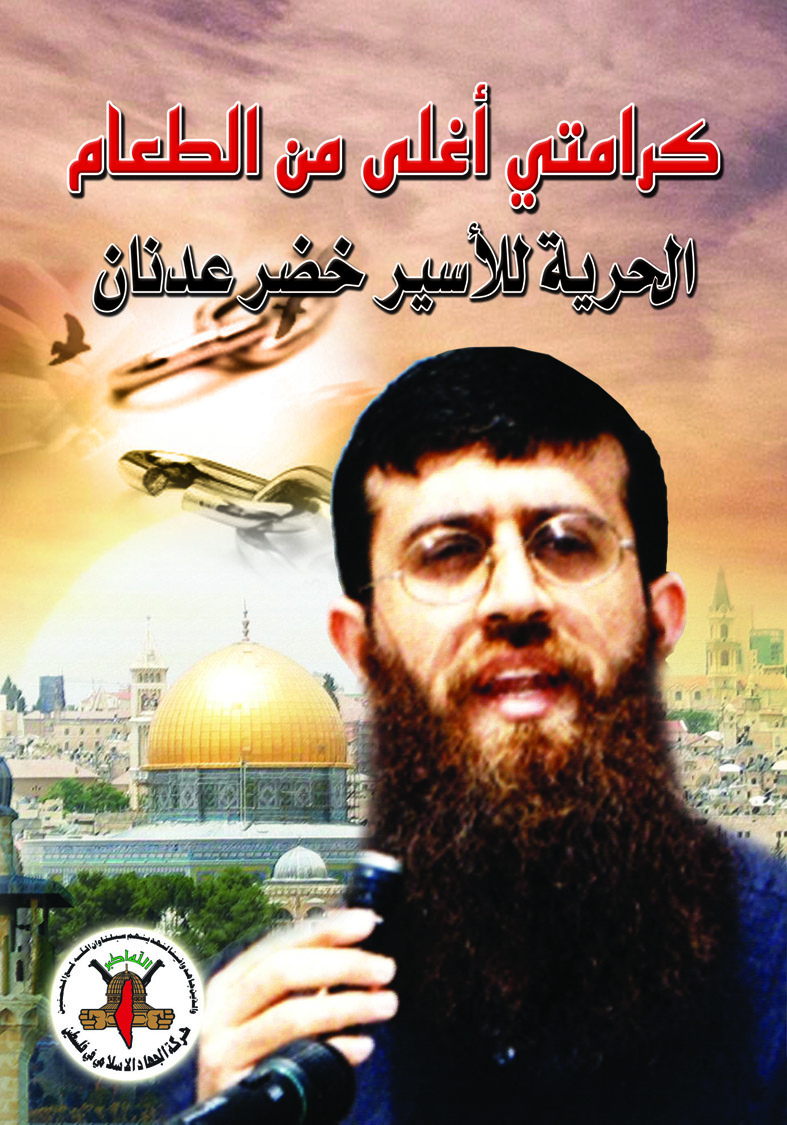
Khader Adnan's photo under this slogan "My dignity is more precious than food"

If you have the power, you can abuse it and no one will say a word in protest. At least this is the case for Israel, which openly violates international law and human rights feeling secure that one will stop it.

But Khader Adnan, a detainee from Jenin, has decided not to stay silent and accept injustices against him and his fellow prisoners. He is battling armed jailers with his only weapon: his empty stomach. Khader started hunger striking the day of his arrest, December 18, to protest the unjust administrative detention he is serving and the indescribable cruelty he has experienced since then.

My father’s experience of being an administrative detainee

It’s worth mentioning that administrative detention is a procedure the Israeli military uses to hold detainees indefinitely on secret evidence without charging them or allowing them to stand trial. Over 300 Palestinian political prisoners are serving this term now, and tens of thousands of Palestinians have experienced administrative detention since 1967.

My father served this term three times. Previously, he had been sentenced to seven lifetimes plus ten years, but released in the 1985 prisoner exchange after serving thirteen. As I read about Khader’s story in a report by Addameer Prisoner Support and Human Rights Association, stories about Dad’s experiences in Israeli prisons came back to me.

The last time it happened, a month after I was born in 1991, was the hardest. My mother told me how I came into this life where safety, peace, and justice are not guaranteed. ”In the middle of the night, a huge force of armed Israeli soldiers suddenly broke into our home, damaging everything before them. They attacked your father, bound him with chains, and dragged him to the prison, beating him the whole way.” The happiness of a new baby – me – didn’t continue for the whole family. My traumatized mother was able to breastfeed me for a month, but then she couldn’t anymore; her sorrow ended her lactation.

Every Palestinian is convicted to a life of uncertainty without having to commit a crime. Being a Palestinian is our only offense. For Khader, this detention is not his first time in Israeli prisons. It’s actually his eighth, for a total of six years of imprisonment, all under administrative detention. Each one had a different taste, ranging from bitter to bitterer.

Story of Khader’s Adnan’s arrest

This time, the Israeli Occupation Forces (IOF) raided Khader’s house at 3:00 am using a human shield, Mohammad Mustafa. Mohammad is a taxi driver who always takes Khader’s father to the vegetable market. He was kidnapped by the IOF and forced to knock on Khader’s door while blindfolded. Then the IOF raided Khader’s house, trashing it as they did. Shouting, they aggressively grabbed his father, with no consideration for Khader’s two little daughters, his wife, who could have miscarried her five-month fetus, or his sick mother. But when did IOF have any respect for human values?

Khader was immediately blindfolded, and his hands were tied behind his back with plastic shackles. Afterwards, the soldiers pushed him into a military jeep with non-stop physical torment that continued for the ten-minute drive it took for the jeep to reach Dutan settlement. You can imagine how a short period seemed like forever to Khader, who was unable to move or see while every part of his body was continuously and brutally beaten. To make things even worse, Khader’s face was injured when he smashed in a wall he couldn’t see due to the blindfold wrapping his eyes after he was pushed out of the jeep.

Addamear reported that after Khader’s arrest, he was transferred to different interrogation centers and ended up in Al-jalameh. Upon arriving there, Khader was given a medical exam, where he informed prison doctors of his injuries and told them that he suffered from a gastric illness and disc problems in his back. However, instead of being treated, he was taken to interrogation immediately.

Silence and hunger strike in response to interrogators’ humiliation

The interrogation period, which lasted for ten days, took the form of psychological torture with continuous humiliation using very abusive language about his wife, sister, children, and mother. Throughout the interrogation sessions, his hands were tied behind him on a crooked chair, causing extreme pain to his back. Believing in the power of silence, Khader’s only response was to object to the interrogator’s use of increasingly insulting speech.

Because of Khader’s hunger strike against violations of his rights and the terrible treatment used against him, Addameer reported that he was sentenced to a week in isolation by the Israeli Prison Service (IPS) on the fourth day of interrogation. Moreover, in order to further punish him without being required to go to court, the IPS also banned him from family visits for three months.

In addition, during the second week of interrogation, Khader experienced further humiliations. One interrogator pulled his beard so hard that it ripped hair out. The same interrogator also took dirt from the bottom of his shoe and rubbed it on Khader’s mustache. But they couldn’t break his dignity, and even after the interrogation ended, Khader continued his hunger strike.

According to Addameer report, on the evening of Friday, 30 December 2011, Khader was transferred to Ramleh prison hospital because of his health deteriorating from the hunger strike. But even there, he lacked medical care. He was placed in isolation in the hospital, where he was subject to cold conditions and cockroaches filled his cell. He refused any medical examinations after 25 December, which was one week after he stopped eating and speaking. The prison director came to speak to Khader, or rather threaten him, commenting that they would “break him” eventually.

I know I mentioned before that there are no trials for Palestinian detainees under administrative detention. But actually, they do get a trial. It’s not for them to challenge the reasons for their detention though. It’s for a military judge to decide the period they are going to serve according to the “secret evidence” that IPS holds against him, none of it shared with the detainee or his lawyer. This is an obvious violation of human rights, leaving Khader and detainees like him with no legitimate means to defend themselves.

On 8 January 2012, at Ofer military court, Khader received a four- month administrative detention order. There, he was threatened by members of the Nahshon, a special intervention unit of the IPS known for particularly brutality in their treatment of prisoners, who told Khader that his head should be exploded.

The need to act

Khader’s health is deteriorating rapidly. He is refusing treatment until he is released, but a prison doctor has threatened to force-feed him if he continues. Cameras in his cell watch him at all times, and if he does not move at night, soldiers knock loudly on his door. This prisoner is at risk, so SUPPORT Addamear campaign to call for his release.

People in Gaza set up a tent in front of the Red Cross last Thursday to join Khader’s protest against his administrative detention and violations of Palestinian detainees’ simplest rights, and demand justice and freedom for them. Something must be done against this unjust system and its conditions of imprisonment. International solidarity is greatly needed. Join Addameer’s campaign to Stop Administrative Detention. ACT NOW!

Read this article in Italian

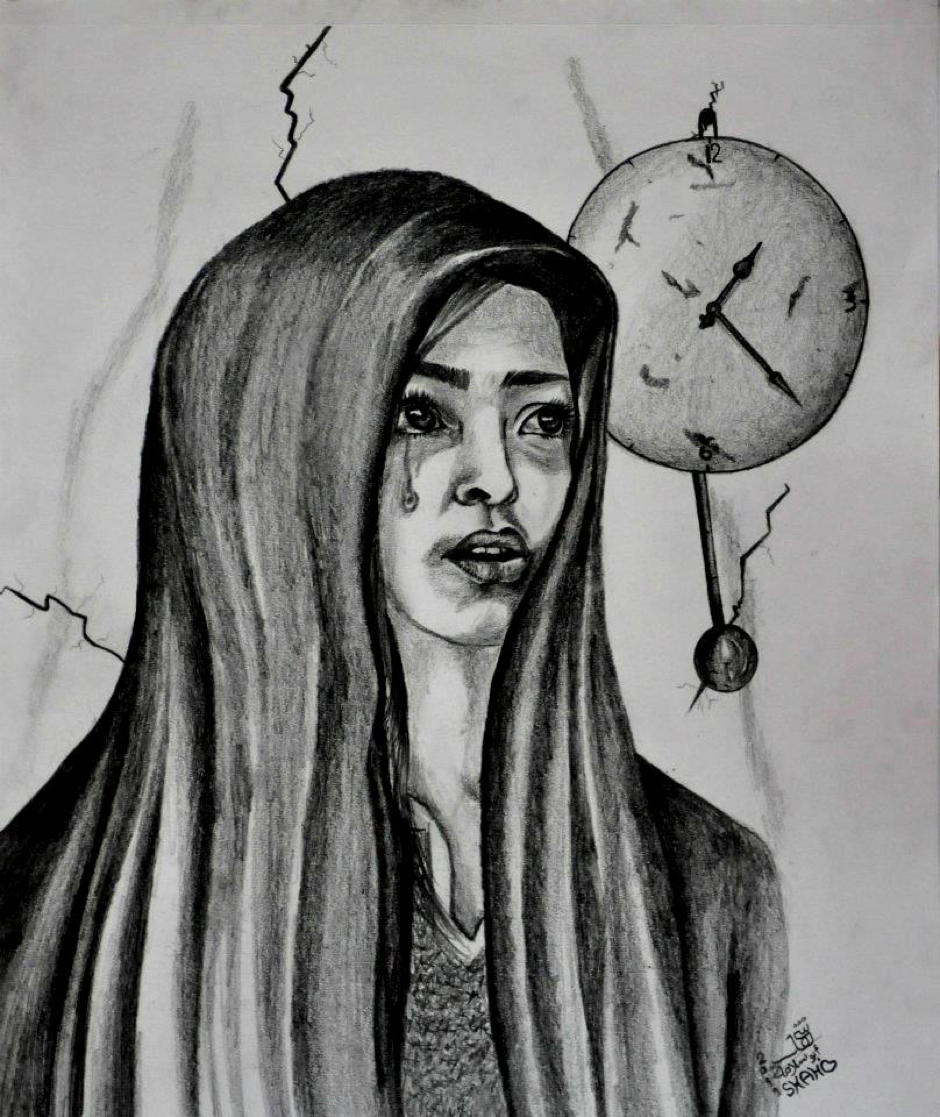
A new drawing speaks for me

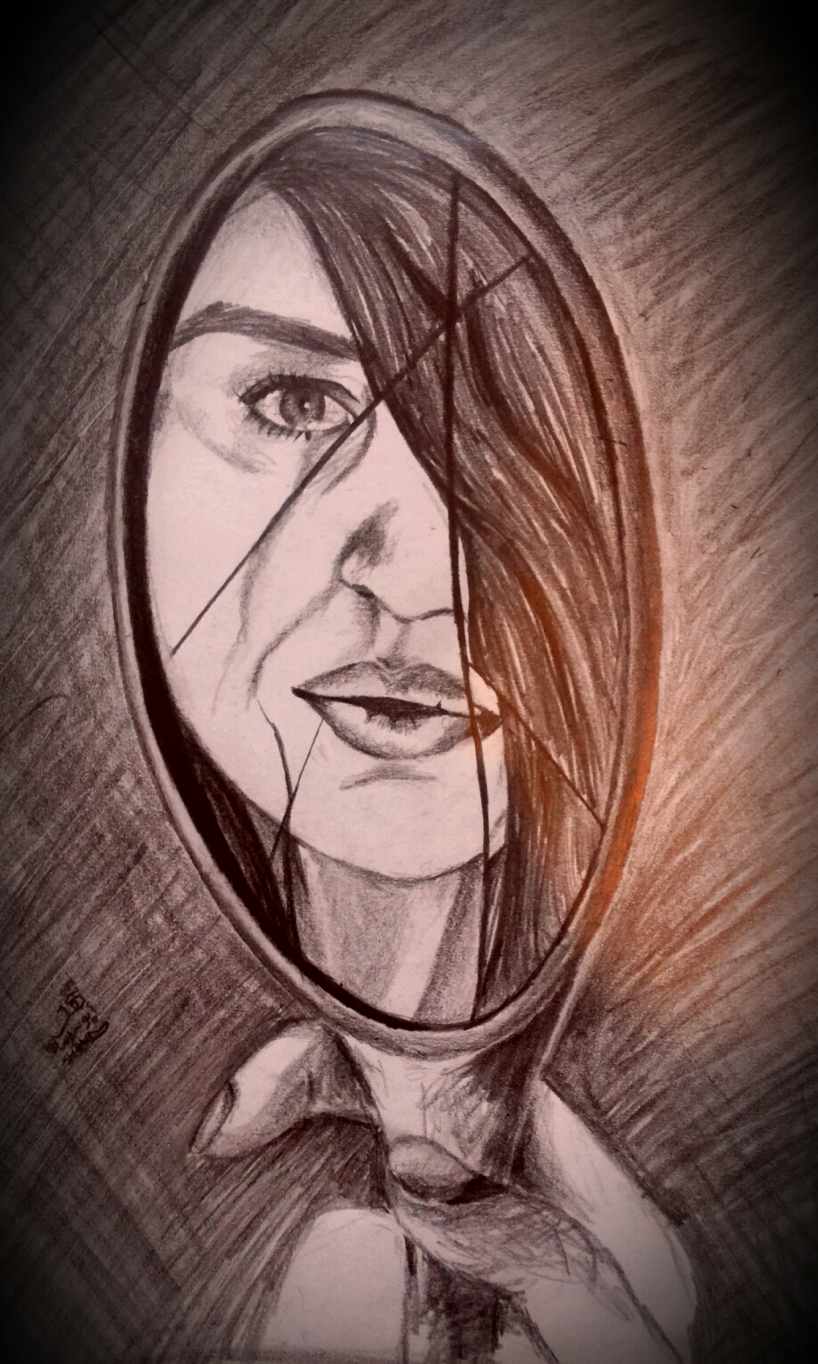
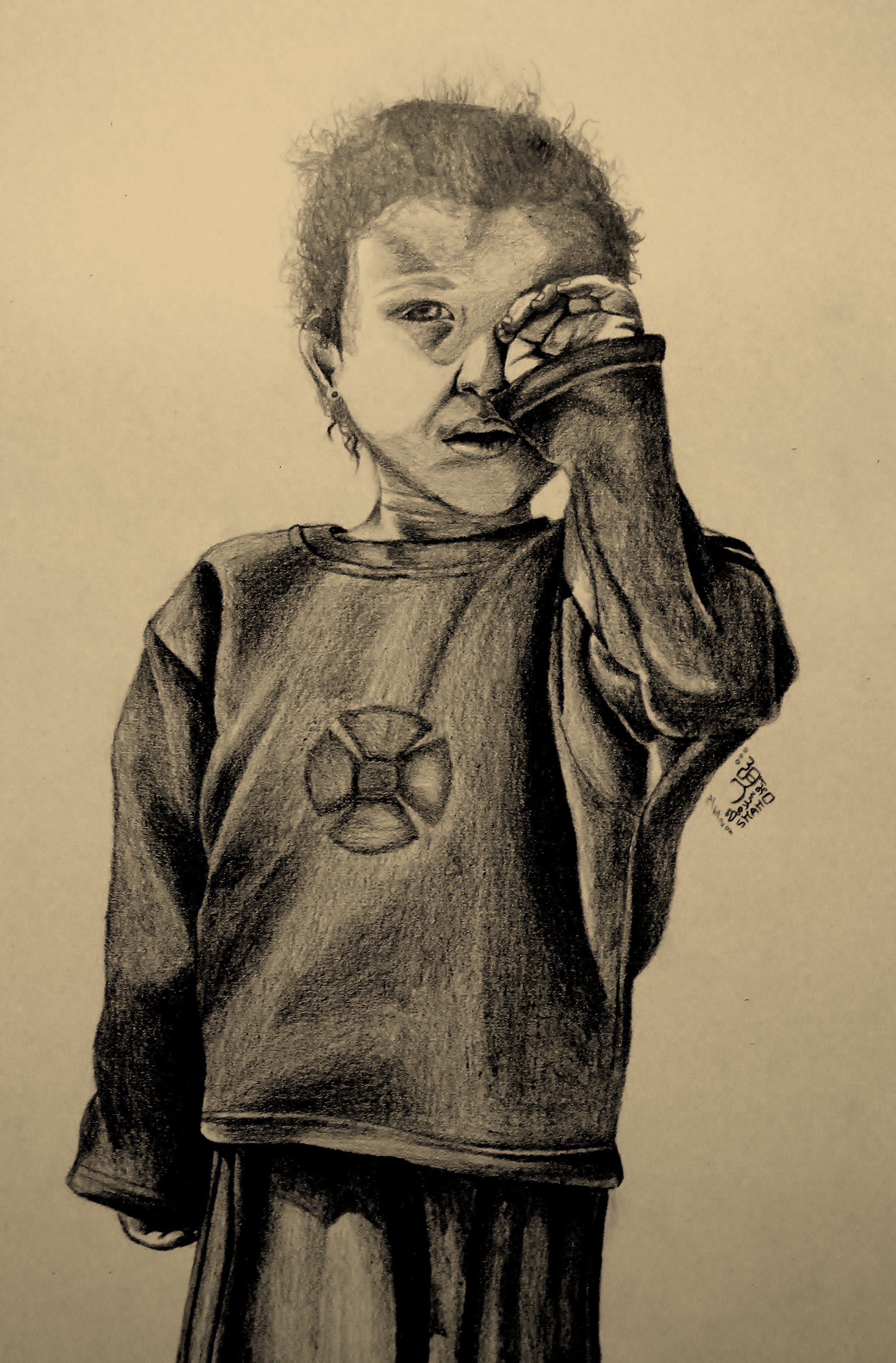
When I’m going through some difficulties, I find it hard to put the right words together to describe how I’m feeling about it. So I made this drawing to speak for me. Every one of you can look at it as you prefer. If I can choose a name for this drawing, it would be “A Complete Mess”.

I believe if we didn’t cry, we wouldn’t know how laughter tastes and if we didn’t feel lonely, we would never appreciate friendship, and if we didn’t lack anything, we would never realize the blessings we have.

Therefore, I’m trying to stay positive and thankful. I hope that these difficulties will end up for the best. If it doesn’t, it will at least help me discover myself more. So I hope that these obstacles will end up creating a better person out of me. I pray for everyone who is feeling like they are living in a mess to find a way to fix it. And I pray that I’ll manage to find the strength inside me to pass through these difficulties and become stronger.

Hope you like it.
With love!

Merry Christmas from Palestine, Gaza

When I was a very young girl, I used to climb the window and stretch my arm out, trying to collect some rain in my small hand, then sip it, believing that it was the purest ever. I remembered this as I was listening to the raindrops hitting my room’s windows, which I made sure were securely closed, to keep the cold wind from blowing inside and disturbing the warmth my body felt under my heavy blankets.

Meanwhile, I could hear mum talking quietly from the room just next door, but couldn’t recognize exactly what she was saying. She suddenly paused and called me to join her and seize the chance to pray, as in Islam it’s said that prayers are more likely to come true while rain is falling. I closed my eyes as tight as I could and listened to her sincere prayers for us to accomplish all that we dream, for all sick and injured people to recover soon, for all dead to reach heaven, and for Palestine, from the sea to the river, to be free. As I could only hear mum’s voice along with the raindrops, a harmonic atmosphere spread around me, and my lips moved in silence, “Amen”.

Being a Muslim, I never celebrated Christmas myself, but having lots of Christian friends inside and outside Palestine has connected me to this day. I’ve always shared it with them one way or another, since I believe that religion shouldn’t stand as a barrier between human beings. Religion is to call for love, compassion, and tolerance. It should unite people, not divide them. Sadly, not all that is said is done. Three years ago, people around the world welcomed Christmas and the New Year happily with lights, colorful balloons and fireworks while Gaza received it with white phosphorous lighting the dark sky and rivers of bloods spilled by the Israeli Occupation Forces.

Even though I am Muslim, I’ve always appreciated the beauty of Christmas trees, lights, gatherings, A Christmas treemeals and religious songs that I see Christians perform in the Christmas movies I watched. On this rainy and windy day, which I knew was Christmas, I wished that Gaza’s sky would snow so that it would be a typical Christmas day like movies made me picture. For an observer like me, snow adds a factor of beauty to Christmas celebrations, even though my Christians friends abroad would sometimes complain about it.  I don’t blame them, though, as I have never seen any snow and never experienced its negative side.

I spent this Christmas Eve with Lydia and Joe, two of our Christian friends who came to Gaza in solidarity with Palestine, and in support of Palestinian people who live under the Israeli Occupation. My family and I didn’t hesitate to bring Christmas gifts and share this special day with them, as a form of appreciation for their indescribable humanity as they chose to celebrate it in the besieged Gaza Strip rather than joining their families on such a holy occasion.

Approximately three thousand people among Gaza’s population are Christians. Recently, I made new friends among them, a Christian family that I met through a funny coincidence. A couple of months ago, I was walking with my Greek friend Mack, who came to Gaza as a solidarity activist, and we passed a dress shop named Kopella. The name attracted Mack’s eyes, as it happened to be a Greek word for a young lady. He dragged me inside the shop, which we learned was owned by a Christian family named Alsalfiti. He was very curious to know if they knew what the word means, and it turned that they have a daughter studying in Greece, who chose this name for their shop.

Around a week ago, I visited the Al-Salfiti family with Joe and Lydia, who were interested to know how Christians in Gaza celebrate Christmas. The first thing my eyes glimpsed was a beautifully decorated plastic tree that was placed in the corner of their house to welcome Christmas. “I brought this from Bethlehem five years ago,” Lili, the mother, told me while pointing at the tree after she noticed my surprise.

“We used to get permits from the Israeli Occupation to Bethlehem every Christmas, to celebrate it in the Church of Nativity with our relatives who live there,” Abu Wade’ the father, said.  “But that can no longer happen.  After Shalit was captured by the resistance, people from 16 to 35 weren’t allowed to go. So my kids haven’t been able to join us in Bethlehem for more than five years. Many people are denied permission for the reasons of security, but no one knows what the security reasons are. For example, my wife and I applied a little while ago. She got permission, but I didn’t.”

Lili interrupted with a frustrated voice, saying, “Only a range of three to five hundred Christians get permission.”

Abu Wade’ raised his voice: “Remember, no Muslim is allowed by the Israeli Occupation to pray in Al Aqsa, either on their religious holidays or any other days.”

While talking about Bethlehem, I recalled precious memories stuck in mind since I was nine years old, just before the Second Intifada started. Mum struggled to get permission from the Israeli Occupation to take me and my two elder siblings on a trip to the West Bank. She eventually did, and so we went. I recall the few hours I had inside the Church of Nativity, and how strongly spiritual it felt to be where the Christ was born. I remember how my eyes were captured by the beauty of the place and its architecture that is enriched with history. Once I recalled these memories with Mum, and she laughed at me, remembering how surprised I was to see people crying very hard. When I asked her about it innocently, she replied, “Christians cry while praying out of reverence, just like Muslims do.”

It is very painful to think of how close I am to the West Bank, but how far the Israeli Occupation makes it seem at the same time. If I were to ask Santa Claus for something that would come true, I would wish that I could step on every grain of sand in our historical Palestine, freely visit Jerusalem to pray in Al-Aqsa Mosque and enjoy the smell of its air and its charming, mountainous nature, and visit Bethlehem and the Church of the Nativity. There are many beautiful, breathtaking scenes that I would love to draw as I see them in reality. I have faith that I will someday, once Palestine is free.

Further violence against prisoners as the 2nd stage of the swap deal begins

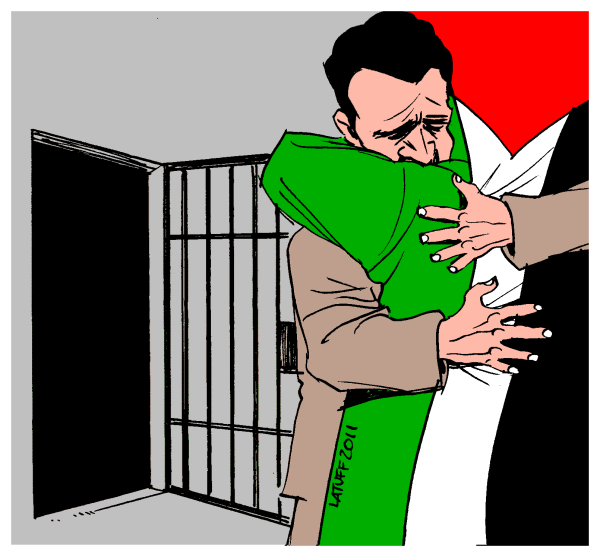
As the second stage of the prisoner swap deal begins, Israel is escalating its violations of the simplest rights of the A sketch shows a prisoner celebrating his freedomPalestinian political prisoners still behind bars and exercising more violence against them.

A statement I have heard repeatedly from all my friends who are former prisoners, every time I have asked about how Israeli torture affects the prisoners’ spirits, is that “Israeli jailers never keep a sense of stability inside prisons. They expose prisoners to extremely difficult situations tying to depress their spirits. However, they always fail at achieving their inhumane aim. Their cruelty brings more strength and will out of the prisoners. No matter how strong those armed and heartless jailers are, our barehanded prisoners are stronger in spirit.”

On Tuesday, 13 December, a savage group of armed Israeli jailers broke into section 10 of Eichel prison and attacked prisoners aggressively.  They sprayed tear gas and pepper powder at the detainees, which resulted in several injuries and cases of suffocation.  They summoned additional military units to break into all 13 rooms of the section. Adding more savagery, they confiscated all the detainees’ possessions, dragging away TVs, fans, banning prisoners from the cafeteria, and cutting off electricity and water, leaving Eichel Prison isolated from the outer world.

Rebelling against this aggression, the prisoners reacted by chanting and banging on doors.  Our strong-willed detainees have started a short-term hunger strike protesting the unjustified attack, and threatened to take serious protest action, like refusing to stand up for the daily count, in objection to Israeli soldiers’ brutality and arrogance.

As I read this news, reported by the Palestinian Prisoner Club, my mind was preoccupied with my friends Mohammed Brash and his brother Ramzy, who are imprisoned together at Eichel Prison and who witnessed this aggression. I found myself consumed with anger and contacted their family, who live in Al-Am’ary Camp in Ramallah. I called Hamza, their youngest brother, who sounded very worried. “I can’t wait to hear some news about them. I don’t know what to expect from Israeli brutality. My brothers might be among those who were injured, but I can never know. Tomorrow, a lawyer of a detainee imprisoned there that I know is going to visit Eichel Prison, and we expect to hear some news if he is allowed to visit.”

His words added insult to injury. He made me even more frustrated than I was already. Thinking of his mother, I asked him whether she knew about this attack that prisoners, including her two sons, had faced. I hoped that she doesn’t know about the increased repression. He settled my fears that his mother was aware. “If you were me, would you tell her?” he asked me, but when he only heard my silence, he continued “of course, I didn’t tell her. Imagine the reaction of a mother of two detained sons in the merciless Israeli prisons as she hears of this attack against them. She is already worried and laments their names over and over again, just knowing that they are in prison for the tenth year, so what if this old mother hears such terrible news?”

These violations by Israeli jailers are not something unusual to our ears, which are used to hearing about their violence and aggression, and to our eyes, which are used to witnessing their enduring crimes, oppression, and humiliations against all categories of Palestinian people. However, one shouldn’t stay silent. The language of silence means submission to their power, which they think is unbreakable, and allows them to exceed all red lines and openly violate human rights and international law. Only the language of action can work here.

Palestine mourns another real legend, a symbol of motherhood

Anees and Akram's motherMy voice is muted but every feature of my face speaks sorrow and anger. There is no need to wonder why. It’s Palestine, the rich land where smiles can turn to tears and laughs can turn to sighs in a second. It’s Palestine, where series of sad stories mixed with strength, will, and glory never end.

Anees and Akram Al-Namoura are brothers who were released in the first stage of the prisoner exchange on October 18 after spending ten years, originally supposed to be two life sentences, in prison. They joined the resistance by the beginning of the second Intifada, answering the call of their occupied lands and oppressed people to defend them, ready to pay any price that their precious homeland, Palestine, would require. While Israel was aggressively and continuously attacking, killing, wounding, and detaining Palestinian citizens, the brothers took to arms against the occupying army hoping for a better future for their family, their neighbors and their community. They planted a bomb beneath an Israeli tank, killing two Israeli soldiers.

I coincidentally met Anees, the elder brother, in his hotel while I was interviewing some other former detainees. After having a short chat, I learned that he was somehow related to my mother’s family. Then he told me that his imprisonment started five months before his brother’s. I commented innocently, “I can’t imagine how hard it is for your mother to have two sons in prison at the same time. But it is a little fortunate that you and Akram met each other there.” He shook his head, smiling at my naïveté, and corrected me. “No. We were in prison at the same time, but separated by the Israeli Prison Administration for the first five years. We tried legal remedies, but no lawyers and no courts could bring us together. So we started an open hunger strike to pressure them, and we were clear that our hunger strike would end only after they had met our demands. We could eventually meet and live as brothers in Armon Prison, in the same cell, for the last five years of our imprisonment. “

Anees and Akram couldn’t enjoy the blessing of kissing and hugging their elderly parents even after they gained their freedom. Israel imposed a separation of a different kind on them as they were exiled from Hebron to the Gaza Strip. But this was only additional pain from a wound that was already existed, as their 80-year-old father, a cancer patient in a wheelchair, and 65-year-old sick mother weren’t allowed to visit their detained sons for more than three years.

When I Googled Anees and Akram’s names, I encountered a video of their parents from a year ago. They were interviewed about how it felt having sons in the Israeli tyrants’ prisons. “How can an old man like me, sick with cancer, threaten Israeli security?” their father wondered with a shaking voice full of sadness. “I collected all papers that explain my health situation, which is getting worse, and tried every possible way to meet my sons again before I die.” After watching the video, I smiled despite my sadness, thinking of how merciful God is: Anees and Akram’s father is still alive and has witnessed his sons attaining freedom.

In the same video, their mother, with expressive wrinkles that evoked long years of suffering, said, “I only wish I could sit on their beds, as I used to when they were young, and play with their hair while their heads lie on my knees.” The father challenged his disability by joining his sick wife and one of his daughters in a trip to the Gaza Strip to meet their sons only six days ago. This trip couldn’t happen earlier, as their permission to leave through Jordan was denied by Israel, and they obviously couldn’t come here through the Erez border for “security reasons.” However, if there is a will, there is a way. They eventually overcame all obstacles and made it here.

Six days ago, I heard Mum speaking cheerfully to Dad about the arrival of Anees and Akram’s parents and sister safely. Today, I saw Mum’s tears for the death of their mother, who had waited long to hug her sons and celebrate their freedom. “Oh Allah, her destiny was to live and not die before she enjoyed seeing and hugging her sons between her arms once again,” Mum said with tearful eyes as she entered our home after the funeral. After ten long years of waiting, with worry, sadness, suffering, and humiliation between checkpoints as she tried to visit her imprisoned sons, she lived six days with them before passing away, leaving us a real legend, a symbol of patience, challenge, and motherhood.

Update on August 7, 2012: After Akram and Anees lost their mother, Anees suffered some medical problems. He had a kidney failure. Doctors thought that this might be caused because of the mass hunger strike he joined which lasted for 24 days and ended following the agreement between Israel and Hamas to release Israeli soldier Gilad Shalit in exchange for 1,027 prisoners, including him and his brother.

Anees’s medical situations was so bad. Doctors said that in order to rescue his life, someone has to donate a kidney for him. Hazem, his 30-year-old brother decided to sacrifice one of his kidneys for Anees. Thankfully, the surgery was successful. I saw Anees after he recovered many times and he looked very well and healthy.

Sadly, when Anees’s medical condition got better, Hazem’s health was under risk. Today, Hazem passed away.  Please pray for this symbol of brotherhood to rest in peace. And pray for Anees and Akram to stay strong after their mother’ and their brother’s loss.