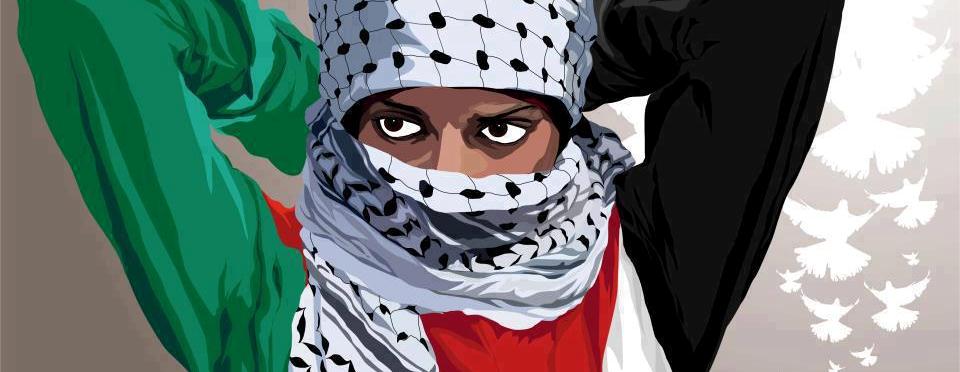
End the rumors: Samer Issawi’s battle isn’t done yet as he still has to face Ofer military court
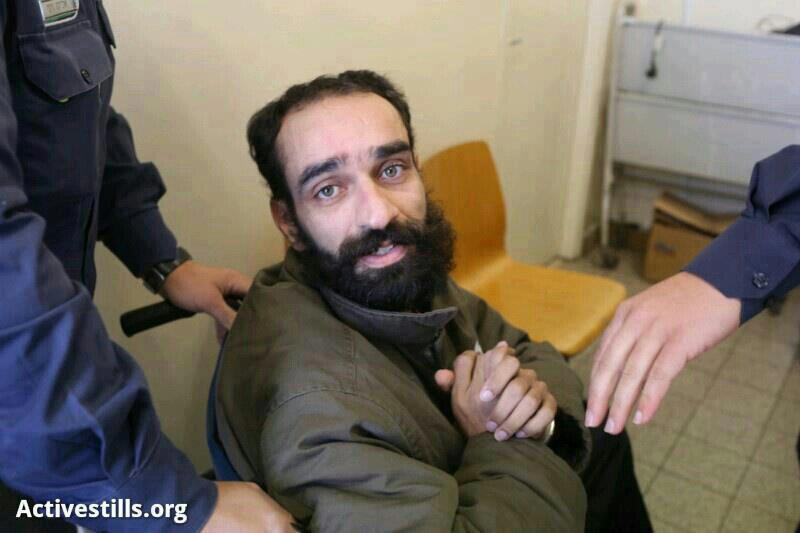
Samer Issawi’s battle isn’t done yet. He is still continuing his hunger strike with great poise for the 115th day till he reaches an absolute agreement that guarantees his release. He knows very well how Israel never holds an agreement and that finding a way around to keep him in custody is always possible.
Today the Israeli Magistrate court issued a release order for Samer on the 6th of March as that court first sentenced him to 8-month imprisonment when he was first arrested. However, this doesn’t guarantee his release. So time for us to celebrate hasn’t come yet. For Samer is a Palestinian, he still has to face another Israeli military court which ordered to hold him captive on the basis of the same accusation; violating his release agreement and entering the West Bank illegally and other charges based on secretive information that no one has the legitimacy to have an access to but their judges.
Remember here that Samer Issawi had been freed after serving 10 years of his 30-year sentence as a part of Shalit’s swap deal that happened between Hamas and Israel on October 18, 2011. He was re-arrested before spending less than 8 months outside jail accusing him of violating his release agreement which is all bullshit and had nothing to do with reality!
Before Samer’s release in Shalit’s swap deal, he was forced to sign a paper that obliges him to never enter the West Bank territories or else he would be re-arrested and continue serving the rest of his 30-year sentence. This is nothing but an inhumane, brutal and humiliating order that comes as an example of the conditional freedom that Samer and all other released prisoners received.
However, even when we think of this unfair charge, no one would be found guilty here but Israel who couldn’t make their mind what the borders of Jerusalem were. Samer was arrested within the municipality of Jerusalem in an area called Kufr Aqab which everyone agrees that it is within Jerusalem. However, they manipulate facts to whatever suits them to prove him guilty.
Currently Ofer military court still insists on this detention order against Samer and that Samer should stay in prison for another two decades to continue what was left from his 30-year sentence! According to Israel’s democracy, there are two approaches in their judicial systems; one serves for the Israeli jews and the other serves for the gentiles, the Palestinian Arabs.
In Israel, if two people, one is a Palestinian and the other is an Israeli Jew, were arrested on some charge, these two go through different judicial procedures. Only in Israel, when a Palestinian convict has to face two types of courts on the same accusation: civil and military court! Does this have any thing to do with justice? This is but an emphasis on that Israel is an apartheid regime. This is injustice and racism.
Samer is done with the Israeli civil court and he still has the military court to face and for that he is still on hunger strike! Our role here is to double our efforts as injustice cannot win!! Free Samer Issawi!
Read Samer Issawi’s letter which he wrote yesterday, February 20, to his supporters whom he thinks that they are not just solidarity activists but “warriors”.
Read more about Samer Issawi’s case here.
Will Samer Issawi be the next victim of medical neglect by the Israeli Prison Service?
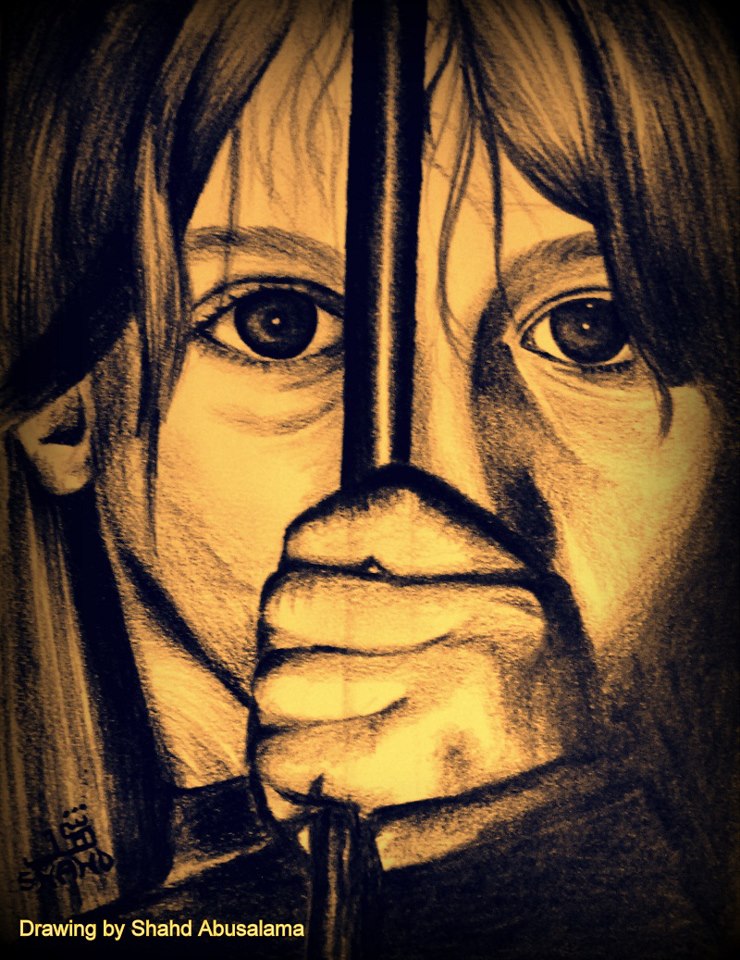 Reading “With My Own Eyes” by the Israeli lawyer Felicia Langer brought painful scenes to my mind, but my faith in humanity grew deeper. While the Zionists might proclaim “woe to the vanquished,” there were Jewish people in Palestine, such as Langer, who, more profoundly, recognized it was “woe to the victor.” Langer was one who fought bravely against the unjust Israeli system throughout her 23-year career. She defended my father Ismael Abusalama in Israeli courts. He has always spoken about her with admiration and respect for her humanity and firmness.
My father’s story of arrest recorded by Felicia Langer
In her book, she wrote that she met my father on April 6, 1972 in Kafaryouna, an Israeli interrogation center. “Ismael Abusalama, a 19-year-old man who lives in Jabalia Refugee Camp, is a refugee originally from Beit-Jerja.” She mentioned Dad’s cousin who was killed by the Israeli occupation forces after the Six-Day War in 1967. Langer quoted my father’s words, “I saw how children were being brutally shot dead in the Camp’s streets by the Israeli border guards. I witnessed the murder of a little girl who was just leaving her school when an Israeli soldier from the border guards shot her dead. They raid the camp with their thick batons beating up every human. They break into the houses inhabited by women without knocking at their doors. They mix the flour with oil during their aggressive inspections deliberately and without any necessity.”
On page 352, she recorded a painful story of my father’s that she witnessed. While reading it, my heart ached to imagine my father in such brutal conditions. She wrote, “After his arrest in Jabalia Camp on January 1, 1972, they dragged him to the Gaza police center while beating him with batons all the way. They showered him with extremely cold water in winter while soldiers continued to attack him with batons everywhere, and punched him very violently to the extent that he lost his sense of hearing. This continued for 10 days.” She quoted my father saying, “They threatened me with being expelled to Amman and assassinating me there if I didn’t say what they wanted to hear.”
I have no doubt that she tried hard to expose the reality and prove my father and other detainees innocent, but Israel’s unjust judicial system was stronger than her. Her dedicated investigations and defense of the truth didn’t stop Israel from sentencing my father to seven life sentences and 35 years! I appreciate her book, which exposes the injustices of the Israeli occupation and the rotten justice system in Israel. She has always repeated that the aggressor can never win. And I have faith that Israel will never win and Palestine shall be free.
Surprisingly, I only learned this story from her book and haven’t heard it from Dad. When I read that story about him losing his sense of hearing, I asked him about it and he confirmed and continued, “but I was never sent to hospital.”
“Detainees suffer intensively from medical neglect,” he said. “Small health problems can become critical with constant negligence. I thankfully survived, but many others didn’t and were left with permanent disabilities or health problems that led in some cases to their death.”
He stopped for a moment and continued, “Actually, such cases, maybe death isn’t the appropriate word. Murder sounds better.”
Medical neglect is one of the major brutal policies the Israeli Prison Service (IPS) practices intentionally against Palestinian political prisoners which Langer aimed to highlight in her book.
“IPS deliberately aims to harm Palestinian detainees’ physical and mental health in any possible way,” my father repeatedly says and many released prisoners have agreed. Because of this, access to proper medical care has been always on the top of detainees’ demands whenever they go on mass hunger strikes.
Akram Rickawi’s 102-day hunger strike in protest of medical neglect
Akram Rikhawi, whose 102-day hunger strike ended July 22, 2012 , has chosen to shoulder the responsibility for hundreds of disabled and ill political prisoners who grieve daily behind Israel’s bars and suffer its medical neglect. Since his first day of detention in 2004, he was held in Ramleh prison hospital, described by him and many prisoners as “a slaughterhouse, not a hospital, with jailers wearing doctors’ uniforms.”
Akram ended his hunger strike in exchange for an agreement by Israel for his early release. As part of the agreement, Akram was supposed to be released on January 25, 2013. But it’s been more than a week since that date passed, yet we have heard nothing regarding his release. This is more evidence that Israel never keeps any promises or agreements.
Ramleh stands as a nightmare for many detainees because of the inhumane procedures for them to receive a medical check, such as the long hours of waiting, being shackled from hands to feet, being aggressively treated during transfer from jail to hospital, and being treated as inferior by the racist doctors there. Many former detainees I interviewed repeatedly described this procedure as “torment.” One said, “Only when pain becomes intolerable will many prisoners call the IPS to allow them a visit to Ramleh Hospital Prison. They fear the humiliation and torture once their call is met after a long wait.”
As the Palestinian prisoners’ rights group Addameer recently reported, “Since 1967, over 200 prisoners have died in captivity, fifty-one of them from medical negligence. Alarmingly, there is a recent trend of prisoners who have died shortly after they are released from medical complications that went untreated during their detention.”
On January 22nd, I came home from my last exam of the semester very happy and relieved that I could finally sleep without worrying about loads of studies. I put myself in bed and decided to check my Facebook before I closed my eyes. I saw a video shared by my friend Loai Odeh that turned my happiness into sadness and my relief into distress. My desire to sleep escaped me.
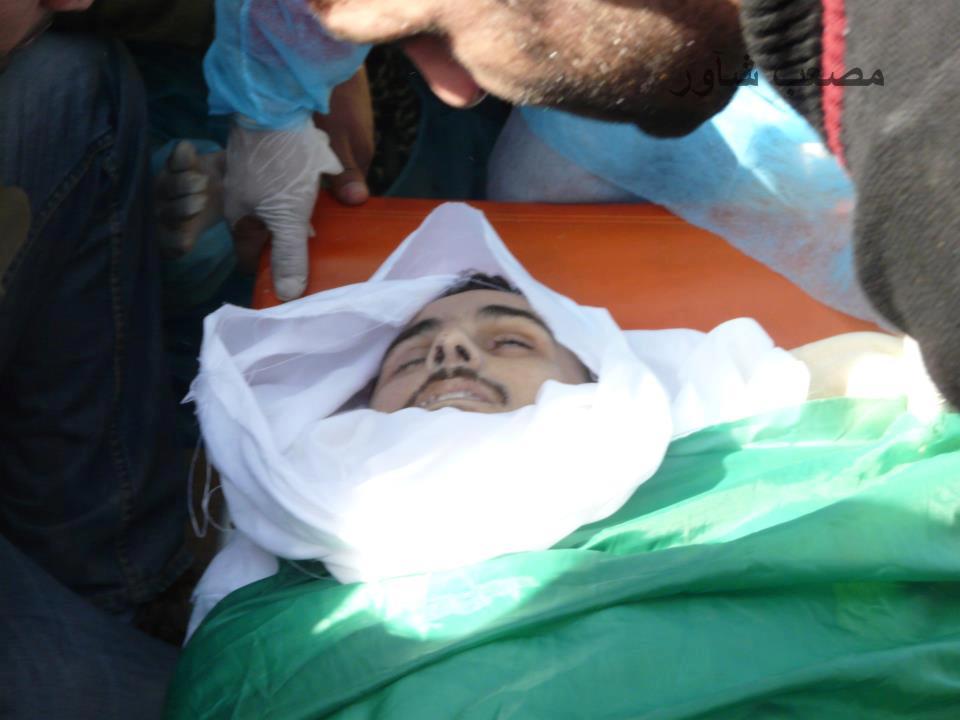
A photo of Ashraf Abu Dhra’ during his funeral (Musab Shawer)
The video’s Arabic title read, “The last words the martyr Ashraf Abu Dhra’ uttered before he fell in a coma.” I had no idea who Ashraf was then. A young man in weak physical shape lay on a hospital bed in the video. While struggling to make his voice as loud and clear as possible, he said, “When I got sick, they only prescribed me paradicamol and released me. When I went to the hospital the medics discovered that I have a severe inflammation. Thank God. My faith eases everything.”
A recently released prisoner fell victim to the IPS’s policy of medical neglect
Then I Googled his name and the ambiguity behind the pronouns he used became no longer ambiguous and learned that Ashraf, a 29-year-old from Hebron, was released recently after a detention of six and a half years in Ramleh prison hospital. Only then did I realize that the pronoun “they” refers to the IPS.
Ashraf was released on November 15, 2012. He spent only ten days outside Ramleh prison hospital at home, surrounded by his beloved family. But those ten days were an extension of the pain he suffered during his imprisonment. Then he fell in a coma until his death on January 21, 2013, which could have been avoided if he had access to better medical care. Israel must be held responsible for the murder of Ashraf.
As Addameer added in their report:
Ashraf had a long history of medical problems that predate his arrest; he suffered from muscular dystrophy and as a result became wheelchair bound in 2008 during his imprisonment. During his detention he contracted several illnesses including lung failure, immunodeficiency and a brain virus that eventually lead to his death.
Due to the frequent denial of medical treatment by the Israeli Prison Service (IPS), Ashraf suffered a slow and painful death that was exasperated by neglect and the prison service’s refusal to provide court-ordered treatment. In 2008, Physicians for Human Rights – Israel (PHR-I) submitted a request to the Israeli district court for Ashraf to receive physical therapy. Although the court granted Ashraf this request, the ruling was ignored by the Ramleh prison hospital, who refused treatment claiming that it was unnecessary. Ashraf was held in captivity despite his failing health for the entirety of his sentence, rarely seeing an independent doctor.
Ashraf’s lack of proper medical treatment in his six and a half years violates several international human rights laws, specifically article 56, 91 and 92 of the Fourth Geneva Convention that obliges the occupying authority to provide “adequate treatment” for each detainee and medical care “not inferior than the care provided to the general population.”
Serious actions must be taken before Samer Issawi become the next victim
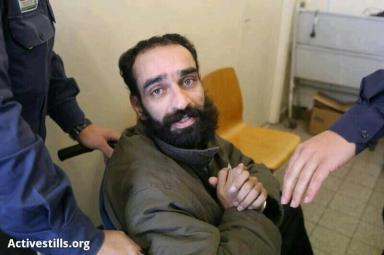
Learning about the murder of Ashraf Abu Dhra’ made my worry over Samer Issawi double. Samer’s health is rapidly deteriorating due to his historic and heroic refusal of food which has continued 194 days in protest of his re-arrest for no charge or trial. His hunger is gradually taking over his body, but as he said earlier, “my determination will never weaken.”
He started his battle with a promise that he would only retreat from it as a martyr. Samer has tasted the bitterness of imprisonment for 12 years before. But once he was re-arrested in July 2012, with no charge or trial, he decided to rebel to send a message to his captors that they couldn’t decide his destiny. He doesn’t do this from love for death. He loves life, but in the form he has always longed to have, a life of freedom and dignity.
Serious actions are needed as Samer stands at the edge of death. He suffers from severe pain all over his body, especially in his abdomen and kidney. He has double vision, dizziness, and fractures in his rib cage from a brutal attack by Israeli soldiers while he was handcuffed to his wheelchair at a court hearing. This injury has caused severe and persistent pains that leave him sleepless day and night.
We shouldn’t sit idly and watch Samer slowly die. We don’t want to count more Palestinian detainee as martyrs. If Samer dies, it will be a glory for him, but a shame for us. Our silence allows Israel to cross all red lines. Save Samer from being the next victim of medical neglect after Ashraf Abu Dhra’. Act now to rescue the lives of Samer and all hunger strikers.
“His imprisonment is a scandal, a shame for France,” said the lawyer of George Abdallad who has served 28 years in French jails

Palestinian people demonstrating in Jerusalem in front of the French Consulate the delay of Georges Abdallah’s release. (Amjad Abu Asab)
The hero Georges Ibrahim Abdallah, a pro-Palestinian Lebanese leftist who has spent 28 years in French prison, was supposed to be freed on Monday and expelled from France to Lebanon.
Georges joined the Popular Front for the Liberation ofPalestine in the 1960s, before joining the Lebanese Armed Revolutionary Factions. He was jailed because he was a true human, a true revolutionary who dedicated his life fighting injustice. He had a great faith in the just cause of Palestine. He sacrificed 28 years of his prime for the sake of the Palestinian people’s justice and freedom. The Palestinian people are excitingly waiting for his release.
However, there is a kind of dissapoitment in the Palestnian and Lebanese streets regarding his release conditions. His release has been postposed and his deportation order has been canceled. A French Interior Minister Manuel Valls refused to sign an expulsion order, a necessary condition for Abdallah’s release. Georges’ supporters fear the postponement is a first step to renew his detention. “We are hopeful, but we don’t know what will happen,” George’s brother Robert Abdallah said. “This case is outside of the judicial realm and is now a political issue.”
He was arrested in 1984 on the basis that he was complicit in the killing of Charles Robert Ray, an American military attaché, and Yacov Barsimentov, an Israeli embassy advisor, in Paris in 1982. The United States and Israel pressured France over the years to prevent Abdallah’s release, under the pretext that he had never apologized or expressed regret for the murders. A former director of the French intelligence agency, Yves Bonnet, later said that Georges was the victim of “an illegal intelligence conspiracy.”
“His imprisonment is a scandal, a shame for France,” Georges’ lawyer Verges told French channel iTélé Thursday. “It is time for French justice to act, not like the whore of an American pimp, but like an independent justice.”
This photo was taken in Jerusalem in front of the French Consulte today. Palestinian people organized a sit-in and held Georges’ photos calling for his release. They aimed to express their anger at the delay of Geroges’ release and their disapproval of the fasciest French policies. Freedom for George Abdallah!
Jerusalem family anxiously awaits return of son, Jihad al-Obeidi, after 25 years in Israeli jails

Jihad’s father, holding Jihad’s picture, celebrates his son’s upcoming release from Israeli prison. (Amjad Abu Asab)
Palestinian detainee Jihad al-Obeidi will be freed on 20 January after 25 years in Israeli prisons. His family has already started decorating their house in Jerusalem with colorful lights and Palestinian flags to celebrate Jihad’s freedom. They are excited to welcome him home and fill his place, which has been empty for 25 years.
Jihad al-Obeidi was charged for affiliation with the Popular Front for the Liberation of Palestine and accused of trying to kill Israeli soldiers. He was sentenced to 25 years of detention, despite never having attended a trial. He was absent from the court that sentenced him, after he was expelled for refusing to stand for its racist judges.
 Jihad wrote to his family that the first place he will visit after his release will be the grave of his nephew, Milad Ayyash. Milad was a 17-year-old boy whose life was cut short in May 2011 as he fell prey to an Israeli criminal who still walks freely somewhere, having escaped from justice by virtue of being an Israeli settler. Milad was killed when the settler’s bullet pierced his chest as Palestinians from the Silwan neighborhood of Jerusalem commemorated the 64th anniversary of the Nakba.
The Nakba is the gloomiest period in Palestinian history, the year of mass killing, dispossession and systematic ethnic cleansing of three quarters of a million Palestinians from 513 Palestinian villages. The Zionist entity, what is called now Israel, was built on their ruins.
Killed by settler
Silwan residents were demonstrating outside an illegal settler home in the Beit Yonatan neighborhood of East Jerusalem – the site of yet another eviction by radical settlers attempting to Judaize that part of the city – when a window suddenly opened from the settler lair and shots rang out, leaving Milad to drown in his own blood. (See the photos of Milad’s funeral, taken by Mahmoud Illean.)
Tragically, Milad was born and killed during his uncle Jihad’s imprisonment. Milad never saw his uncle Jihad, as only first-degree relatives are allowed family visits – if they aren’t banned – according to the Israeli Prison Service’s inhumane rules. But Jihad was introduced to Milad through his photographs and his mother’s stories of him, which made Milad feel close to his uncle. Milad was attached to his uncle, as well as the Palestinian prisoners in general, as he is also the son of ex-detainee Saeed Ayyash, released in a 1985 prisoner exchange. Milad’s thoughts travelled to the day when his uncle Jihad would be free. He often shared his thoughts with his mother: “We will be Uncle Jihad’s first destination when he is released, right, Mum?”
The painful news of Milad’s murder broke Jihad’s heart. Filled with sorrow at his murder, Jihad decided to make Milad’s wish true and visit him first. He will visit his grave to show that Israel doesn’t kill our children, it immortalizes them, and that, sooner or later, Israel will be held accountable for all its crimes against humanity.
Solidarity hunger strike

A scaned photo of Loai and his comrades taken in prison. Loai is on the very left. Jihad al-Obeidi is the send from the right.
Loai Odeh, a detainee freed in the Shalit deal and expelled from Jerusalem to the Gaza Strip, sparked my curiosity to learn about Jihad al-Obeidi. During the open mass hunger strike launched on Palestinian Prisoners’ Day in 2012, dozens of people, including detainees’ relatives and ex-detainees, went on hunger strike in solidarity inside a sit-in tent in a Gaza park.
Loai was one of the hunger strikers who took the sky as their ceiling and trees as their walls, with a surrounding tent to protect them from the sun. He decorated the tent behind his bed with pictures of detainees who he feels most attached to, including Jihad Obeidy.
That motivated me to Google his name. I found a touching video of his parents that shows the torment Palestinian detainees’ parents typically endure, especially for the sake of their 45-minute family visits. The video began with Jihad’s 75-year-old mother introducing herself, saying, “I am Um Jihad al-Obeidi. I was born in Lifta.”
Lifta
Lifta is a village on the northern fringes of Jerusalem, one of hundreds of Palestinian villages seized by the newly-established Jewish state in 1948. But it is one of the few not to have been subsequently covered in the concrete and tarmac of Israeli towns and roads, or planted over with trees and shrubs to create forests, parks and picnic areas, or transformed into Israeli artists’ colonies. The ruins of Lifta were threatened many times with being bulldozed and turned into luxury housing units.
A sigh, and a moment of silence, followed that sentence, as if Umm Jihad meant to remind everyone that her village is originally Palestinian, and that for the injustice Palestinian people face, we continue to struggle and pay the price of freedom. For many Palestinians, Lifta is a symbol of the Nakba, of their longing for their land and bitterness at their continued refugee status, a physical memory of injustice and survival.
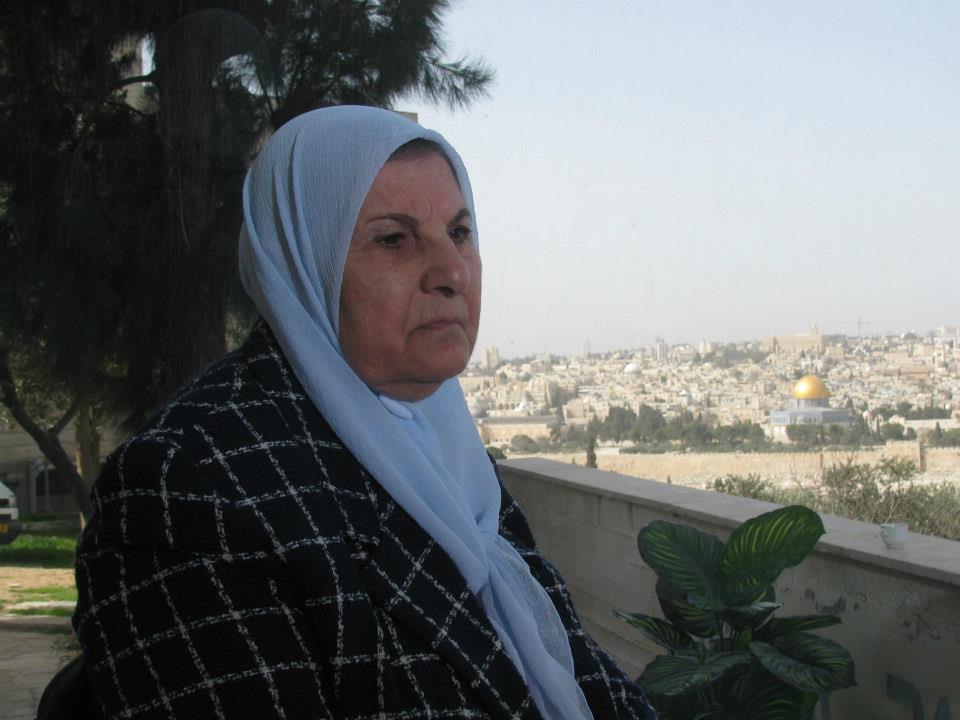
A photo of Um Jihad al-Obeidi, taken from her balcony that overlooks the Old City of Jerusalem (Amjad Abu Asab)
Since Jihad was arrested, his mother fell into depression, then became ill with cancer. She went through chemotherapy and four surgeries. However, her longing to see her son again served as her source of strength. Her fear of passing away before hugging her son again never left her mind. She was able to visit him only once every year because her critical health wouldn’t allow her to travel far.
“May God grant us health and patience to see you freed,” Jihad’s mother says in the video, while hugging her son’s picture and kissing it. “It’ll be the happiest moment when you are set free. God willing, I’ll live long enough to hug you, away from Israel’s bars and jailers’ inspecting eyes, and carry your kids.”
Jihad will be free in a matter of few days, but these days feel like years to his mother.
Jihad’s parents, like all detainees’ parents, suffered from the Israel Prison Service’s (IPS) ill treatment, especially during family visits. In Jihad’s twenty-five years of detention, the IPS transferred him between almost every Israeli jail, so that he never enjoyed a sense of stability. They never considered the distance between his jail and his family’s house. For years, Jihad’s parents traveled long distances to reach prisons, then suffered verbal and physical harassment, humiliation, strip searches and long hours of waiting.
Promises and bitterness
“Jihad keeps promising us that he will never let us do anything at home when he is released,” his father said with a slight smile. “He said he will cook and clean and serve us with all his strength, as he could feel how much we tolerate Israel’s torture to visit him. Sometimes in the winter, during family visit, Israeli soldiers used to make us stand and wait outside prison, as the sky snowed over us.”
Despite these family visits symbolizing a lifeline to prisoners and their families, the happiness of uniting and exchanging stories is mixed with bitterness. “Our tears start streaming down whenever we see him behind Israeli bars,” his father said with tearful eyes. “Our hearts ache to observe how he is growing old there.”
Jihad’s parents’ painful story is about to have a happy ending with his release. But thousands of prisoners are still behind Israeli bars, and they and their families continue to suffer. Thinking of other detainees and their families, who share the same pain, Jihad’s mother said, “My son has served most of his sentence, but many others are serving lifetimes. I call on everyone to remember these prisoners and keep following their just cause. Support them so they regain their freedom soon and return to their families.”
My message to Jihad al-Obeidi: this post is dedicated to you, to congratulate you in advance for your physical freedom. Israel has only succeeded in imprisoning your body, but never your mind, nor your determination and everlasting hope for complete freedom.
I’ve always looked at you, and all your comrades who sacrifice their most precious years for the sake of our freedom and dignity, as heroes. You’re the most dignified and the most courageous. Be certain that your people in Gaza are as excited for your freedom as your people in Jerusalem. Israel’s apartheid walls and checkpoints will never manage to make us apart. I know your happiness will be incomplete, as more than four thousands of your comrades remain inside Israeli jails. But we will raise our voices higher and continue to fight until all jails are emptied.
“My family is living through hell:” Samer Issawi speaks from jail

I can’t kick the bad habit of biting my fingers when I’m stressed despite my constant attempts. My forefinger is swollen due to this habit and it really hurts; the cold weather makes it worse. The pain was intolerable this morning and it made me cry, but I quickly wiped my tears. I felt ashamed to think that our hero Samer Issawi suffers pains incomprehensible to the human mind.
However, he makes us all proud as he continues to fight injustice. His body has broken the limits of hunger. His hunger has broken the silence and will help defeat Israel’s injustice and oppression.
As the rain pounds continuously and the winds howl uncontrollably, Samer Issawi dominates my mind. I think back to my 24 hours of hunger strike on Monday, which caused me a terrible headache leaving me unable to focus on my studies for my final exams; I observe how very few people walk outside and how even fewer cars drive past my house. Then I think of Samer and I can’t but look to him with utter admiration and respect – proud of his shocking ability to refuse food for 168 days. My admiration for him made me give Samer’s dire situation priority over my studies and draw him a portrait.

Mum shot this picture of me right after I finished the drawing.
How painful it is to imagine him now… to imagine how much he endures from Israel’s constant oppression, medical neglect, pain, hunger and cold. Personally, I can hardly leave my warm bed to go to the bathroom. I’m studying and typing away with trembling fingers while I lie under three heavy blankets. But Samer suffers in the cold. Mum takes very good care of me; she even brings me food to my bed so I don’t have to stop my studies and leave this warmth. But Samer suffers alone. Those around him aren’t there to ease his pain but to make him suffer more. He finds no one to comfort him. Instead, he is relentlessly harassed.
Nonetheless, while I’m cosy in bed, my thoughts are torn between my books and Samer Issawi. I can’t help but travel in my thoughts to Samer: lying in a cold, dirty, narrow solitary cell in Ramleh prison hospital, described often as a “slaughterhouse.” Starvation makes the hunger striker feel cold despite the weather.
Shackled
Samer can barely stand on his feet and hardly turn his body on his borsh — a bed of metal that has a very thin mattress, which my father and friends who are ex-detainees often complained caused back-pains.
In winter, one of the most brutal practices that the Israeli Prison Service uses to oppress our prisoners is depriving them from their winter needs such as heavy blankets and warm clothes, often even depriving them of hot water. As a result, Samer’s sister Shireen worries about him more heavily. “The sky is snowing in Jerusalem,” Samer’s sister Shireen has said. “But unlike others, the happiness of seeing the layers of snow covering everything escapes me. When one has a little wound, its pain increases in cold weather. So imagine the situation of Samer who is hunger striking for 168 days and left without blankets or heavy clothes. Imagine him after he was physically attacked by the savage Israeli soldiers, causing him fractures in the rib cage. These are unbearable pains that one can hardly endure. But Samer lives and suffers these pains every moment, every day.”
He is shackled from his hands and feet to his bed or his wheelchair, and left with no means to defend himself. All this doesn’t deter the Israeli soldiers from repeatedly beating him up. Israel tried every inhumane way to put pressure on Samer Issawi to end his strike. He wasn’t the only target of this inhumanity: his family, his people in the village Issawiyeh, even sit-in tents installed in solidarity with him were targeted as well.
Israeli bulldozers recently demolished the house of Samer’s brother that was under construction and left it as rubble. But they couldn’t break his brother’s resilience. Instead he was thankful he didn’t meet the fate of other Palestinians who had their houses demolished while they were inside, burying them alive.
Sadistic
Moreover, Israeli forces get a sadistic pleasure in making the heart of Samer’s mother burn in worry over her sons and daughter. They arrested her son, Fares and her daughter Shireen several times and called them to the investigation centers on numerous occasions. Raising Samer’s voice to break the racist walls and reach beyond his cell to the hearts of humans of conscience was their only offense. The Israeli occupation forces attacked Samer’s house several times and couldn’t care less whether they raided the house at noon or after midnight. Moreover, Israel has cut the water supply to his family’s house. They enjoy making them live in panic day and night. Isn’t it painful enough for her to watch her son Samer dying every day?
Samer gets updates about his family through his lawyer. “With all the pressure that targets me and my family openly with no shame, Israel aims to force me to break my hunger strike,” Samer has said. In a message delivered through his lawyer, Samer has commented powerfully on these latest inhumane practices Israel committed against his family. “They reflect their feeling of defeat through enjoying punishing me and my family as if my arrest and my life being in danger weren’t enough,” Samer said.
“After they shamelessly fabricated a play in which Israel played the victim’s role and accused me of being the attacker while my family and I were aggressively attacked openly in the Israeli racist court despite my critical health situation about a month ago,they hurried to demolish my brother’s house. Why now?” Samer asked.
“This demolition is a threat Israel tried to convey to me. That house was practically my future home in which I was planning to marry and establish my own family after my release from the 10-year imprisonment in Israeli jails, in the swap deal for [Israeli soldier Gilad] Shalit. Moreover, reacting to the failure of the Israeli intelligence in misleading public opinion and fooling them about the reasons for my re-arrest, they cut the water from my family’s house ignoring the hardships they suffer. That was another threat for me that aimed to pressure my soul to submit and surrender.
“All that wasn’t enough for the Israeli occupation which turned my family’s life into a living hell. They continue to provoke my family every now and then and call my sister Shireen and my brother Fares to interrogation centers and arrest them aiming to prevent them from delivering my message to the world and break my determination which will never weaken or shake.
Silence
“Where are the international human rights organizations when all that is happening? Israel continues to commit crimes against us and the world responds with silence. Are the Palestinian people excluded from international law? Or are we not humans, therefore these laws don’t apply to us?”
However, despite all the pains Samer Issawi suffers, he conveyed a message of gratitude for everyone who supports him, through his lawyer who has visited him and witnessed his terrible condition. Samer gained more hope and faith in humanity fromthe latest international hunger strike in solidarity with him, organized by Malaka Mohammed, in which about 3,000 people from different nationalities fasted for 24 hours. Moreover, hundreds of demonstrations were organized worldwide to call for his release. “I send my greetings to all who are fighting with me in this battle and who go out for this cause, I don’t consider them in solidarity, but they are warriors,” Samer said.
Let our voices rise higher, break through the racist walls and reach Samer to provide him with more strength to withstand the torment. Let us double our efforts to rescue his life. Let us make his words echo all over the word and chant after him, “freedom and dignity is more precious than food.” He shouldn’t be left alone in this fight against injustice.
“Injustice anywhere is a threat to justice everywhere,” Martin Luther King once said. Let King’s words inspire you to join Samer’s fight against Israel’s injustices. His death would be a threat to your security, your humanity, to your values of justice and human rights. We need our Palestinian legend Samer Issawi alive as he deserves to live in dignity and freedom.
Samer Issawi’s hunger is stronger than Israel’s savagery
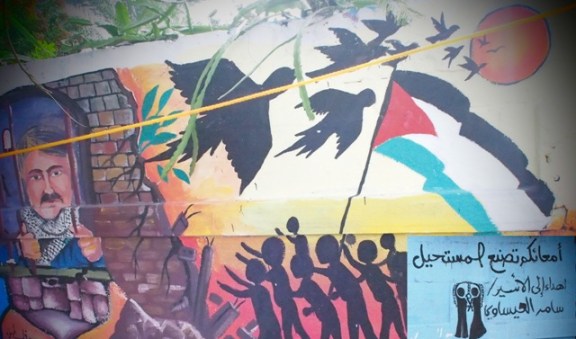
A mural in solidarity with Palestinian hunger strikers has been painted opposite a protest tent at the International Committee of the Red Cross offices in Gaza.
Ayman Shrawna has suspended his 178-day hunger strike for ten days, as he has been promised by the Israeli Prison Service (IPS) that it would review his case and release him by the beginning of next year. He is allowing himself to have only fluids, but has threatened to continue his strike if the IPS fails to fulfill its promises. This leaves Samer Issawi alone in this battle of empty stomachs, continuing his historic hunger strike that has lasted for 183 days.
While surfing on Facebook this week, I saw a video my best friend Loai Odeh had shared of the attack on Samer Issawi in an Israeli court. It made me feel sick and angry, but not shocked.
“Your humanity and determination is always stronger than their brutality and savagery,” Loai wrote to his friend Samer, whom he grew up with in Jerusalem, and with whom he shared a cell in Israeli jails and was released in the prisoner exchange deal last year. Loai had first thought that Samer was luckier than him to be able return to Jerusalem. By contrast, Loai was expelled to the Gaza Strip from his hometown, where every corner guards his and Samer’s precious childhood memories.
“I know how stubborn he is,” Loai told me when Samer was kidnapped by Israeli forces on 7 July and declared an open hunger strike to protest his re-arrest. “He will not break this hunger strike until he is set free, even if it costs him his life.”
Loai spoke beautifully to me about Samer many times, which made me feel spiritually close to him. “Samer is stronger than all these hardships.” Loai keeps repeating these words over and over again as he counts the days of Samer’s mounting hunger strike.
I remember when Loai called me last Sunday, December 16, saying that it was Samer’s birthday. “He is celebrating his birthday in hunger, in a cold dark cell,” he said after a few seconds of silence that interrupted our call.
“Keep being free,” Loai wrote as a birthday greeting to Samer. “Keep your head held high over their barbed wires and racist walls. You shall be among us, my comrade.”
Despite the grave conditions Samer suffered on his birthday and still suffers, he and all the Palestinian people still have something to celebrate: his indestructible will. He is armed with a determination that makes physical necessities like food meaningless. This steadfastness is more harmful to the Israeli military than any weapon. It drove them to attack him and his family, and to destroy sit-in tents erected in solidarity with him in Jerusalem, especially in his home village, Issawiyeh. We are all proud of Samer, who reminds us that our cause is just.

A photo posted on the Facebook page of Shireen, Samer Issawi’s sister.
As I read Facebook status updatesby Shireen, Samer Issawi’s sister, her simple but powerful words moved me so much that I burst into tears. She vividly narrated how Samer and her family were attacked three days ago in the Israeli court, which she described as “racist.”
“Seven Israeli occupation soldiers savagely attacked Samer, ignoring his critical health condition and the fact that he was shackled to his wheelchair,” she wrote.
His family saw this brutality against Samer, and tried to protect him and prevent soldiers from beating him, but were dragged outside the court. Shireen wrote that the judge of the court was also there, watching idly. Instead of trying to do anything to end this brutality against a sick, shackled prisoner lingering at the edge of death, he ran out of the court. This judge and the IPS should be held accountable for their crimes against humanity.
Yesterday morning, I heard Samer’s mother speaking to Palestine Today TV live by telephone. She described how she saw her dying son being beaten. “All he did was try to shake hands with me,” she said. “This might have been the last chance for us to see, touch, or say goodbye to each other.” Her shaking, sorrowful tone still echoes in my ears.
She also described how Israeli soldiers raided their house in Jerusalem the same day, broke into Shireen’s room, and kidnapped her. Shireen has done nothing but try to give a voice to her brother. She has worked very hard organizing solidarity hunger strikes and protests. She has spoken to human rights organizations and international media, calling on people around the world to support her brother. But she is a threat to Israel because she is a strong voice of truth.
One of Shireen’s status updates reflected how she felt during the day she spent in an Israeli cell. “When they pushed me into that narrow, horribly dirty and cold isolation cell, I felt more spiritually united with my brother Samer,” she said. “I can’t put into words how proud I felt that my brother Samer can endure these hardships. He is a legend, as he remains resolved to continue his hunger strike despite all the difficult and painful circumstances he has endured.”
This cold weather makes the hunger strike a lot more difficult. The colder it gets, the more food the hunger striker needs. All our Palestinian political detainees suffer as the IPS refuses to supply them with winter clothes, sheets, and shoes, in attempt to break their will. Israel will never succeed. No matter how and to what extent the IPS oppresses our heroes, they will remain strong and defiant.
In Gaza, we have set up a tent to express solidarity with Samer Issawi, Ayman Shawana and all Palestinian political prisoners. Groups of people from different generations keep coming back and forth to the tent expressing their solidarity in different ways. Yesterday, I attended a poetry reading organized by the Islamic University of Gaza, featuring the Egyptian poet Hesham El-Jakh. I could see a group of students holding Samer Issawi’s posters while waving the Palestinian flags. Observing how our heroes inside Israeli jails unite the Palestinian people everywhere makes me proud and happy.
Don’t hesitate to do anything you can in support of Palestinian hunger strikers. Your silence gives the IPS impunity to continue its cruelty against our detainees, violating international humanitarian law. Your silence can lead to the killing of our heroes. Act now to end our hunger strikers’ suffering. We want our hero Samer Issawi to stay alive.
Samer Al-Barq was promised release after his historical hunger striker three months ago but is still in custody
I wrote this entry when Samer Al-Barq was on his 110th day of hunger strike, in protest of the continuous renewal of his administrative detention order.

Samer Al-Barq’s father calls for urgent actions to put an end for his son’s suffering
On his 117th day of hunger striker, the Israeli Prison Service IPS accepted to release him on condition he would be deported to Egypt which approved to welcome him on its lands. Samer Al-Barq agreed to the conditions of release because of the dire condition he reached hunger striking; especially as this strike started a week after he had ended a previous 30-day hunger strike on May 14.
However, three and a half months have since passed and he is still detained. The Israeli Prison Service is continuously procrastinating the process of deportation. Samer’s deteriorating health conditions have been critical for some time yet no concrete action has been taken by the Israeli Government to ensure his release and safety. Instead, on November 22, the IPS clearly deceived Samer and renewed his administrative detention order toan additional 3 months,although they promised him to be released after the historical hunger strike. This is a utterly absurd. No charge has been held against him. He is detained indefinitely based on secret information that neither Samer nor his lawyer can have an access to. He is not permitted to stand a trial and that leaves him with no legitimate tools to defend himself. This is simply inhumane.
According to Samer Al-Barq’s father, the latest attack on Gaza has frozen the process of Samer’s deportation to Egypt. His documents and legal papers are still with the Egyptian side but Israel tries its best to make this process take the longest time possible. Samer has been in a terrible condition and is still subjected to medical neglect. He went on a week hunger strike in October in protest of deferment of his release, though his health condition puts him at acute risk if subjected to further strikes.
Samer Al-Barq’s father is calling on every human of conscience and human rights organizations, to support Samer with every means possible to put an end for his continuous suffering. He also urges the Palestinian Authority to intervene and put pressure on the IPS to release his son soon.
Photos: Palestinian Traditional Henna Party

Me taken by the beauty of our Palestinian traditions
These are some photos from my cousin Rawan’s traditional Henna party on Sunday, December 16. I can’t tell you how unique that was. Everything was traditional, even the decoration. Everyone came wearing Palestinian traditional dresses. As the guests’ original villages were different, their traditional dresses were different as. I had so much fun comparing their dresses and I reached one conclusion which is that the bride’s dress was certainly the most beautiful.
No modern music was played at all. Women exchanged roles: some played drums, some danced while others sang traditional songs that they orally learned from their mothers and grandmothers. Moreover, the young girls including Sarah, Roba, Amjad and I performed Dabka, the fork dancing of Palestine. We enjoyed every moment!
During the Henna party, a woman took responsibility of painting Henna on the girls’ hands one after another starting with the bride. We all have different shapes of Henna paints on our hands and everyone is proud, showing off hers to the others.
At the end of the Henna party, we served Summaqiya to the guests. Summaqiyya is a traditional kind of food that our grandparents used to serve for guests in their weddings in our original villages and it has become a basic custom in the Palestinian people’s weddings. Some relatives arrived early this morning and cooked a huge amount. It was so delicious that Sarah and I had two big dishes on our own! I think it was made with so much love for Rawan.
My grandmother used to describe to me vividly how their weddings looked like. Today, I felt emotional while recalling my grandmother’s description and glancing some of her memories from the old days as watching the women celebrating. By reviving our traditions, I could feel our grandparents alive again. I hate it when I observe how badly our Palestinian traditions and customs got influenced by TV and modern and western music and culture. Nothing is as good as our precious heritage. Thanks Rawan for bringing us back to the old days, the days that our grandparents used to live peacefully in Beit-Jerja and Deir-Sneid. We shall return and finish the olive harvest that our grandparents had to leave behind assuming that they would return in a matter of two weeks to continue it.
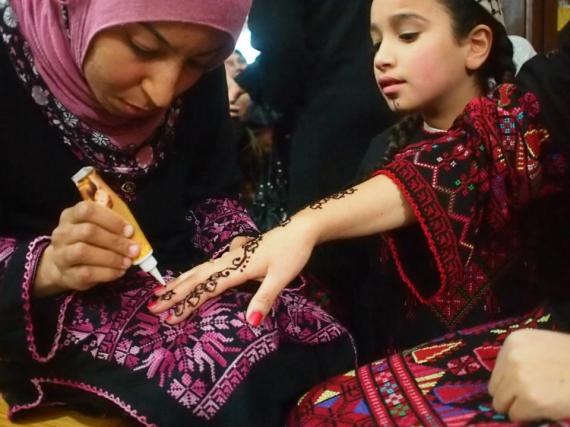
The bride is getting a Henna painting on her hand

Bakhour “incense”

We were here going on a circle and repeating after my aunt while singing traditional songs.

My lovely grandmother was the main singer. She can memorize thousands of traditional songs

Noor, the bride’s sister

Our beautiful bride Rawan is the one that having a red flower sticking in her hair
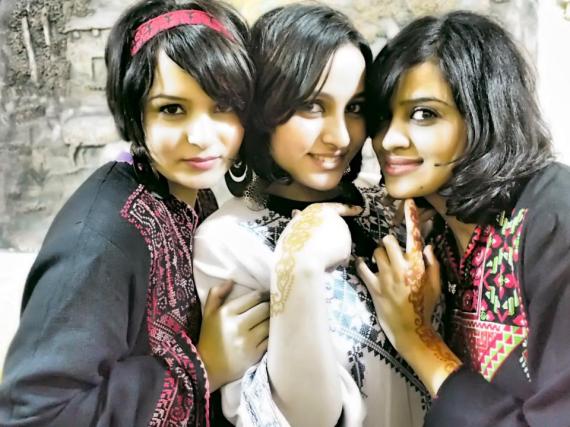
Me on the right and my cousins, the bride’s sisters, in the Henna Party

Different designs of Palestinian embroidery

That’s me :)

Women wearing traditional dresses and dancing. The woman who’s dancing on the right is my aunt, the bride’s mother.

I performed a Dabka performance while carrying the pottery imitating how Palestinian women before 1948 used to take potteries and go to fill it with water from a well in their village.

My Henna design

My grandmother is singing and playing drums and I am repeating after her
Photos: In my first morning outside home after the attack on Gaza, I saw a rainbow
After the attack on Gaza ended on late November 21, within less than an hour after the truce was declared, tens of thousands of Palestinian people marched Gaza streets celebrating a victory that was painted with the people’s pains, blood, sacrifice, and determination. According to the latest update of Ministry of Health in Gaza, 191 people were killed including 48 children–16 of them were below the age of 5, 12 women, and 20 elderly people. Moreover, 1492 people were injured, including 533 children–195 of them were below the age of 5, 245 women, and 103 elderly people.Check my blog for names, ages, and circumstances in which 174 victim were killed.
The people of the Gaza Strip returned eagerly to their ordinary lives right after the attack ended. But still, their happiness was incomplete with much loss among their souls; with many dreams killed before they even blossomed. They couldn’t fully be happy with so much painful scenes from the 8-day attack; reflected in their memories and with the sense of insecurity that Israel left them with. They knew Israel would violate the agreement any moment—which is what actually happened. Four people lost their lives after the truce and many violations were reported against Israel.
However, they didn’t allow their pains and fears to stop them from celebrating, to depress their spirits. Out of their sufferings, they have found a gateway to more hope. They believe that a day shall arrive when she shall overcome all these obstacles and they keep faith in their just cause. Their pains turned into more willingness to sacrifice and determination to keep fighting for their justice and the justice of every Palestinian killed. They turned their suffering into a level of positive energy anyone can imagine. They filled out Gaza’s streets and chanted with a united voice for freedom.
Personally, it has taken me quite a while to recover. I can still feel my body unconsciously shaking and I would frequently wake up from nightmares with a scream of horror. I found it difficult to concentrate on my studies nor fully enjoy being in the presence of my friends or family’s company–I would be physically with them but mentally somewhere else.
Soon after the attack ended, I had to go through another sad event–having to say goodbye to another best friend that has been a main source of comfort and security in these times of difficulties. Very early in the morning, at 7:00 am on November 26, I left my house to greet him one last time before he traveled. It was a very sad feeling that I was going to part with another close friend without knowing when I would see him again, especially after I already experienced this with my two sisters who traveled about a month earlier.
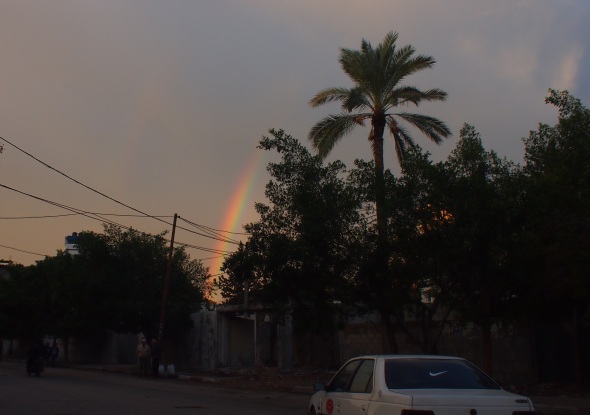
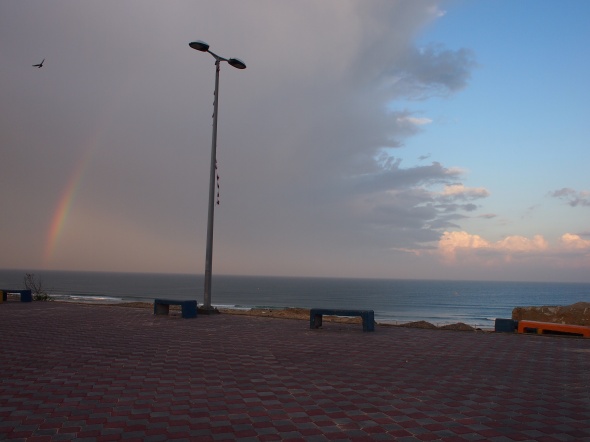
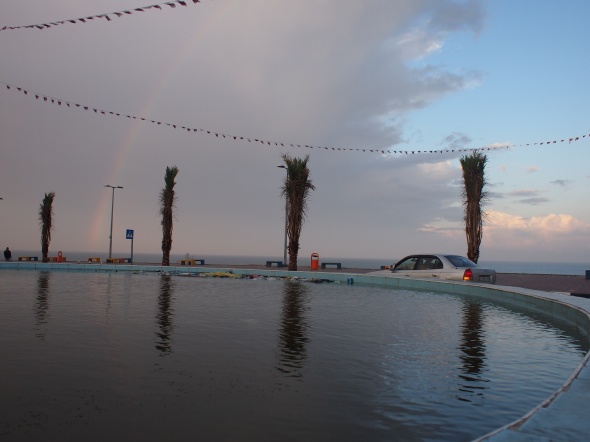
However, on this day that was depicted to me as another black day in my life, nature opened its arms to wrap me with warmth as I saw a rainbow. I was amazed when I saw that beauty in Gaza’s sky. It felt like God wanted to convey to me through this rainbow that things will be alright. This rainbow filled my heart with peace, warmth, tranquility and happiness. Luckily I had my camera then and I had the opportunity to commemorate that exceptional natural scene that I haven’t seen for long time.
PS: I apologize that I didn’t share this breathtaking scene with you earlier, but I was very occupied with too many things.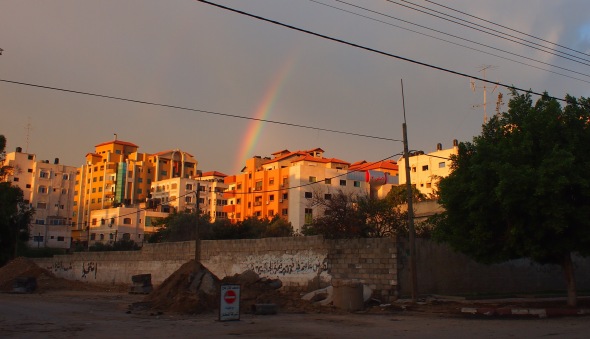
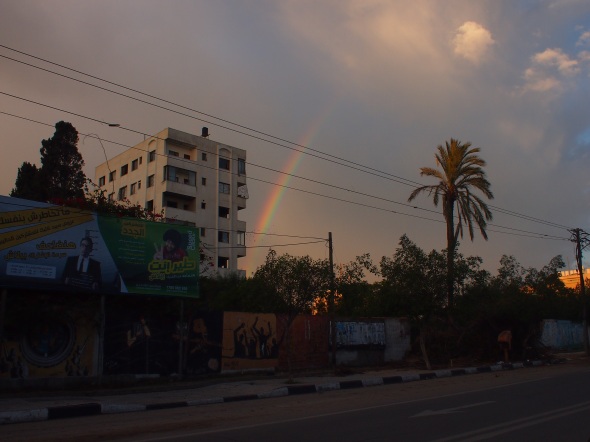

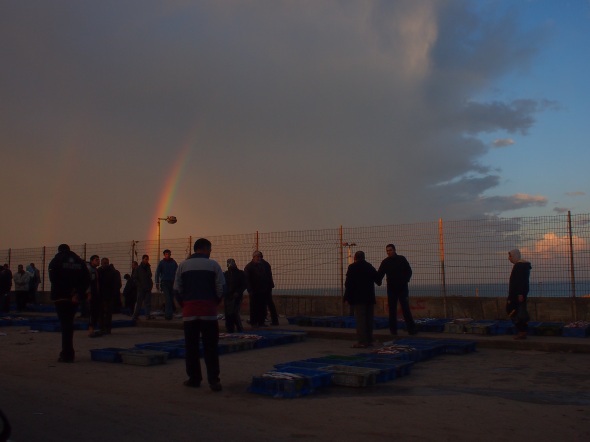
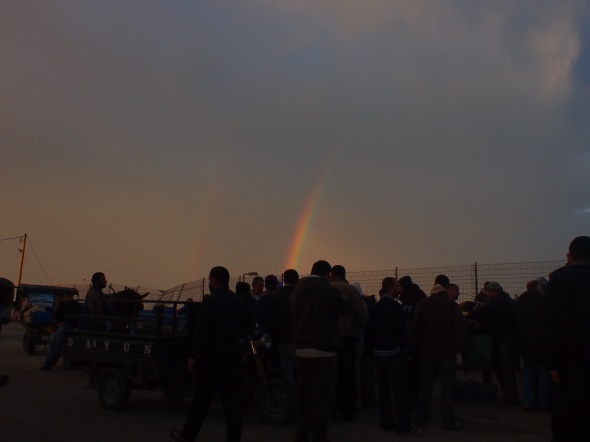
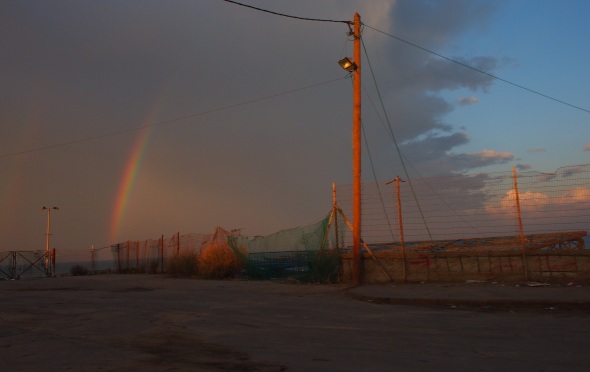
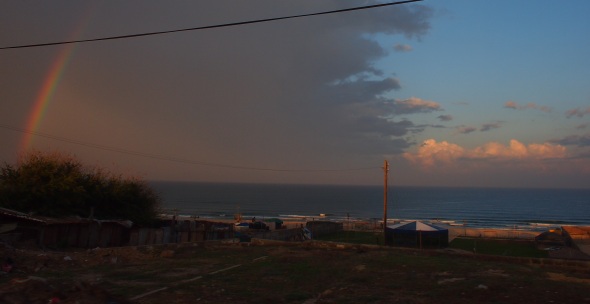

Gaza’s beach

A rainbow captured at Gaza’s beach
#GazaUnderAttack| Photos: A trauma in my neighborhood as IOF attack a car behind my house killing one and injuring another
Today, at around 2:30 pm, I witnessed one of the most horrifying scenes, not on TV, but with my own eyes. I will never forget the massive sound that hit the car behind my house. I still can hear it resonating in head.
I was laying down under my blanket feeling exhausted, desperate to fall asleep after almost 6 six days of continuous bombings on Gaza. I remember exactly how I heard the missile falling, like a whistle. I closed my eyes right, shut my ears hard with both hands and waited to hear the explosion. I’ve been having this moment of horror for uncountable times since Wednesday.
This time was different though. The dearest people to my heart, my family and I, were few meters away from being murdered. The rocket hit right behind my house.
As I heard the rocket hitting, I got up in panic as the house was still shaking and Mum was screaming, wandering around herself, traumatized. Dad rushed outside. I could see the fire flames from my window, the smoke filling the sky. It smelled very bad. The speakers of the mosque behind my house started shouting at people not to be crowded near the target, fearing another attack. We realized that a car was targeted and another car that was driving behind got seriously destroyed.
Within minutes, the fire service and the ambulances arrived. The people in the neighborhood were all outside, looking in silence while staring at this atrocious crime. I saw men crying as the paramedics were collecting the pieces of Hussam Abdeljawad’s body who was the victim of this attack. He was torn to pieces, spread all over the street. The street was stained with his blood. I was too traumatized while watching all this happening that I couldn’t shed even one tear. I was about to burst though.
One man, Fadel Jouda, was injured in this attack as he was driving by accident behind the attacked car. He happened to be the manager doctor of Al-Awda Hospital in northern Gaza. His situation is still very critical.
Within 15 minutes, fire service put on the fire and the ambulances rushed to hospital with the body of Hussam Abdeljawal and the injured Fadel Jouda, leaving two charred cars behind and a traumatized crowed of people, fearing that any one of them could be in that place.
Check this slideshow below of the photo me and my younger bother Mohammed have taken:
Israel has risen the death toll in Gaza to 104, including at least 25 children, 10 women and 10 elderly people. More than 770 people were injured since Wednesday, mostly children and women.
Check this post of the names and ages of those who fell victims in the past days of the ongoing Israeli attacks on Gaza since Wednesday. Because we’re not just numbers, I’m going to keep updating this post as long as I’m surviving. Israel is killing souls of innocent people in Gaza. Israel escalates its inhumanity and more victims are being murdered. Act now to stop this mass killing in Gaza. Israel gets its immunity from your silence.
#GazaUnderAttack| Names and ages of killed people in the ongoing Israeli attacks on Gaza
Because we are NOT just numbers, I compiled the names and ages of 174 people murdered during the 8-day Israeli attack on Gaza, November (14-21) and the circumstances in which they were killed. Their blood won’t go in vain. The murder of those innocents has just made us more determined and more willing to pay any price for our freedom from this inhumane Israeli occupation. Israel must be held accountable for their crimes against humanity sooner or later. RIP
1- Ahmad Al-Ja’bary, 52 years old.
2-Mohammed Al-Hams, 28 years old.
3- Rinan Arafat, 7 years old.
4- Omar Al-Mashharawi, 11 moonths old.
5-Essam Abu-Alma’za, 20 years old.
6-Mohammed Al-qaseer, 20 years old.
7- Heba Al-Mashharawi, six-month pregnant, 19 years old.
8- Mahmoud Abu Sawawin, 65 years old.
9- Habis Hassan Mismih, 29 years old.
10- Wael Haidar Al-Ghalban, 31 years old.
11- Hehsam Mohammed Al-Ghalban, 31 years old.
12- Rani Hammad, 29 years old.
13- Khaled Abi Nasser, 27 year old.
14- Marwan Abu Al-Qumsan, 52 years old.
15- Walid Al-Abalda, 2 years old.
16- Hanin Tafesh, 10 months old.
17- Oday Jammal Nasser, 16 years old.
18- Fares Al-Basyouni, 11 years old.
19- Mohammed Sa’d Allah, 4 years old.
20- Ayman Abu Warda, 22 years old.
21- Tahrir Suliman, 20 years old.
22- Ismael Qandil, 24 years old.
23- Younis Kamal Tafesh, 55 years old.
24- Mohammed Talal Suliman, 28 years old.
25- Amjad Mohammed Abu-Jalal, 32 years old.
26- Ayman Mohammed Abu Jalal, 44 years old.
27- Ziyad Farhan Abu-Jalal, 23 years old.
28- Hassan Salem Al-Heemla’, 27 years old.
29- Khaled Khalil Al-Shaer, 24 years old.
30- Ayman Rafeeq sleem, 26 years old.
31- Ahmad Ismael Abu Musamih, 32 years old.
At 8:20 am, as a result to an Israeli inhumane attack on Deel Al-Balah, central Gaza, three people were killed. The list of murdered victims goes longer>>>
32- Osama Musa Abdeljawad, 27 years old.
33- Ashraf Hassan Darwish, 22 years old.
34- Ali Abdul HakimAl-Mana’ma, 20 years old
At 8:45 am_ 9:00 am, warplanes attacked several places including Rafah, Khan-Younis, and Tal Al-Sultan, southern Gaza, leaving three killed>>
35`- Mukhlis Edwan, 30 years old.
36- Mohammed Al-Loulhy, 24 years old.
37- Ahmad Al-Atrush, 22 years old.
In a series of attacks on several places on central Gaza at noon, two more people fell victim:
38- Abderrahman Al-Masri, 31 years old.
39- Awad Hamdi Al-Nahhal, 23 years old.
40- Ali Hassan Iseed, 25 years old, killed in an attack on his motorbike in Deer Al-Balah, central Gaza, at 8:10 pm, Novebmer 17.
IOF attack another motorbike in Deer Al-Balah at 8:20 pm, leaving two more killed:
41- Mohammed Sabry Al’weedat, 25 years old.
42- Osama Yousif Al-Qadi, 26 years old.
In an attack on central Gaza, to the west of Al-Masdar area, at 9:10 pm, two more people people killed:
43- Ahmad Ben Saeed, 42 years old.
44- Hani Bre’m, 31 years old.
At 9:40 pm, Israel attacked Qdeih family’s house in west Khan-Younis, Southern Gaza and a woman got killed.
45- Samaher Qdeih, 28 years old.
46- Tamer Al-Hamry, 26 years old, died after being seriously injured in an attack on Deer Al-Balah.
On November 18, the fifth day of the Israeli ongoing aggression on Gaza:
Israeli warplanes shelled the house of Abu-Alfoul family in northern Gaza, killing two children and injuring at 13 at least, mostly children and women.
47- Gumana Salamah Abu Sufyan, 1 year old.
48- Tamer Salamah Abu Sufyan, 3 years old.
An Israeli warplanes fired missiles at a house that belongs to the family of Abu Nuqira in Rafah killing one person:
49- Muhamed Abu Nuqira
An Israeli war plane fired a missile at a house in an agricultural land east of Bureij camp, in the Central Gaza Strip, killing one child and injuring 2 other children:
50- Eyad Abu Khusa, 18 months old.
Two people were killed, one of them a child, when an Israeli missile hit a beachfront refugee camp in Gaza City:
51- Tasneem Zuheir Al-Nahhal, 13 years old.
52- Ahmad Essam Al-Nahhal, 25 years old.
Medics also reported finding the body of woman under the rubble of a house in eastern Gaza City who had been killed in a strike earlier in the morning.
53- Nawal Abdelaal, 52 years old.
At 3:10 pm, November 18, Israel rocked a house belongs to Al-Dalou family in Sheikh-Redwan area, west Gaza, killing at least 10 people, including 4 women and 4 children.
Soon after Al-Dalou massacre, 2 more were killed, a father and his son, in an attack on a car for water supply in northern Gaza.
65- Suheil Hamada, 53 years old.
66-Mo’men Suheil Hamada, 13 years old.
In an airstrike that targeted Nussairat camp after that two people were murdered and 10 at least got injured
67- Atiyya Mubarak, 55 years old.
68- Hussam Abu Shaweish, 35 years old.
69- Samy Al-Ghfeir, 22 years old, killed in an attack on Shijaiyya area, west Gaza.
70- Mohammed Bakr Al-Of, 24 years old, killed in an attack on Al-Yarmouk st. in Gaza city.
At 8:00 pm, November 18, the ministry of health in Gaza has reported that Israel has risen the death toll in Gaza to 69, including 20 children, 8 women, and 9 elderly people. Moreover, Over 660 person got injured since Wednesday, including 224 children, 113 women, and 50 elderly people.
At 10:00 pm, November 18, an Israeli warplane attacked a motorbike near the ministry of finance roundabout, west Gaza, killing a father and his son:
71- Ahmad Abu Amra, 42 years old.
72- Nabil Ahmad Abu Amra, 20 years old.
At 10:10 pm, November 18, an Israeli warplane rocked a house belong to Nasser family near Abu-Sharekh crossroad in northern Gaza, killing a child and his father.
73- Hussein Jalal Nasser, 8 years old.
74- Jalal Nasser, 35 years old.
On November 19, the sixth day of the Israeli ongoing aggression on Gaza:
At 12:10 am, an Israeli warplane attacked Mahmoud Al-Hashash house in Rafah killing one woman.
75- Sabha Al-Hashash, 60 years old.
At 1:00 am, an Israeli warplane rocked a car in Rafah killing two people:
76- Saif Al-Deen Sadeq, 27 years old.
77- Hussam Al-Zeiny, 30 years old.
78- Emad Abu Hamda, 30 years old, killed after being seriously injured in as a drone fired a rocket at Beach camp, west Gaza.
79- Mohammed Jindiyya, mentally disabled, killed in an attack on Helles roundabout in Shijaiyya, west Gaza.
At 4:10 am, Israel committed another atrocious crime shelling a house belong to Azzam family that is full of children. 3 people were killed in this attack and at least 40 injured. Medics said that more than 15 children have arrived Shifaa hospital, three of them are in a very critical condition.
80- Mohammed Iyad Abu Zour, 4 years old.
81- Nisma Abu Zour, 19 years old.
82-Sahar Abu Zour, 20 years old.
83- Ahed Al-Qattaty, 38 years old.
84- Al-Abd Mohammed Al-Attar, 51 years old, killed in an attack on Beit-Lahya, northern Gaza at 6:00 am.
85- Rama Al-Shandi, 1 YEAR OLD, killed as four F16s airstrikes hit former security compound Al-Saraya in Gaza City.
In an Israeli attack on Al-Qarara area to the south of the Gaza Strip, two farmers were killed at 8:50 am. In the same attack, a 4-year-old girl was seriously injured.
86. Ibrahim Suleiman al-Astal, 46 years old.
87. Omar Mahmoud Mohammed al-Astal, 14 years old.
As a warplane rocked a motorbike in Khan-Younis, southern the Gaza Strip, two people were killed:
88. Abdullah Harb Abu Khater, 21 years old.
89. Mahmoud Saeed Abu Khater, 34 years old.
An Apache warplane fired a rocket at a car in Al-Berka street in Deer Al-Balah, killing three people:
90. Rashid Alyan Abu Amra, 45 years old.
91. Amin Zuhdi Bashir, 40 years old.
92. Tamer Rushdi Bashir, 30 years old
93- Hussam Abdeljawad, 32 years old, killed as an F16 rocked his car in Saftawi street, northern Gaza, at 2:25 pm.
94- Ramadan Ahmad Mahmoud, 20 years old, died this morning after being seriously injured in an attack that hit Al-Maghazi camp, two days ago.
95- Mohammed Riyad Shamallakh, 23 years old, killed as IOF targeted a car in Tal Al-Hawa, southern Gaza city.
At around 4 am, two people were killed as an Israeli warplane fired a missile that hit Al-Nusseirat Camp, to the west of Gaza city.
96- A’ed Sabri Radi, 48 years old.
97- Ameen Ramadan Al-Malahi, 24 years old.
In an attack on Al-Shorouq building in Gaza City which contains several media offices, 2 were killed and 3 journalists were seriously injured.
98- Ramez Najib Harb, 29 years old.
99- Salem Boulis Sweilem, 53 years old.
100- Muhammed Ziyad Tbeil, 25 years old, killed in an attack than hit central Gaza.
At 6:55 pm, an Israeli warplane attacked Al-Bureij camp killing two people:
101- Arkan Harbi Abu Kmeil, 24 years old.
102- Ibrahim Mahmoud Al-Hawajri, 34 years old.
At around 8:00 pm, an Israeli warplane shelled Shhada family’s house in Nusairat camp killing two people from the same family– a child and an elderly.
103- Khalil Ibrahim Shhada, 53 years old.
104- Osama Walid Shhada, 17 years old.
At around 9:00 pm, Israel committed another massacre against Hjazi family killing a father and his two sons, and injuring at least 15, most of them are children and women.
106- Suhaib Fo’ad Hjazi, 2 years old.
107- Mohammed Fo’ad Hjazi, 4 years old.
108- Fo’ad khalil Hjazi, 46 years old.
On November 20, the seventh day of the Israeli ongoing aggression on Gaza:
At around midnight, an Apache rocked a house in Rafah that belongs to Nassarsa family, killing two siblings and injuring 10 others.
109- Mohammed Tawfeeq Al-Nassasra, 20 years old.
110- Ahmad Tawfeeq Al-Nassasra, 18 years old.
111- Yahya Akram Ma’roof, 38 years old, a farmer killed at 9:20 am as an Israeli warplane attacked agricultural lands in Al-Atatra area, northern Gaza. Four other farmers were injured in this attack.
In an Israeli attack on an agricultural land in Beit-Layha, northern Gaza, at 10:10 am, two people were killed:
112- Yahya Mohammed Awad, 15 years old.
113- Bilal Jihad Al-Barawi, 20 years old.
114- Mahmoud Rezq Salman Al-Zahhar, 30 years old, killed in an attack on Al-Mughraqa are in the middle of the Gaza strip.
115- Abderrahman Hamad Abu Hamza, 22 years old, killed at 12:10 pm in an Israeli attack on Mokhabarat buildings, west Gaza.
116- Mohammed Abed-Rabbo Yousef Bader, 24 years old, killed at 12:20 pm as IOF targeted Abu Tama’a family in Deer-AlBalah, in middle the Gaza Strip, at 12:20 pm.
117- Ahmad Khaled Doghmosh, died in Egypt after being transferred to a hospital in Egypt for being seriously injured in an airstrike that hit Tal Al-Hawa on November 18.
Within 1 hour and while negotiating the truce between Israel and Hamas, Israel committed another massacre killing at least 14 people.
At 4:20, an Israeli warplane rocked a car in Al-Sabra neighborhood, leaving four people from the same family killed and torn to pieces:
118- Ahmad Jameel Hamdan Doghmosh, 30 years old.
119- Sobhi Nemer Mohammed Doghmosh, 29 years old.
120- Salah Nemer Mohammed Doghmosh, 29 years old.
121- Musab Mahmoud Rushdi Doghmosh, 22 years old.
122- Ameen Mahmoud Asad Al-Dadda, 22 years old, killed in an Israeli attack on Baghdad street in Shijaeyya, west Gaza at 2:30 pm.
In an attack on Kishko street in Zaytoon street, two children were killed while playing football in front of their house:
123- Mohamoud Rezeq Ashoor, 54 years old.
124- Saqer Yousef Bulbul, 57 years old.
125- Ayman Rafiq Abu Rashid, 33 years old, killed in an Israeli attack on Jabalia camp, northern Gaza.In the same attack, a 5-year-old girl was seriously injured.
In another attack on Al-Shawwa family’s house in Shijaeyya, west Gaza, a young woman arrived at Shifa hospital as charred pieces. 20 people were injured in this attack at least, 3 cases are severe.
126- Yosra Basil Murtada Al-Shawwa, 18 years old.
At 5:55 pm, an Israeli warplane attacked a press car working for Al-Aqsa TV station in Nasser street in Gaza city killing two journalists. They were just holding their cameras, reporting on the ongoing attacks…
127- Mahmoud Ali Ahmad Al-Koomi, 19 years old.
128- Hussam Mohammed Abderrahman Salama, 30 years old.
At 6:10 pm, two more were killed in an attack on Beit-Hanoon, northern Gaza.
129- Mahmoud Mohammed Hussein Al-Zahry, 21 years old.
130- Tareq Azmy Mustafa Hjeila, 40 years old.
At 6:50 pm, an Israeli missile hit a car in Deer Al-Balah killing two people:
131- Mohammed Musa Abu Eisha, 24 years old, the manager of Al-Quds educational radio.
132- Hassan Yousef Al-Ostaz, 22 years old.
At 8:30, two brothers were killed in an Israeli attack that targeted a motorbike in Bilbeisy street in Rafah:
133- Ahmad Abed Abu Moor, 24 years old.
134- Khaled Abed Abu Moor, 19 years old.
At 9:00 am, two cousins were killed in an Israeli attack on Deer Al-Balah:
135- Mohammed Ahmad Abu Sitta, 21 years old.
136- Salem ‘Ayish Abu Sitta, 32 years old.
137- Shawqi Abu Sneima, 24 years old, killed as Israeli warplane targeted his motorbike in Rafah.
At 11:45 pm, two children were found as pieces in Al-Shouka area, western Rafah.
138- Ibrahim Ahmad Mahmoud Hamad, 16 years old.
139- Mahmoud Kahlil Al-Arja, 16 years old.
On November 21, the eighth day of the Israeli ongoing aggression on Gaza:
At 9:25 am: an Israeli warplane hit two places in Northern Gaza:
140- Fadi Mousa Al-Qatnani, killed in as attack on Beir Al-Na’ja area, northern Gaza.
141- Mustafa Awad Abu Hamidan, 23 years old, killed in an attack on Al-Shafi’y mosque compound in Jabalia, northern Gaza.
At 11:20 am, an Israeli warplane attacked a group of people in Khan-Younis, killing a child:
142- Ahmad Awad Abu’liyyan, 15 years old.
143- Fares Sbeita, 25 years old, died at noon after being seriously injured in an attack on Shijaeyya, west Gaza.
A young girl and her elderly father were killed at 1:30 pm in an Israeli attack on a group of civilians in Abasan area, west Khan-Younis.
144- Ameera Abu Nasser, 15 years old.
145- Ibrahim Abu Nasser, 80 years old.
146- Mohammed Adnan Al-Ashqar, 22 years old, killed in an attack on Al-Khuzundar gaz station in Al-Twam area, northern area, at 2:00 pm
147- Mahmoud Abu Khusa, 4 years old, killed in an attack on Al-Nafaq street in Gaza City.
At 2:40 pm, an Israeli missile hit a house belongs to Al-Assaly family killing a man and his son and daughter:
148- Talal Al-Assaly, 47 years old.
149- Ayman Talal Al-Assaly, 17 years old.
150- Abir Talal Al-Assaly, 10 years old.
151- Abderrahman Majdi Na’eem, 6 years old, killed in an Israeli attack on Ne’ma building in Gaza City. In the same attack, 3 children from Neim family also got injured.
152- Riham Al-Nabaheen, 13 years old, killed in an Israeli attack on house in Nussairat camp in the middle of the Gaza Strip
153- Mubarak Ibrahim Abu Ghalwa, 24 years old, killed in an attack on the middle of the Gaza Strip
154- Mohammed Mohammed Baker, 27 years old, died after being seriously injured in an attack on Al-Sabra neighborhood on Monday.
155- Ibrahim Mheisin Shhada, 20 years old, killed In an attack on Al-Na’ga street, to the west of Jabalia camp, northern Gaza.
In an attack on a house that belongs to Abu Kmeil family in Al-Mughraqa area in the middle of the Gaza Strip, 5 people were killed:
156- Ramy Abed-Rabbo Abeid, 30 years old.
157- Mohammed Salama Abu Eteiwy, 33 years old.
158- Nidal Hassan Abu Riyad
159- Sa’dy Mohammed Abu Kmeil, 26 years old.
160- Ahmad Abu Kmeil
As negotiations about ceasefire is going, more bombs fall over several places in the Gaza Strip killing a child and injuring at least 7 people.
161- Nader Yousef Abu Mghaseeb, 14 years old.
162- Abderrahman Amer Ayish, 32 years old, killed in an Israeli attack on Sheikh-Redwan bridge in Gaza City at 8:50 pm.
163- Mohammed Abu Edwan, 18 years old, killed in an attack on Raffah.
164- Odeh Arafat Al-Shandi, 17 years old.
A man and his daughter from Al-Dalou family were found buried beneath the rubble on Thursday, November 22, after three days of their death. Israel committed a massacre against Al-Dalou family on Monday. The paramedics managed to pull out ten dead bodies in that attack (Check the list from 54 to 64) The death toll in this single massacre rises to 12 people.
165- Mohammed Al-Dalou, 35 years old.
166- Yara Mohammed Al-Dalou, 15 years old.
On Friday, November 23, 3 people died due to their wounds sustained during the 8-day attack on Gaza:
167- Ahmad Samih Ja’roor, 24 years old.
168- Zaki Saeed Qadadah, 42 years old.
169- Jouda Sulaiman Amran Shamallakh, 30 years old.
170- Ramadan Abu Hasanein, succumbed to serious wounds suffered during the 8-day Israeli aggression on the Strip and died at dawn Saturday, November 24 .
Other people killed during the attacks on Gaza.
171- Kamal Mohammed Morad Miqtat, 23 years old, suffered a heart attack that killed him on November 18 due to the Israeli bombings.
172- Ahmad Sulaiman Abu Nqeira, 61 years old killed in an Israeli attack that targeted his house in Rafah or November 18.
After the truce was endorsed at 9:00 pm on late Wednesday, December 21, Israel has violated the truce continuously.
173- Anwar Abdelhadi Qdeih, 21 years old, killed as the Israeli Occupation Forces started shooting at the farmers in the southern Gaza village of Khuzaa, close to the buffer-Zone. In the same attack, 19 other Palestinian were injured.
174- Mahmoud Jaroun, 21 years old, died late Friday, December 23, of wounds he sustained hours earlier by Israeli gunfire east of Rafah in the southern Gaza Strip.
On November 29, the Israeli navy has also detained dozens of Gaza fishermen, although Israel agreed to allow Gaza fishermen to go six nautical miles off the coast instead of three.
#GazaUnderAttack: A collection of my fb reflective posts during the 8-day Israeli attacks on Gaza
Listen to Electronic Intifada’s latest podcast on the ongoing Israeli attacks on the Gaza Strip. -15, you’ll hear me screaming as an explosion happened nearby that lightened the dark sky into red. This podcast will help you have a glimpse of what’s going in Gaza.
Listen to my podcast on the Tunisian International radio, reporting on the third day of Israeli attacks on Gaza.

The mother of 10-month-old Hanen Tafesh, killed in an Israeli airstrike on Thursday in Gaza, mourns with family members at the baby’s funeral, 16 November. Reports indicate that as of Friday, 8 children have been killed in Israeli attacks. (Majdi Fathi / APA images)
I have no time for well-written blog entries but I report constantly on my facebook and twitter accounts. All posts on fb are public. Feel free to subscribe. You can also follow me on twitter for more updates.
Posts I’ve written on facebook during the previous two days:
On Friday, November 23, I wrote:
Updated: I hope this will be the last update of this painful post:
A man and a woman from Al-Dalou family were found buried beneath the rubble on Thursday, November 22, after three days of their death. Israel committed a massacre against Al-Dalou family on Monday. The paramedics managed to pull out ten dead bodies in that attack (Check the list from 54 to 64) The death toll in this single massacre rises to 12 people.
Jouda Sulaiman Amran Shamallakh, 30 years old.
After the truce was endorsed at 9:00 pm on Wednesday, Israel has violated the truce killing Anwar Abdelhadi Qdeih, 21 years old, as the Israeli Occupation Forces started shooting at the farmers in the southern Gaza village of Khuzaa, close to the buffer-Zone. Nineteen other Palestinians suffered gunshot wounds.
Status updates on the eighth day of the Israeli attacks on Gaza, November 21:
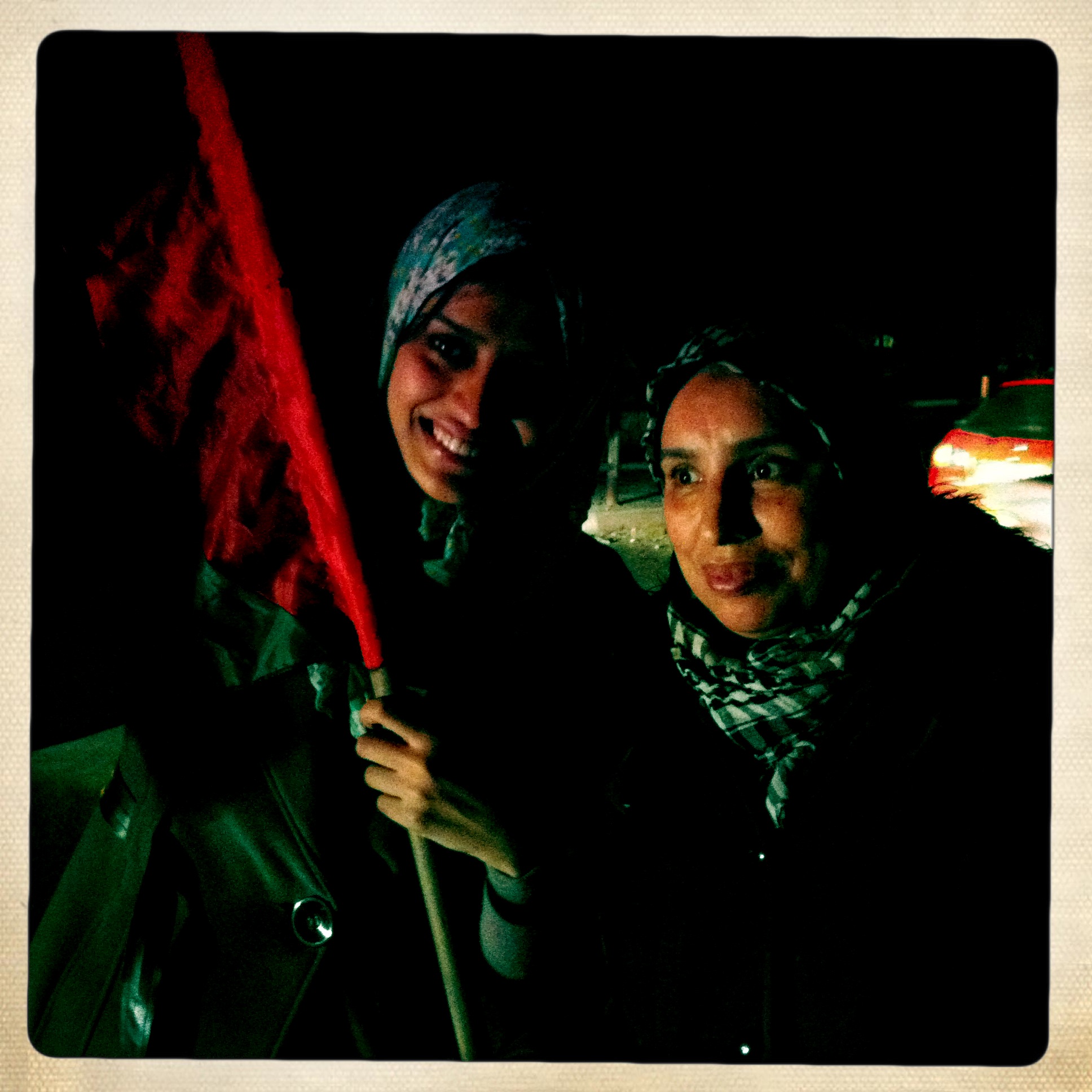
Mum and I in the street raising the Palestinian flag, joining the crowds of people who started celebrating victory after the truce started at 9:00 pm on November 21
That’s how big my smile is now!!!! My brothers, Dad, Mum and I just returned home. We were joining the crowds of people marching outside, celebrating this magnificent victory that even tasted more beautifully with the fact that the blood of
That nightmare and cries of pain have turned to tears of happiness and pride. It has made us stronger, more determined to go on resisting. The past 8 days of continuous suffering under the Israeli aggression has made the people of Palestine united again for one cause, one goal: restoring our dignity and defeat our enemy! RIP our 162 martyrs and know that every blood you spilled on our precious Palestinian soul has made it smell more beautifully. You made the people’s spirit go even higher. Be sure that we’ll go on the fight for humanity and justice and Israel will pay the price of every crime committed against our people sooner or later. Justice must be done. This apartheid regime of Israel will fall one day and we’ll all wander in the holy land one day freely celebrating the victory of liberation from the river to the sea. Mercy be upon the souls of martyrs! Long live Palestine! Down with Israel!For we’re NOT just numbers, let’s remember together all those martyrs that we’re celebrating their lives today with happiness and pride, not regret. Check my blog of names/ages of 162 victims murdered in the past 8 days of attacks on Gaza. http://wp.me/p29sAu-es
*********
As negotiations about ceasefire is going, more bombs fall over several places in the Gaza Strip killing a 14-year-old Nader Yousef Abu Mghaseeb and injuring at least 7 people. Death toll in Gaza rises to 161 now, including 42 children. 1250 people were injured in the past 8 days of Israeli attack on Gaza. According to the minister of health, more than 75% of the injuries were women and children. Even if the ceasefire ends up being true, we will never forget those 161 victim killed in Gaza and we’ll never forgive Israel for this massacre. We’ll bring justice to these souls sooner or later.
************
Abderrahman N’eim, 6 years old, killed at around 3 pm as Israel attack Ne’ma building that contains several media offices and is inhabited by many families and surrounded by many densely inhabited building. He’s a son of a medic who has been continuously working in Shifaa hospital since the Israeli attacks on Gaza started. He didn’t have time to see his son during the past 8 days and his son finally arrived to him as a dead body drowned with blood. He stayed solid, bent over his dead son with dignity, kissed his forehead and said “Al-Hamdullah” Thank God. RIP dear Abderrahman. Israel will pay the price to every crime they committed sooner or later.
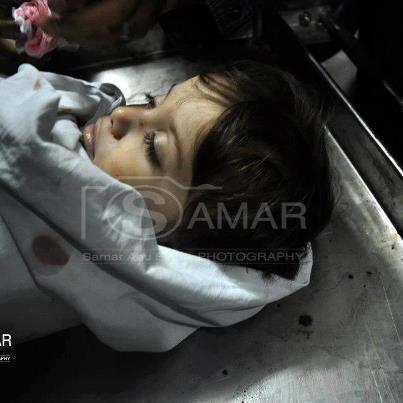
Abderrahman N’eim, 6 years old
**********
Israel just committed another massacre against Al-Assaly family who live in our neighborhood, killing the father Talal Al-Assaly and his son Ayman and daughter Hadil. Death toll in Gaza rises to 149 and still rising. I’m sick of updating this blog. Do whatever you can to stop this mass killing!
Status updates on the seventh day of the Israeli attacks on Gaza, November 20:
On the seventh day of the ongoing Israeli attack on Gaza, 35 were killed. Two of them are still unknown for they reached the hospital as charred pieces. Death toll rises to 143, including 30 children. Still rising. Just heard 8 continuous huge bombings in my neighborhood that shook the house. I felt like I lost my breath out of fear. This horror has to stop. This mass killing has to stop. Check latest update of names/ages of victims.
*******
Fo’ad Hijazi and his sons Mohammed Hijazi who is 4 and Suheib who is 2 years old, were murdered when their family home in Beit Laheya North of Gaza was bombed a few hours ago. The wife Amna who was also pulled from the rubble was in intensive care but died shortly after. 14 wounded in this attack. 39 Palestinians killed today, 26 Israelis killed by rockets in 8 years. 110 Palestinians killed this week compared to 3 Israelis. Its nothing but racism that equates the two sides. What’s happened this week, is an absolute abomination. We cannot let this butchery and subjugation win. Given that bodies are still being pulled out of the rubble and destruction, we should all push forward with renewed and relentless vigour to bring justice to Palestine
*******
Within the past 2 hours, Israel committed another massacre against the people of Gaza killing at least 14 people, including two children who were killed while playing football in front of their house in Zaytoon.. Many of those killed are still unknown for they were found torn to pieces. The Israel aggression on Gaza is going. More bombs are falling over us and more innocents are being killed.. Check this blog of the list of names and ages of the people killed on the seventh day of Israeli attack on Gaza.
******
The past 4 hours were very scary.. Bombings were crazily continuous. Warplanes were targeting everywhere from the north to the south. Still bombing.. And more are being killed. As negotiations about making a truce is going, Israel went crazy to kill an many people as possible. Within less than 2 hours, 18 people were killed, including two children playing football in front of their house. Many of those killed in the past few hours are still unknown. They were arrived at hospital as pieces. With the killing of Musa Abu Eisha, death toll in Gaza rises to 135. Very atrocious massacre is going here. Israel is threatening of escalating their ongoing crimes against the people of Gaza and threatening people to leave. 4 thousand people have already left their houses to UN schools. Just saw a report on TV on those who evacuated their houses. Children, women, elderly people were crying. It was heartbreaking. Don’t sit and watch. Act for the sake of humanity. The least thing you can do might contribute a little to end our suffering soon.
Status updates on the sixth day of the Israeli attacks on Gaza, November 19:
A status reflective update on the Israeli attack on Azzam family:
Oh God! Israel just committed another atrocious massacre against Azzam family. It seems Israel is still thirsty for more blood of innocent, even after they have sucked enough already. Wasn’t what happened to Al-Dalou family earlier satisfying enough? 11 people were murdered in Al-Dalou massacre, including 3 children and 4 women.
An Israeli warplane just rocked Azzam family’s house in Zaytoon area while sleep88ing peacefully at night, killing three, including a 19-year-old woman, Nisma Abu Zour, and a 5-year-old boy, Mohammed Iyad Abu Zour, and a 38-year-old man, Ahed Al-Qattaty. At least 40 got injured in the same attack, including 15 children. Medics are still pulling injuries from under the rubble of the house. 3 of the injuries among children are very much under the threat of death any moment. Why if Israel knows exactly who inhabits the house they are targeting before they attack it? Why to target children and women? Or is it just a desperate desire for spilling more of the Palestinian blood? The more you stay silent, the more Israel escalates their inhumanity and kill more innocents. They get their immunity from your silence. Act now!
Status updates on the fifth day of the Israeli attacks on Gaza, November 18:
Reflecting on the massacre Israeli committed against Al-Dalou family, I wrote:
Feeling so enraged. The images of the bodies can’t leave my head. Crying and screaming, but not out of sorrow, but out of anger and frustration. Why is the world still watching? Criminal Israel is continuing to massacre us. Al-Dalou family were just massacred. 10 people were buried under the rubble of their house. Why did they target this family? No reason. Israel is targeting randomly. Innocents are being killed.
Five members of the very same family were murdered: the father Mohammed Jamal Al-Dalou and his four children Ranin, Jamal, Yousin and Ibrahim, and his elderly father Jamal Al Dalou. Another three women from the extended family also died, Suhaila Al Dalou, Samah Al-Dalou, and Tahani Al-Dalou. Moreover, two neighbors, the 83-year-old Ameina Matar Al-Mzanner and Abdallah Mohammed Al-Mzanner, were also killed in the same raid. What did those people do to deserve being murdered in such an atrocious way? Their bodies were torn to pieces, drawned with their blood. Is this also self-defense? What kind of threat do these children, women, and the elderly form against Israel? Why is the world still silent?
I almost burst out. I couldn’t tolerate what happened to Al-Dalou family. As I was watching the sad and ugly scenes of the dead of injured, unconsciously, I started running like crazy in the house, screaming, and crying very hard. Mum started calming me down as she was silently crying. I could find my strength again inspired by my faith in our just cause. We die to live freed and dignified. Israel will pay the price for all these crimes against my people. No matter how bloody they get, we’ll never give up. We’ll keep fighting and sacrificing whatever we can until freedom. Justice will be done and Israel will never get away with their crimes.
********
Status update at 3:20 am, November 18
The crazier Israel gets, the bloodier and more inhumane they become. Enormous explosions and continious bombings have been on-going for the longest I’ve ever witnessed since the attacks started on Wednesday. The sky has also meant beauty and purity to me. However, Israel has shifted the sky from being a sourse of inspiration and relaxation to a sourse of horror.
The warplanes have become indscriminate; shelling houses, TV offices, motobikes, empty lands, even poultry farms. As I’m hearing explosions in northern Gaza, people in central Gaza and southern Gaza are also hearing exactly the same. They are rocking everywhere, at the same time, and they don’t care where they’re targeting. They never think who is being harmed. Tonight, civilians, including children, women, the elderly and journalists have been targeted.
A little earlier, Israel just shelled Qdeih family’s house, killing another woman, Samaher Qdieh. Soon after that, Israeli warplanes shelled another house in Shaboura Refugee camp injuring 6 people, including 4 children. Israel has just bombed two houses in northern Gaza, killing two children: 1-year-old Gumana Abu Sufian and Tamer Abu Sufian. In the same attack, at least 13 got injured, mostly children and women.
They also targeted Al-Quds TV office in Gaza, leaving at least 5 injured among the journalists working there. The photographer Khader Al-Zahhar has lost his leg in this attack. It seems that the Israeli war against Palestinian journalists has started. They form a serious threat as they are the tongue of truth who are dedicated to cover the ongoing crimes that Israel commits against the people of Gaza and humanity 24/24.
Till now, airstrikes can be heard all over Gaza. The Israeli navy is still firing rockets against houses along Gaza’s beach. The sound of warplanes are getting louder and closer. More attacks are coming. Keep your eyes on Gaza. Your prayers and thoughts are appreciated but your actions are more appreciated! Act now and stop this genocide!
Status Updates on the fourth day of attacks on Gaza, November 17:
Israel is escalating its inhumanity and their exceeding all red lines! They moved from shelling empty lands and poultry farms surrounded by civilians houses, to shelling motorbikes and cars, and houses. This morning, IOF attacked Salah and Abu Qarmoot family’s houses turning their houses into rubble. They pulled out at least 25 people from under the rubble, mostly kids and women, all suffering very critical situation. Israel just shelled a house in Rafah that belongs to Qdeih family, leaving another woman, Samaher Qdieh, murdered. Just few minutes ago, Israeli warplanes shelled another house in Shaboura Refugee camp leaving 6 injured, including 4 children.
Ministry of health in Gaza: 45 killed in Gaza, including 11 children, 3 women, and at least 500 injured, mostly children and women.
*****
At 9:40 pm, Israel attacked Qdeih family’s house in west Khan-Younis, Southern Gaza and a woman got killed, Samaher Qdeih. The number of killed people rises to 45, including 8 children, 3 women, two elderly people. Injuries have exceeded 450, most of them are children and women. Over 50 cases are under intensive care. The Israeli attacks on the people of Gaza are continuing. Bombing are all over the Gaza Strip. Keep your eyes on Gaza and act!
*****
Update at 6:20 am, November 17
A friend of mine just messaged me. Everyone in the neighborhood were falling asleep when they suddenly woke up as the glasses of their house’s windows are raining over them as a result to the latest IOF rocked a governmental ministry few minutes ago, located behind their house in Nasser street. A situation of horror and trauma is spread among people there! There is a total blackout in several places in Gaza. The sound of drones is getting louder. Warplanes are flying on low distances. Keep your eyes on Gaza.
Updates at 5:30 am, November 17
Woke up on series of huge explosions in the neighborhood that shook everything in my room! Everyone has woken up. One can hardly fall asleep!! bombings became quieter for a little while. However, unsurprisingly, IOF started firing missiles one after another as the time for Fajir prayer came!! Good timing for more killings as people are going to mosques to pray!
******
More bombings, more attacks!! Israel just targeted a motorbike close to Al-Aqsa hospital in Deer-Al-Balah, central Gaza, leaving one murdered and 2 injured and in another attack, two children got seriously injured.
8 victims of the people murdered in Gaza as a result to the latest Israeli attacks are children, three of them haven’t even celebrated their first birthdays. Over 250 injures have been reported, including 150 children and 96 women. Where are the terrorists you Israeli bastards are targeting!
****
Very sad! What Nasser family went though yesterday as their house was targeted in Sikka, Beit-Hanoon, Abu-Jalala family are experiencing now as a result to the very recent attack on Magazi, southern Gaza.
Yesterday, Nasser family lost 3 of their family members including 15-year-old boy. 20 injuries were reported from the same Israeli attack on their house. Six of the injuries belong to the same family, including 4 children and the elderly father whose life is under risk of death any moment.
*******
Status updates on the third day of Israeli attacks on Gaza, November 16
The Israeli attacks on Gaza are continuing. A little while ago, IOF shelled a poultry farm in Khan-Younis, leaving a bunch of chicken killed. I just wonder, where are animal rights activists from this horrible crimes. Aside to that, “just a secondary news”, a child and his father got injured.
Medics just reported that 24 people weree killed in Gaza since Wednesday, including 8 kids, 3 women, 4 elderly ppl,(AND hundreds of chicken). Moreover, 270 people got injured, over 30 cases under intensive care, including over 150 kids & 96 women. Medics say that the medical equipment and resources are about to run out from hospitals of Gaza. We don’t only have ‘terrorists’ among children, women, and elderly people, but our chicken are the most terrorist!
********
The residents of Israel are evacuating their houses, seeking underground shelters, terrified. Bombings here are non-stop, targeting several places in Gaza and more victims are falling. Just a little while ago, 3 children, a woman and a young man just arrived at Shifaa hospital, drowned in their blood. There is no safe shelters in Gaza. However, we’re still enjoying very high spirit. Very bravely, whenever we hear of more victories our freedom fighters accomplished, we put our pains aside and we start singing and distributing sweets celebrating our victory. The people of Gaza are ready to pay whatever cost Palestine entails for the sake of freedom and dignity.
*********
I seriously feel like I’m back to life after death. Feeling excited!! I got sickened of hearing more bombings, killings, injuries and causalities. But now I’m celebrating, singing, and dancing, just like all people of Gaza who forgot about their woos and mourning over the victims and started celebrating this victory of our freedom fighters who just managed to down the third Israeli warplane!! Moreover, a resistance rockets just hit an Israeli settlement to the south of Bethlehem!! Proud!! Go resistance goooooo!! We shall overcome!
*********
More attacks are happening at the moment. Our house is shaking. 3 children, critically injured, just arrived at Shifaa hospital in Gaza.
The Israeli warplanes are intensively dropping missiles on several places in Gaza now. bombings are sounding louder and closer. More killings and injuries have resulted. The number of killed people have reached 24, including 7 children, a pregnant woman, and two elderly men. Over 300 injuries have resulted from the attacks, the majority are children and women. 30 cases are under intensive care and very much in danger to die. The attacks are continuing and the Palestinian blood of innocents is being spilled by criminal Israel.
My father has just left the house to visit his friend’s funeral Marwan Abu Alqumsan who was buried in a very hugely deep crater resulted as an israeli missile hit an empty land northern Gaza. We didn’t want him to leave because Israel can target any place close on his way there, but he promised he’ll be back soon. But I know we’ll only relax when we see him back home safe and sound. Keep your eyes on Gaza.
Status updates on the 2nd day of Israeli attacks on Gaza, November 15
My parents’ friend, Marwan Abu Al-Qumsan, 52, who repeatedly visited our house, was walking on the street back from a family visit to his sister’s house. At the meantime, the IOF fired a missile on an empty land few meters far from him that left a HUGELY deep hole in the ground. Somehow, he fell there and it buried him alive. People kept kept digging for 4 hours to take him out. :'( His brother was walking after him about 20 meters far and he miraculously survived this with several wounds everywhere in his body. I am speechless. Down with this zionist criminal entity of Israel!
More attacks, more freaking explosions, more killings, more blood of innocents is being spelled by criminal Israel… The number of killed victims rises to 19, including 5 children, three of them haven’t even celebrated their first birthdays. Injured people have exceeded 180, many of whom are children, women, and elderly people. 30 cases of them are under intensive care and very much under risk of dying any moment. The hospitals in Gaza is suffering a huge shortage in blood and medical equipment. Ambulances were targeted today. Israel cannot care less about what, where or whom they’re targeting. However, our people are ready to pay the price for their freedom and dignity. We’ll never give up. We have a complete faith that we will come out of this with with more humanity and determination. Bless
Feeling so sorry, so sad for Nasser family who just lost 3 members of their family, including 2 brothers and a 15-yr-old boy, as IOF bombed their house in Shikka street in Beit-Hanoon, northern Gaza. Six more injuries have been reported from the same family, including 3 children and the elderly father. Medical sources say that the father is suffering seriously terrible condition. I hope he doesn’t die! :'(((((((
The IOF just targeted a house in Sikka, northern Gaza. Two brothers were killed and their father is seriously injured :( Now the Israeli tanks are moving forward. The Israeli navy are still firing missiles at people’s houses. It’s gonna be a freaking night. But we’re up to this!!
Another child has just made the number of martyrs rise to 15. The number of injuries has exceeded 130 victims, many of whom are children and women. They can care less about the victims harmed as a result to their attacks or the places they are targeting. A little while ago, they targeted an ambulance in Al-Twam area in Northern Gaza.
The Israeli missiles are still falling intensively over Gaza. I heard news about ground incursion starting on the borders of the Gaza Strip. The Israeli navy is continuing to fire missiles towards the people’s houses in the Beach Camp. Our sky is intensively occupied with their warplanes. Basically, we are besieged from everywhere by the Israeli Occupation Forces.
My eyelids have been struggling to close and rest a bit but it’s impossible in this terrorizing situation for anyone to be able to sleep for longer than few minutes. Just heard two explosions nearby. It felt like our house was going to collapse on us. Hang in there our people. Nothing can defeat your indescribable determination. We shall overcome.
Status updates on the first day of Israeli attacks on Gaza, November 14
Just few minutes ago: We could hear a series of horrifying bombings falling one after another in several places, specifically west Gaza. A total blackout over Gaza followed that. Can’t tell you how terrorizing that was. It sounded very close. Me and Catherine Charrett ran towards the windows and we could see the dark sky lighting red. The ambulances are rushing to the place.
Can’t tolerate hearing of more killings!!! I’m gonna burst any moment!!!! Another baby girl has just died after she was seriously wounded in an attack on Gaza city this afternoon!!! :'((((((((((((((((((((((
I’m tired of writing “More bombings” but they are just non-stop at the moment. Too many, too terrorizing, everywhere! Hang in there my people!!! We’ll come out of this stronger! العزيمة جبااااااااااارة!!
Despite Abbas and Balfour, we will return to our homes in Palestine

My latest drawing that comes as a response for Ben Gurion who said, “The elderly will die and the young will forget.”
Today, I look back in anger to a gloomy day in the Palestinian history. It happened 95 years ago, long before I could have witnessed it, but I still live its impact daily. Without even a shred of legitimacy, on 2 November 1917, the United Kingdom’s Foreign Secretary, Arthur James Balfour, promised the leaders of the Zionist movement they could establish their national homeland in Palestine, violating my people’s right to self-determination.
Balfour laid the groundwork for the conspiracy launched against the people of Palestine which led to our Nakba, the mass killing, dispossession, and systematic ethnic cleansing of the Palestinian people at the hands of Zionists gangs.
Great Britain is responsible for this atrocity against my people that the Balfour Declaration triggered, for the expulsion of three quarters of a million Palestinians, who with their descendants now number many millions more. It is also responsible for the Palestinians who survived the violence and mass expulsion, and were forced into ghettos within occupied Palestine under a military regime for decades.
An everlasting hope that has no remedy
Last night, I was reading Revolutionaries Never Die, the biography of George Habash, one of the Palestinian leaders who founded the Arab Nationalists Movement, and in 1967, the Popular Front for the Liberation of Palestine. In his book, he vividly describes the terror he saw inflicted on the people of his town, Lydda in 1948.
He wrote, “June 11, 1948 was the darkest day I ever witnessed in my life. Zionists arrived and ordered us to evacuate our homes … We were forced out of our homes, leaving everything behind under the threat of their weapons. I saw the neighbors fleeing their houses while being watched and threatened with violence. We didn’t know the reason for our mass expulsion. We thought that they planned to gather us in one of the fields to search our houses without having any witness, and then let us go back home. We never imagined that they were actually uprooting us, and that we would never return. Indeed, everything was organized to lead us outside Lydda as soon as possible.”
Not only George Habash thought that the Nakba was the darkest period in Palestine’s history. All the victims of the ethnic cleansing of more than 500 cities, towns and villages shared the same sentiments. I heard my grandparents repeatedly say them. They were expelled from Beit Jerja to the Gaza Strip, and they grasped the dream of return until their last breaths.
I recall my grandmother’s affectionate words when my siblings and I surrounded her once. “I lost my father amidst the panic of that gloomy day,” she said. “I never saw him again, so I realized that he was buried at home. But at the same day I lost him, I gave birth to your uncle Khader. This incident, with all its harshness, symbolized for me the Palestinian struggle, which will end only when we return.”
My illiterate grandmother couldn’t have been more right. The Palestinian struggle will only end when justice prevails, and no one will ever manage to distort this glorious struggle for justice. According to Mahmoud Darwish, “To be a Palestinian means suffering an everlasting hope that has no remedy.” After more than six decades of the Nakba, refugees have never given up hope to return, and they never will. There are those who thought that the elderly will die and the young will forget. We haven’t forgotten. We are still here, the young and the old, suffering the Israeli occupation’s terror and continuing our struggle for justice.
Whoever surrenders their right to return is no longer a Palestinian. To be a Palestinian is to be a revolutionary, born to struggle for all our grandparents possessed, their keys and their faith in our just cause. To be a Palestinian is to love and constantly feel attached to a homeland you never saw.
To be a Palestinian is to live maturely at a very young age, to grow up breathing politics, and to observe how others trade with your life and your rights. To be a Palestinian is to keep cultivating the national principles in your children and grandchildren, and to warn them never to digress or lead the cause in a different direction. To be a Palestinian is to never stop raising revolutionaries who will get what you couldn’t live long enough to accomplish. This is the cycle of the Palestinian life and struggle.
Abbas’ Balfour Declaration
On the anniversary of Balfour Declaration, Mahmoud Abbas came with another declaration competing with Balfour’s.
I felt sick when I first read an article about it. I could imagine Abbas saying this. At the same time, I wished that it could be fabricated news that he had renounced his — and our — right to return to our homes and villages. Then I saw the interview when he uttered those shameful statements, and I couldn’t believe what I heard. I am sure that the majority of Palestinian people and people of conscience worldwide were as frustrated as me.
“As far as I am here in this office, there will be no armed third intifada,” Abbas promised, stressing “never.”
Abbas, you are foolish if you think you can prevent the dignified Palestinian people from expressing their anger at ongoing attacks and violations of their most basic rights, and the ongoing expansion of Israeli settlements? You can’t stop them from practicing their legitimate struggle, through all legitimate means, to attain their justice, freedom, and independence.
Did Abbas forget that the first intifada was a nonviolent struggle, and that Israel is the party that turned to brutal violence, especially against children, to crush it? Did he forget that when the second intifada began, Israel fired a million bullets in the first days and weeks to try to crush it and dozens of unarmed civilians were killed in those first days?

Carlus Lattuf’s reflection on Abbas’s declarations
The right to resist is legitimate
Abbas said, “We don’t want to use terror. We don’t want to use force. We don’t want to use weapons. We want to use diplomacy. We want to use politics. We want to use negotiations. We want to use peaceful resistance. That’s it.”
With such a statement, Abbas is ignoring all the sacrifices Palestinians made in their legitimate struggle. Thousands of our people who never carried a weapon were cruelly shot dead or injured, tortured or imprisoned by the occupier. Who then are the “terrorists”?
And of course nobody supports “terrorism” or harming innocent people regardless of who they are. But with such a statement, does Abbas really mean to suggest that all those who used arm struggle to fight for the dignity and freedom of the land and people, are “terrorists,” as the Israelis claim? Was Dad a terrorist? Is this the “president” of Palestine talking, or an agent of Israel? Mr. Collaborator, we will never allow you to defile the names of our martyrs, who paid with their lives as the price for freedom.
I have always been proud to be the daughter of a freedom fighter. I believed Naji Al-Ali when he said, “The road to Palestine is neither far or near. It’s the distance of revolution.” Kanafani was one of the most accomplished young Palestinian patriots and intellectuals. At the same time as his pen commemorated the glories of martyrs, awakening people to their national rights, he joined the PFLP’s armed resistance. Kanafani was murdered by Israel’s Mossad.
Couldn’t Abbas grasp how insulting it was to Palestinians for him to use “terror” to describe their struggle? Or did the United States dictate to him to say so? Being ‘nice’ while addressing the ‘democratic regimes’ doesn’t mean giving up your people’s most basic rights guaranteed by UN resolutions.
I feel bad when forced to use UN resolutions and international agreements to justify our right to return and legitimate right to resist occupation and ethnic cleansing and to defend ourselves. Why should Palestinians, as oppressed people, have to use these resolutions to prove the legitimacy of our rights? They were issued only to absorb our anger, as evidence of supposed objectivity, not to be implemented. We, the Palestinian people, don’t want resolutions, we want actions! We want real justice, not just words tossed into the air!
Regardless, UN resolutions guarantee the right to use force in the struggle for “liberation from colonial and foreign domination.” General Assembly Resolution A/RES/33/24 of 29 November 1978:
Reaffirms the legitimacy of the struggle of peoples for independence, territorial integrity, national unity and liberation from colonial and foreign domination and foreign occupation by all available means, particularly armed struggle.
It is up to Palestinians to decide if they use that right, or pursue their struggle by other means, but how strange that Palestinians must defend their right to defend themselves, while, Israel, the invader, occupier and colonizer is always granted the right to “self-defense” against its victims! What Abbas seems to be saying is that Palestinians neverhave the right to resist or defend themselves as Israel continues to violently steal what is left of their land. That can never be true.
Giving up the right of return
Abbas crossed another red line, the right to return, also guaranteed by a UN resolution (194). “I am from Safed,” he said. “I want to see Safed. It’s my right to see it, but not to live there. Palestine now for me is the ’67 borders, with East Jerusalem as its capital. This is now and forever … This is Palestine for me. I am [a] refugee, but I am living in Ramallah. I believe that [the] West Bank and Gaza is Palestine, and the other parts (are) Israel.”
He didn’t only surrender his people’s right to return, he also surrendered his people. He couldn’t have had in mind Palestinians who steadfastly remained in their lands, torn between their Palestinian identity and their cursed Israeli passports, enduring daily harassment and discrimination. He also forgot the millions of Palestinian refugees outside Palestine, many still enduring horrible conditions in their refugee camps in the diaspora.
After hearing Abbas, I allow myself to speak on their behalf to reaffirm that Abbas doesn’t represent us. His declaration ignores the majority of Palestinian people, who still embrace their right to return. It is an individual and collective sacred right, which no one can surrender. Abbas also ignored the historical fact that Israel was established on the ruins of ethnically-cleansed Palestinians villages.
Abbas, I hang the map of historic Palestine around my neck, like it hangs on every wall of many Palestinian houses. Not a day passes without me pointing at my original village, Beit Jerja, while uttering the title of Mahmoud Darwish’s poem, “I came from there,” with a slight smile. It’s the last thought I enjoy every night as I close my eyes, recalling my grandmother’s vivid description of the green fields of grapevines and olive and citrus trees. We’ll never stop dreaming of a dawn when the Israeli apartheid regime no longer exists, and we return to both see and live there, walking freely through Haifa, Yaffa, Al-Lod, Nablus, Jerusalem, Gaza, Bethlehem, and every inch of historic Palestine.
“We’re counting on you”: In video, Palestinian students in Gaza call on peers around the world to intensify BDS
We, the Palestinian Students Campaign for the Academic Boycott of Israel (PSCABI), have created this boycott divestment and sanctions (BDS) video call for students around the world, believing in the power of youth to make a change. We specifically want to support and encourage students to attend the UK Student Palestine Conference 2012 on 23 September at the University of Manchester.
We want people around the world to move beyond just feeling solidarity with Palestine and to actually stand up for justice.
Don’t sit behind your TV screen and watch us getting killed, injured and detained in numbers, and feel sorry. Nothing will get better and Israel will, with impunity, escalate its inhumane practices and violations of Palestinians; human rights. When you watch our people dying while waiting for permits to cross the Israeli apartheid check points and react with feeling depressed, the situation will not change. Silence contributes to making our situation worse.
Silence tortures our hunger strikers inside Israeli jails and makes them go through a process of slow death. Silence contributes to the rising number of ill Palestinian prisoners who die at the Israeli apartheid checkpoints. Silence motivates Israel to terrorize us, massacre our people with their “world’s most moral army.” It allows Israel to attack our fishermen and shoot at our farmers while they work for a living in their lands located close to the “buffer-zone” —the ever-expanding area that separates Gaza from Israel. Farmers are banned from working on 35% of our total agricultural land, severely weakening the potential for economic and agricultural development in the Gaza Strip.
Silence is the reason behind the ongoing blockade on the Gaza Strip for the sixth year. Silence contributes to the Israeli apartheid policies which contributes to the isolation of Palestinian academic institutions. As I say in the video,:
“While Palestinians are not able to access universities and schools, Israeli universities produce the research, technology, arguments and leaders for maintaining the occupation.”
Silence encourages Israel to act as a state above law.
Many governments prefers to just watch Israel violating our rights and committing striking crimes against humanity,. But some do not just watch passively, they are active in their complicity as they continue their ties, including arms trade, with Israel, and thereby contribute to the normalisation of our systematic dehumanisation. However, you, “civil society, must hold them to account, since governments do not. As we, Palestinians, deserve the same rights as anybody else.”
UK students organize for action
A brave group of UK student Palestine activists decided to move and speak up loudly against Israel’s apartheid regime. They organized the UK Student Palestine Conference 2012 on 23 September at the University of Manchester. It aims to encourage students to put boycott, divestment and sanctions at the heart of their solidarity actions.
Organizers are aiming higher than ever:
Together we will form the steps necessary to guarantee that this year our commitment to justice in Palestine exceeds all previous years; our activism brings achievement and that our campaigns bring results. With the rising Boycott, Divestment and Sanctions movement and the threat it poses to the Israeli Apartheid system, it is now time that we as students go beyond just being members of our Palestinian solidarity group and become change-makers – on campus and across the UK.
The conference’s goals include:
To Give students the ideas and tools they need to build effective campaigns, particularly Boycott, Divestment, and Sanctions efforts.
To Link Palestine Societies with other national and international organizations, so that they have better access to outreach, speakers and resources.
To Develop effective and safe methods of communication between UK student activists.
These goals mean building creative and engaging campus campaigns which seek freedom, justice and equality for all Palestinians; involving new people on the issues; challenging academic discourses; and with Boycott, Divestment and Sanctions, creating real political and economic pressures while narrating Palestinian identity.
Those passionate activists who organized this conference are taking big strides towards justice for Palestine and they inspired us to send this video message to support their call for students to come to the conference and get involved.
BDS gives Palestinians hope
We want say to all the activists that we want you to double your efforts because every success that the BDS activists accomplish brings us, the Palestinian people, more hope that justice isn’t far away. Every BDS success makes us feel like we made a stride forward towards freedom, justice, equality and return.
The Palestinian call for BDS was inspired by the South African struggle against apartheid and the responsibility that the international community shouldered to fight injustice and inequality, which helped abolish the apartheid regime. “South Africa is leading the way because they know what racism means. With hard work the same can happen at your university.” That’s why we started our video saying, “We, the students in Palestine, believe in you. But we demand more from you this year. This year we hope for results.”
It’s time to push even further to boycott Israel and isolate it until Palestinians enjoy their full human rights. I believe in the power of BDS to help Palestinians regain their rights and exercise self-determination. Without justice and equal rights for everybody, there can never be a just and sustainable peace in the entire region.
The video includes music by Marcel Khalife, who dedicated his life to singing for justice and freedom for Palestine and immortalized our great Palestinian poet Mahmoud Darwish, by singing his lyrics that take one’s breath away.
Please share this video and spread it worldwide. Make our voice heard and act. “Make this year, not only about solidarity but change, too. Palestine needs political action from you. This year, we’re counting on you.”
Justice for Vittorio in Gaza, but Israeli impunity continues

The portrait that I drew for Vik after 3 days of his murder
It is ironic that justice has come for Vittorio Arrigoni and his family as we commemorate the anniversary of the Sabra and Shatilla massacre, one of the most atrocious crimes ever committed against us, against anyone. Thirty years have passed since it happened in the Sabra and Shatila refugee camps in Lebanon by a Lebanese Phalangist militia trained, supported, and secured by Israel. The blood spilled in less than three days, the elderly and the babies killed and tossed into rubbish heaps, women raped and brutally killed: the horrors unleashed on a vulnerable village knew no bounds. The memories of this atrocity are too painful to forget and the wounds it left in the Palestinian people’s hearts are just too deep to heal.
Justice was done for Vittorio — Vik, we called him — by Hamas, an organization that almost the whole world branded as a ‘terrorist’ organization and opposed when they were democratically elected in 2006. But justice for the thousands of victims of Sabra and Shatilla, a slaughter in which Israel was entirely complicit, has not yet been achieved.
And neither has justice for Rachel Corrie, killed in 2003 by a soldier of “the world’s most moral army.” He ran over her body with his Caterpillar bulldozer while demolishing a Palestinian home in Rafah that she gave her life trying to save. Less than a month ago, almost a decade after Rachel’s murder, an Israeli court in Haifa ruled that it was merely an “accident” for which the State should not take responsibility.
I decided not to attend the final court hearing for those suspected of killing Vittorio on Monday. I tried it once last April, but it was just too painful to watch the endless procedures mask the horror of the truth people were trying to find. I remember how I sat and shook, bit my nails, bowed my head, and looked at my tears falling on the floor. I remember how intolerably annoying it was to hear the murderers’ voices speaking of morals and respect while they had no shred of morals, respect, or humanity. I remember how I couldn’t bear to remain until the end and escaped the court to express my anger and sorrow at his murder outside.
At the time of the verdict, I sat in a cafe hall named after Vittorio Arrigoni, waiting for Adie Mormech, a British activist who was one of Vik’s best friends, to tell me what the court had ruled. He said that Mahmoud Salfiti, 23, and Tamer Hasasna, 25, were sentenced to life imprisonment, plus 10 years of hard labor, for kidnapping and murder, while Khader Ajram, 26, was sentenced to 10 years of imprisonment with hard labor for assisting. The fourth, Amer Abu Ghula, fled Gaza after the killing and was sentenced in absentia to a year of imprisonment for harboring fugitives.
I didn’t know how to describe my feelings about the criminals’ sentences. I don’t suspect them to be unjust. But something tells me that this trial only punished the hands behind this crime, not the minds that plotted it. I also believe that with the killing of the Jordanian Abderrahman Breizit and the Salafi Bilal Al-Omary during their shootout with Hamas forces, many facts were buried as well. This trial didn’t answer all our questions and left us still wondering, who benefited? Who had the most to gain from the murder of Vittorio Arrigoni and Juliano Mer Khamis who was killed in Jenin shortly before?
Even after the convictions of Vik’s murderers, they can never absorb the grief that his family and friends felt and still feel over his loss. Since his killers sentenced us to live the remainder of our lives without him around, Vittorio’s physical absence has been difficult. I still find it hard to imagine that we will have to continue without his laughs filling the room, without his voice singing, “Unadikum, ashod Ala Ayadikum,” “I call to you all. I take your hands and hold them tightly.” I know it’s been more than a year since he had his last Friday dinner with my family, but no Friday has ever passed without his memories flooding into our minds. His spiritual presence is very strong almost every place I go, especially in our house.
I see him in every corner of our home, on the sofas sitting and smoking his pipe while drinking coffee, on the dining table using his unique sense of humor to make us laugh and distract us from eating, even in the street in front where he frequently had football matches with my youngest brother Mohammed and other internationals activists such as Adie and Max Ajl. He also used to chat in the garden with my father about his immense pride in his grandparents who resisted fascism in Italy, a legacy that inspired him to fight the fascist policies of Israel against the Palestinians.

My second portrait of Vik in his first anniversary.
I will never forget you, dear Vik, and I’ll always cherish your memories dearly. We still laugh very hard when we hear any of my family or our friends imitating you, speaking your countable Arabic words that you used to repeat over and over again, “Zaki, Mushkili, Mish Mushkili, Mumkin, shway.”
You will live immortally in every heart of every Palestinian, every farmer, every fisherman, and every child in the Samouni family to whom you gave your strength and sympathy. In the massacre, you were there for them like for so many others, right from the moment Israel forced a hundred of them into one house, before dropping a missile on them all. You were one of those trying to reach them, as the dead and injured lay together under the rubble for four days. 29 of them were killed, yet three years later Israel’s military prosecution absolved the Israeli army of wrong-doing, arguing that the massacre had not been carried out “in a manner that would indicate criminal responsibility.”
I hope you’re resting in peace, looking upon us from heaven, and smiling. Be sure that those murderers didn’t kill you, but made you immortal. You have become a symbol of humanity, an icon of Muqawama, the tattoo you chose for your right arm out of your faith in our cause and as a promise to the oppressed Palestinian people to never end the struggle for real justice. We will carry on the fight, and we will achieve the aim you sacrificed your life for: “Freedom, justice, and equality for Palestine.”
Related articles:
Samar Al-Barq’s father: “Every minute matters in his life now”

Samer Al-Barq’s father protesting at the Egyptian embassy in Ramallah yesterday, appealing them to receive Samer in Egypt
“Dignity and freedom are more precious than food.” This is the belief that arms our Palestinian political prisoners and strengthens their determination against Israeli jailers.
The revolution of hunger strikes inside Israeli jails continues. Palestinian icon Khader Adnan’s hunger strike against administrative detention lasted for 66 days and ended with victory. This awakened our heroes’ pride to continue what Khader Adnan started and put an end to indefinite internment without charge or trial.
Waves of individual hunger strikers have joined the battle since then, including Hana Shalabi, Thaer Halahlah, Bilal Diab, and Mahmoud Sarsak. The victories these former administrative detainees won freed them from Israel’s hands and inspired more to carry on the fight.
Currently, four other administrative detainees are on hunger strike: Hassan Safadi, Samer Al-Barq, Ayman Sharawna, and Samer Al-Eisawy. Each has his own story of bitterness and poise.
The other evening, I went with a group of friends and relatives to the beach to escape the power cuts at our houses. I planned to enjoy the sunset and breathe fresh air while chatting about my sister’s wedding in a month. Instead, I found myself saying how ashamed I felt for getting preoccupied with studies during my exams and not blogging about the hunger strikers. That started an endless, emotional conversation about them. It was very late when we realized that we had been so absorbed by the conversation that we missed the sunset.
“Why haven’t Samer Al-Barq and Hassan Safadi reached any victories yet, even after their hunger strikes broke records?” we wondered.
Who should we blame for the critical condition they face? Should we blame Palestinian leaders, for whom the issue seems unimportant? Or those politicians who trade with Palestinians’ lives? Or divided factions who care for their own gains more than the public interest? Or the popular movement inside Palestine that is not doing enough? Or the deteriorating economic situation that chokes people in Palestine and pushes them to burn themselves like Ehab Abu Nada? Or the international community and human rights organizations who stay silent while watching these crimes against humanity in Palestine, either in Israel’s jails, in the Gaza Strip’s open-air prison, or in the occupied West Bank?
I feel confused. I can excuse my oppressed people, for their priorities have reversed. They also face slow death under Israel’s stifling apartheid regime. All they care about is surviving each day. They don’t dare to have future plans because they don’t want to be wishful in a place unsettled politically, economically, and socially.
But what about free people around the world? Our hunger strikers are freedom fighters, struggling for justice, for humanity. Why turn your backs on them?
When I returned home from the beach, I phoned Samer’s family in Jayyous, a small village near Qalqilya. My hands shook when I spoke to his father. I thought he would appreciate a call from Gaza. He did, but in my heart, I felt useless and ashamed that my call came late, as he is expecting to hear the news of his son’s death any moment. I knew, though, that my words would be useless. I tried to pull myself together and not to cry as I told him, “I pray you strength, and that you will hug your son alive and victorious soon, inshAllah,” but I wasn’t strong enough to control my shaking voice.
 Every minute, if not second, can make a difference in Samer’s life now. He began a hunger strike two days before the mass strike started on Prisoners’ Day, April 17, to protest his administrative detention. An end to administrative detention was one of the mass hunger strike’s demands. In exchange for its end, an agreement was reached on May 14 between the Israeli Prison Service and the higher committee of the hunger strike, with Egyptian mediation, to meet our detainees’ demands.
Addameer reported, “The agreement included a provision that would limit the use of administrative detention to exceptional circumstances and that those held under administrative detention at the time of the agreement would not have their orders renewed.”
Accordingly, Samer ended his strike. But a week after the 28-day mass hunger strike ended, he discovered that his administrative detention order had been renewed. That pushed him to resume his hunger strike to protest this violation of the agreement. His renewed hunger strike has lasted 110 days.
“Since Samer started his hunger strike, we have been banned from seeing him,” his father told me on the phone. “To pressure him to end his hunger strike, the IPS denied his right to family visitations. We have heard nothing from him since then, only from the International Committee of the Red Cross (ICRC).”
I asked his father if I could speak to Samer’s mother. “His mother barely speaks at the moment,” he replied. “She is traumatized and depressed by what her son is enduring. She weeps over Samer all day. She stops only when she falls asleep. She was hospitalized a few times. Pray her strength!”
I stayed silent for seconds, unable to say anything. I couldn’t imagine how painful it is for a mother to witness her son’s slow death. But he resumed angrily, “It drives me mad to see my son detained until now for no reason.”
“Nothing at all was found against him?” I interrupted.
“Not at all, except him being a religious man with a beard who lived in Pakistan, earned his master’s degree in science analysis, and taught science in its universities,” he continued. “He married there to a Pakistani woman, but barely lived a year in peace with her for unknown and mysterious reasons.”
“He was kidnapped from Pakistan by Jordanian intelligence and detained in Jordan for about five years without charges. Then Jordanian intelligence delivered him to Israel in July 2011, to hold him indefinitely, again without charges. Since then, his administrative detention order has been renewed seven times. The last was on August 22, after over three months of his hunger strike. His rapidly deteriorating medical condition didn’t stop the merciless IPS from extending his detention.”
Samer’s time in detention was very tough. He spent three years of isolation in Jordanian jails. When he was arrested by Israel, he endured even more brutality, especially during his hunger strike. Trying to pressure him to end his strike, the IPS transferred him to Ramla Hospital Prison, or the “slaughterhouse,” as many ex-detainees describe it when recalling the medical neglect, humiliation and discrimination they endured there.
Akram Rikhawi, who suffers several medical problems, and who went on a 102-day hunger strike against the medical neglect he and his disabled and ill comrades endured inside Israeli jails, described the Ramla Hospital Prison as “a slaughterhouse, not a hospital, with jailers wearing doctors’ uniforms.”
The IPS pressured Samer and his comrade Hassan Safadi to end their hunger strike using various methods. They were put in a narrow isolation cell, with barely any space for their shared wheelchair, and shackled them to their hospital beds, even though they could barely move. Even worse, they were physically attacked by jailers whenever they protested against their terrible conditions in Ramla. On August 13, Hassan’s head was slammed against the iron door of his cell twice, causing him to fall to the ground, unconscious. Prison guards then dragged him through the hall, past all the other prisoners.
Samer’s father told me, “A delegation from the ICRC and Physicians for Human Rights – Israel visited us recently and said that Samer’s death is imminent, unless a miracle happens to rescue him. He has lost more than 20 kilograms so far.”
To convince Samer to end his hunger strike, Israel agreed to deport him, but not within the Palestinian territories, because he poses ‘a threat’ to Israeli security. Remember that the deportation of Palestinians, within or outside the Palestinian territories, is a war crime under Article 49 of the Fourth Geneva Convention. But while Israel searched to see if any country will receive him, he is welcome nowhere! No country wants him because he is a “global threat.”
Yesterday, Samer’s father protested at the Egyptian embassy in Ramallah to ask it to receive Samer in Egypt.
At the end of the call, I asked his father to tell me what he wished to tell the world. He replied, passionately and quickly, “His hearing is on Sunday, September 9, and no one knows if the court will decide in Samer’s favor or against him. Besides, I don’t even think that Samer can wait for days. He’s motionless on his hospital bed suffering gravely,” he said.
“Every minute matters in his life now. I want them to know that my son isn’t on hunger strike in search of death. He is simply desperate for a real life with freedom, dignity, and justice. I urge them to take action, or if he dies, the responsibility for his death will be on our shoulders.”
My Birthday Wish and Drawing: Next Year in A Free Palestine
This is my favorite birthday wish. My friend Maath from Jerusalem started it and then all my tweeps started quoting it. Words can’t describe how pleasant this thought is and how much I enjoy daydreaming about it. But as much as I like daydreaming about it, as much as it hurts me when I get struck when I wake up and I have to face the reality, the fact that it can’t happen in matter of a year, or another 21 years, or even a century! It made my eyes, that are always longing to see Jerusalem and feel Jaffa beach’s refreshing breeze again, cry, because I never know how far this dream is from coming true.
But as I was trying to wipe my tears away, I decided to keep thinking positively of the blessings I have. I didn’t stop crying, but the tears I had were happier and filled with hope. While sitting alone, with one eye on my incomplete drawing and another on my blog, I could manage to preserve my positivity. I realized that even the horrible situation we endure in Palestine, under the apartheid regime of Israel, deprived of freedom, security and dignity, is somehow a blessing. It’s true. Palestine has always been my inspiration and my motive in my path toward striving for justice. Palestine, my people’s daily life, and my unique life under constant terror and insecurity have contributed a lot to making me the person I am now. My Palestinian identity and the Palestinian cause have been the main theme of my drawings and writing. I’m very blessed that I was born on this holy lands, even though I have hardly lived even a single day in peace. I’m thankful I was born on this land, which has been always the home carried in my heart wherever I went. I’m thankful and proud because I was born with a Palestinian spirit, unbreakable, dignified, and challenging.
I will not stop dreaming. I will not lose faith that freedom and justice are near. And if I don’t live long enough to witness the freedom of Palestine, my children will. My passion for a just peace will keep pushing me forward, if not for me, for the generations after me. Hopefully, a day will come when we look back at this painful present as an ugly past. There must be a light at the end of the tunnel. No one knows how long it will take to reach the very end of Palestine’s tunnel, but we will stay steadfast until we reach the light, the bright future of justice, freedom, and equality.
My drawing of my birthday is complete now… I’m going to give it a title of “Next Time in A Free Palestine”.
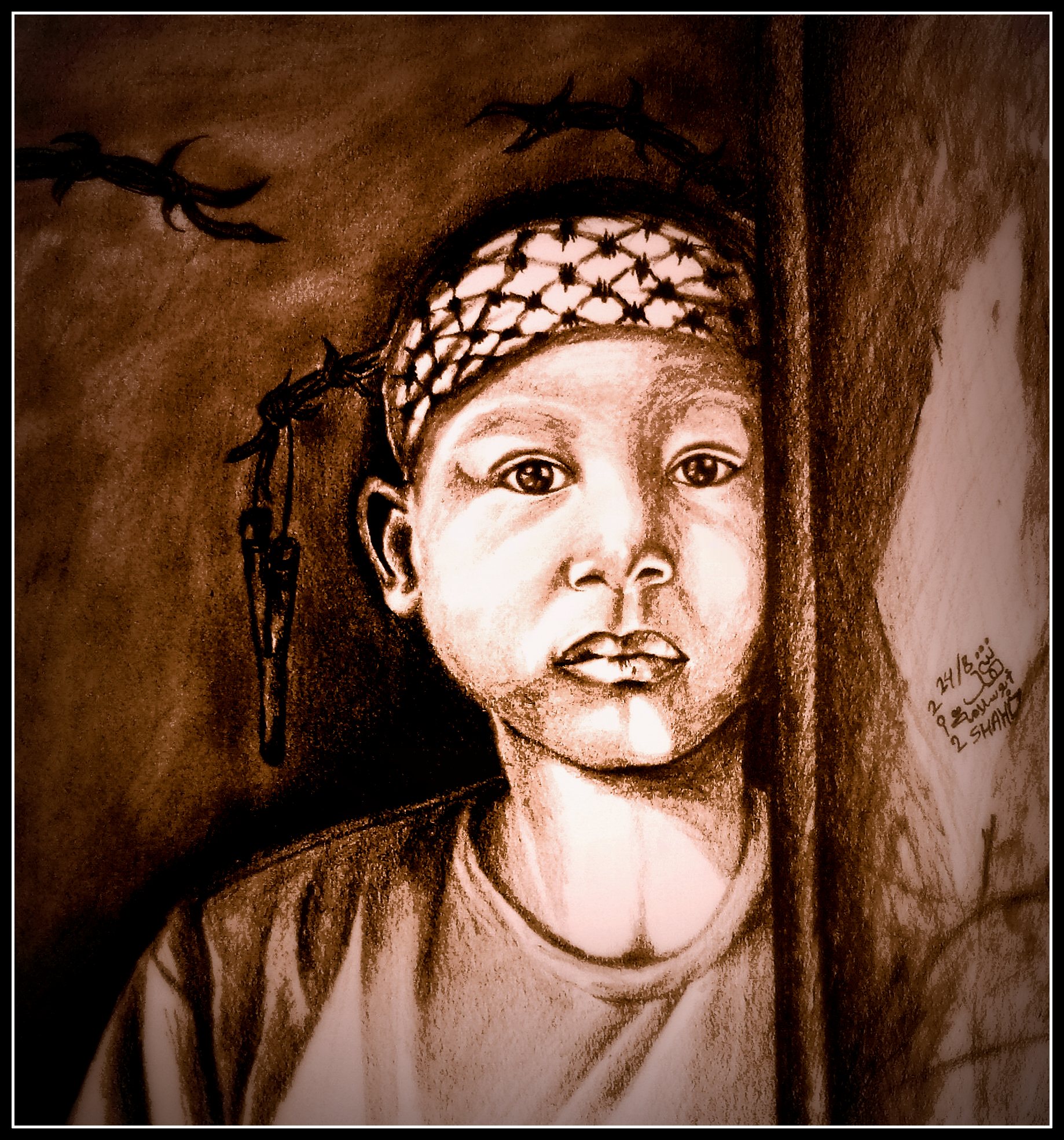
“Next Time in A Free Palestine”–August 24, 2012
Good news I receive as I’m turning 21:
I’ll take this opportunity to first thank Twitter for introducing many amazing and encouraging people to me, including Jareer and Muiz. These two tweets above are my other my favorite birthday greetings. I wanted share these tweets with you as an introduction to the coming news.
https://twitter.com/TamamAbusalama/status/238394827824324609
Recently, I got an offer from an Italian writer and published named Luigi Lorusso to translate my blog into Italian and publish it as a book with the name of my blog ,“Palestine from My Eyes.” When I received this news, I left my laptop open and started jumping and screaming with joy. My smile was so big, it left my cheeks hurting for hours! I am mostly happy because the stories I write from a human dimension about Palestinian political prisoners and their families, and my personal writings on what it means to be a Palestinian, will be heard by a wider audience. I’m very grateful for this appreciation of my work. I can’t wait to hold the hard copy of the book! It’s a success that I’ll be always proud of and thankful for.
Something I feel very humble and thankful for is my family and my close friends, who overwhelm me with their love and care. I thank you for being such an inspiration in my life. I hope you always remember that I would have never achieved what I have without your support and love. You were always there to raise my confidence in myself when it was shaking. You were always there when I needed a shoulder to cry on. You were always the first to share my happiness and sadness with me. I’ll be in awe of all of you forever.
 Thanks for my dear childhood friends Sarah and Amjad for making me a surprise by coming and bringing this cake for me! You made my day even more special <3
YouthSchool Eid Card- “Images of Resistance”
Eid is around the corner. This post is to send best wishes for all Muslims around the world through this slideshow. I did these drawings before Ramadan 2011 so they could be featured in YouthSchool Eid Card project – “Images of Resistance”. Through these images, I tried to portray the excitement and the joy that the children of Palestine have while waiting for Ramadan and Eid. In the same time, I meant to show what it means to be a Palestinian. We’re simply a combination of hope, defiance, pride, love, and anger. We challenge occupation, apartheid and blockade and we continue living, resisting through living. We smile despite all difficulties, a sign of our inner strength that cannot be defeated. All Israel can do through its inhumane practices is to make us more Palestinian. Let’s be hand in hand for the sake of humanity, for justice in Palestine.
Want to order your own set of Eid Cards? Contact YouthSchool right away and they can ship it for you as soon as possible.
I hope you like my drawings. Eid Mubarak!
My Drawing of The Palestinian Poet Mahmoud Darwish

My portrait of Mahmoud Darwish. The quotation on the drawing is his. It says: “Oh friends of who had gone far, don’t ask, “When will he come back?” but ask, “When will the people of conscious wake up?”
Today, August 9, is Mahmoud Darwish’s anniversary. I did this drawing to commemorate his soul and to emphasize that his soul is always present as an inspiration for many of us. Mahmoud Darwish is my favorite Palestinian poet and my teacher of life and humanity. He left for us a lot of humanitarian lessons to learn such as “Think of Others”, my favorite poem of him. He is an icon of peaceful resistance. Israel has always thought of him as a dangerous threat even though his only weapon was his creative pen.
Darwish’s simple but highly powerful poems has always inspired me to keep resisting and fighting the Israeli apartheid regime any way I can. His words always take me to my fantasy world that I always dream to live in, a pure world that is full of love, peace and people of conscience.
Here is my translation of his poem “Think of Others”. But it’s certainly nothing like the original!
As you fix your breakfast, think of others. Don’t forget to feed the pigeons.
As you fight in your wars, think of others. Don’t forget those who desperately demand peace.
As you pay your water bill, think of others who drink the clouds’ rain.
As you return home, your home, think of others. Don’t forget those who live in tents.
As you sleep and count planets, think of others. There are people without any shelter to sleep.
As you express yourself using all metaphorical expressions, think of others who lost their rights to speak.
As you think of others who are distant, think of yourself and say “I wish I was a candle to fade away the darkness.”
“Godono di spezzare i cuori delle madri sui loro figli”: Gaza piange la madre di un detenuto – di Shahd Abusalama
PS: My Italian friend Angela Bernardini translated my latest article about Aisha Islieh to Italian! Grateful for her, I decided to share her translation on my blog for my Italian audience!
“I detenuti passano la loro detenzione in attesa delle visite delle loro famiglie” papà ha detto una volta, ricordando che i servizi carcerari israeliani IPS lo punirono negandogli le visite dei familiari durante i suoi 15 anni di reclusione. “Nonostante tutta la sofferenza e l’umiliazione legate alle loro procedure, le visite dei familiari sono importanti per i prigionieri, come l’aria che respiriamo”.
“They enjoy breaking mothers’ hearts over their sons”: Gaza mourns a detainee’s mother
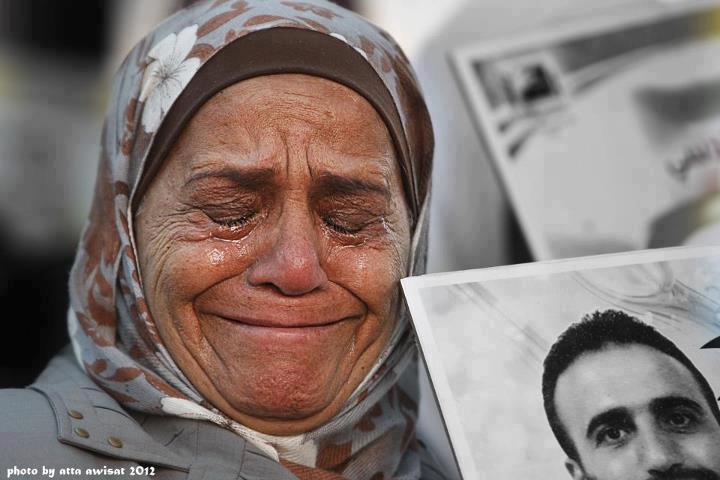
“The detainees spend their imprisonment waiting for their families’ visits,” Dad once said, recalling the Israeli Prison Service IPS punishing him by denying him family visits during his 15 years of imprisonment. “Despite all the suffering and humiliation attached to their procedures, family visits are as important to prisoners as the air they breathe.”
Following the capture of Gilad Shalid in June 2006, Israel collectively punished Palestinian political prisoners from Gaza by banning family visits, one of their basic rights and a lifeline between detainees and their families. “Under international humanitarian law, Israeli authorities have an obligation to allow the detainees to receive family visits,” said Juan Pedro Schaerer, the head of the ICRC delegation in Israel and the occupied territories.
Our detainees’ determination proved stronger than the jailers’ guns. In exchange for ending the one-month mass hunger strike in May, they made Israel comply with the international humanitarian law and reinstate family visits to Gaza Strip detainees after almost six years without them.
On July 16, 48 family members were finally allowed to see to their relatives in Israeli jails for the first time since Shalit’s capture, through barriers for 45 minutes. However, Israel imposed its own conditions on the visits. Only wives and parents were allowed to visit. Detainees’ young children weren’t, “for security reasons.” Fathers must imagine their children growing up without them, or wait for the miracles of their smuggled pictures.
Last Monday, August 6, the fourth group of detainees’ families gathered in front of the ICRC to visit their relatives in Nafha prison. The day before a visit, the ICRC usually announces the names of approved relatives.

Among those who received permits were the parents of detainee Yahya Islaih, who was captured on August 24, 2008 and sentenced to 12 years. His 75-year-old mother and 80-year-old father arrived very early at the ICRC, dressed very traditionally and beautifully. Yahya has not met his parents since his arrest. I used to see Yahya’s mother Aisha in the sit-in tents for political prisoners. She barely missed any protest, despite her advanced age. Last Monday was supposed to be her first reunion with her son in four years. But destiny stood between them.
Aisha breathed prayers of thankfulness that she had been blessed with another opportunity to talk to her son, and see him through a barrier after five years of separation. While sitting in the bus, wishing that time would move faster, she felt the gasp of death and leaned on a neighboring woman’s shoulder.
Later that morning, as I was getting ready to leave for the weekly protest for political prisoners, I read the terrible news. I found it difficult to believe that this had really happened. I thought that we only hear such stories on dramas. But it did happen. When she was so close to meeting her son again, she passed away. Death separated them, just as Israel had for so long.
I left home with tears in my eyes. When I arrived at the protest, people were very quiet. Everyone was in shock. I could read the sorrow in every eye. The elderly mothers of detainees cried while hugging the banners of their sons. Each seemed to wonder, “Will we share Aisha’s fate?”
Amidst silence and sorrow, the 75-year-old mother of detainee Ibrahim Baroud who has been detained for 27 years stood and began shouting. “Enough tears. Tears won’t bring her back to life! Just pray for her soul to rest in peace.” Om Ibrahim Baroud was in the first group issued permits to visit their sons on July 16. That was her first visit to her son, after 16 years banned “for security reasons.” “How would an elderly mother like me threaten their security?” she always complained. “They are simply heartless and merciless, and enjoy breaking mothers’ hearts over their sons.”
The world blamed her when she hurled her shoes at Ban Ki-moon’s convoy when he entered Gaza. She was angry and disappointed by his prejudice when he refused to meet prisoners’ families in Gaza, after repeatedly visiting Gilaad Shalit’s parents. But they didn’t know to how much she had suffered at Israel’s hands. Read the story of this incident, when shoes and stones welcomed Ban Ki-moon to Gaza, here.
After the protest, I went to say hello to her. “Are you joining us for the funeral, Shahd?” she asked, every wrinkle in her face revealing her sadness. “Yes, grandmother,” I answered, even though I hadn’t known of the plan. I wasn’t sure whether I wanted to go or not. Honestly, I fear funerals.
But when I said yes, she caught my hand so I could help her to the bus, and pushed me forward as if she sensed my hesitance. “When I saw her last Monday, she congratulated me for having visited my son, and sighed while hoping that her turn to see hers again would come soon,” Om Mahmoud said.
When we arrived at the funeral, we learned that Aisha hadn’t been buried yet. She was in a narrow room with two doors. It was crowded with women. They entered one by one from a door, kissed her, prayed for her, and then left through another door. I glanced at the scene, then pushed myself away, trying to postpone my turn. I recalled meeting my dear friend Vittorio Arrigoni for the last time as a dead body.
I stood next to a woman who happened to be Aisha’s niece. “Yahya wrote her a letter once, asked her to remain steadfast and know that she would see him again,” she said with tears streaming down her cheeks. “He asked her to wear her traditional Palestinian dress when she comes to visit him again. And she did. After she learned that she would visit him, she was very happy. She ironed her new dress, which she had kept for Yahya’s wedding after his release.” She burst out crying and continued, “But she neither visited him, nor would she ever attend his wedding.”
Finally my turn came. I entered, one foot pushing me forward, the other backward. I saw her body and kissed her forehead. I still can’t believe I did. Traumatized, I returned home in the afternoon and slept. I couldn’t stand thinking of her, nor her son, who would never see his mother, alive or dead again. I felt like I wanted to sleep forever, but I woke up after twelve hours.
Please pray for Aisha’s soul to rest in peace, and for her son to remain strong behind Israel’s bars. Her story is more clear and bitter evidence of the suffering our detainee’s families endure because of Israel’s violations of their basic rights and their families’.
‘Don’t tell my mother that I am blind’: Muhammad Brash grasps for light in the darkness of Israeli jail

Mohammed Brash when he became blind with one leg in 2001
Gilad Shalit, the Israeli soldier captured by the Palestinian resistance from his tank and held for five years, is known worldwide as a “victim” of the “terrorist” Palestinians.
But seeing how little the world knows of our Palestinian political prisoners infuriates me. There is not only one. Nearly five thousand Palestinians are behind Israeli bars, which are more like “a grave for the living.” as my dad ad, who spent 15 years in Israel’s prisons, frequently describes his detention.
Last night, while following the latest news on political prisoners, I saw a headline reading, “The medical situation of the detainee Muhammad Brash is deteriorating.” I’m certain few have read that name before.
Muhammad Brash, like every Palestinian hero locked up in Israel’s jails, has his own story, a human and heroic story that would touch any heart. I didn’t know him before I coincidentally – and tearfully – read his letter, “Don’t tell my mother that I have become blind.”
I want to introduce you 32-year-old Muhammad Brash to you in depth. But I’ll let his own poetic words first tell you who he is. Here is my translation of his letter:
Don’t tell my mother that I can no longer see. She can see me, but I can’t see. I fake my smiles when she shows me the photographs of my siblings, friends, and neighbors, as she doesn’t know that I have become blind after illness spread in my eyes until the darkness filled me.
Don’t tell her that I waited several years to have a cornea transplant surgery. But the Israeli Prison Service kept procrastinating and procrastinating, giving my eyes every reason to leave me.
Don’t tell her that the last thing I remember from the sweet days when I could see was a small child, running toward me, waving the Palestinian flag, and yelling, ‘A martyr, a martyr.’
Don’t tell my mother that the shrapnel of the bombs which managed to hit me is still settling in my body, and that my left leg was mutilated and replaced with a plastic one. Don’t tell her that the other leg rotted and dried of blood and life.
Don’t tell my mother that the prisoner survives a lifeless existence and is treated as subhuman. He is sentenced to see only ashes and iron, darkness and hopelessness.
Tell her I am alive and safe. Tell her I can see, walk, run, play, jump, write, and read. Don’t tell her I shoulder my pains on a walking stick, and can see every martyr as a moon, soaring in the sky and calling me with the power of lightning, thunder, and clouds.
Don’t tell her I suffer from sleepless nights, and that I live under the mercy of painkillers until they drug my body. Don’t tell her that I keep losing my things, and I barge into the iron beds or another prisoner sleeping close to me, to wake him to help me reach the bathroom. Don’t tell her that wakefulness always hurts me and sleep never visits me.
Don’t tell her that Israel, a country in the 21st century, has turned its prisons into places where diseases are planted and bodies slowly ruined.
Don’t tell her that I have learned the names of horrible illnesses and strange medications, along with all types of painkillers, while watching my friend Zakariyya fall into a coma, with an ending unknown to me.
Don’t tell my mother about the sick prisoners whose diseases launched fierce wars against their bodies: Ahmad Abu Errab, Khaled Ashawish, Ahmad al-Najjar, Mansour Mowqeda, Akram Mansour, Ahmad Samara, Wafaa al-Bis, Reema Daraghma, Tareq Asi, Mutasim Radad, Riyad al-Amour, Yasir Nazzal, Ashraf Abu-Thare, Jihad Abu-Haniyye. The merciless Israeli prisons slaughter them; there is an illness and a carelessness in a country that enjoys slow death sentences and funerals for others.
Tell her that I never stop dreaming of being wrapped in her tender arms. My nostalgia for her is great, and her soul never leaves me. Tell her that I have kept her gifts: my Arab tongue, my purity, my symbols stuck on the wall, all of which soothe my pain every time the light disappears around me.
Tell her that I always embrace her holy prayers, to survive the dark cloud that surrounds me after the pain has spread in my body and tortured me. I might return to her or I might not, but I leave the answer to this question open, although I’ve chosen to be spiritually close to her heart. Tell her I am sorry I have no control over my future.
Tell her I am not too far from her, and I get closer every time a bird flies and a fire burns in my eye, and barbed wires wound me, carrying me to her arms.
Learning about Muhammad
This letter began my spiritual relationship with Muhammad Brash’s persona. He became a new source of inspiration in my life and deepened my faith in the cause of the Palestinian political prisoners.
Muhammad somehow managed to smuggle his moving letter from Eshel prison during the campaign of disobedience, the 22-day mass hunger strike launched at the end of September 2011. He shared his own experience of medical neglect, attempting to shed some light on the Israel Prison Service’s inhumane practices against him and his comrades. Quality medical care always tops the list of our detainees’ demands whenever they start a mass hunger strike.
Eager to know Muhammad Brash in depth, I searched every possible source for more information on him. I wished I could visit his family and listen to their story first-hand. Sadly Israel’s apartheid made it impossible for someone from Gaza to meet another from West Bank, even though it’s only a couple of hours away.
A message from Muhammad’s brother

A photo of Muhammad Brash (right), and his brother Ramzy in jail
After a long search, I found a Facebook page called The Detainees Muhammad and Ramzy Brash. Only then I realized that Ramzy Brash was Muhammad’s brother, who shares his prison cell and is also sentenced to life-long detention. I left a post on their page saying how moved I was by Muhammad’s letter. Shortly after that, I received a message from his 22-year-old brother, Hamza Brash, saying he was ready to tell me all about Muhammad.
Muhammad’s family is originally from Abu Shosha village, which was ethnically cleansed in 1948. His grandparents fled to al-Amari refugee camp in Ramallah, where they still live.
Brother killed by Israeli soldiers, Muhammad wounded by a bomb
At the start of the second Intifada – which began in September 2000 – Israeli occupation forces invaded al-Amari, massacred people, and demolished their houses. An armed soldier shot Muhammad’s 15-year-old brother Subri, cutting his life short while he was throwing a stone. This moved Muhammad to join the resistance and defend his people’s dignity and sense of security.
At the same time, Muhammad worked as a policeman. In 2001, he had a night shift, guarding a Palestinian police station 50 meters from an Israeli checkpoint. As he entered his car to return home, it exploded. Later he learned there had been a bomb inside it. There was suspicion over who had done it, but his brother responded, “We have only one enemy: Israel! The rest of the story will prove to you that their denial of the responsibility for this crime is a lie.”
“Muhammad was found quite far from the explosion,” Hamza told me during a phone call. “People thought they had found a martyr. But thankfully the bomb didn’t kill him. It only left him blind with one leg.”
Muhammad was carried to a governmental hospital. But even while he was half dead, he was attacked again. “A masked man entered his room and stuck his fingers in Muhammad’s eyes, already blinded from the bomb,” Hamza said angrily. “After that, he was sent to a private hospital and was never left alone without guards.”
Arrested in 2003
“But how did he end up in prison?” I asked. “On 17 February 2003, the Israeli army besieged Al-Amarai preparing for a detention campaign,” Hamza replied. “We never expected that Muhammad would be the target. After his disability, how could he threaten Israel’s security?”
“A huge force of Israeli soldiers raided our house,” he said. “They found Mahmoud leaning against a wall, trying to stand. They attacked him and started shackling and blindfolding him, as if he could see or run away. The soldiers started harassing him because of his disability.” Hamza told me that he heard the head soldier telling Muhammad, “We wanted you dead, but when we heard that you were alive, we thought you should be our guest.”
Mohammed didn’t fear them. Hamza heard Muhammad telling the head soldier, “I’m sorry for you, you coward!” The head soldier laughed at him wondering “How come?” Then Muhammad answered him with pride and slight smile, “If you weren’t a coward, you wouldn’t come besiege the whole camp with thousands of soldiers to arrest a disabled man like me!”
At first, the Israeli court sentenced Muhammad to seven lifetimes. But then it was reduced to three life sentences plus 35 years in light of his health condition. “As if this merciless court made a difference! ” Hamza said angrily. “A life sentence was enough to make Israel’s prison his grave.”
Muhammad has served ten years of his sentence, and no one knows if he will ever be released. Ever since his arrest, he has suffered from medical neglect every day. It’s this that left Muhammad in two forms of darkness: His blind eyes that see no colors but black, and his dark cell where he dies every day and may spend the last day of his life.
More than 50 prisoners are either physically or mentally disabled. And as Dad said, recalling his imprisonment, “Being detained by the merciless jailers of the Israel Prison Service is enough to threaten your psychological health.”
Most of Israel’s shameful crimes, which offend any sense of propriety in any heart with any shred of conscience, were committed in the name of security. But how can they justify them in Muhammad’s case where he can hardly endanger their safety?
Read Mohammed Brash’s letter to his mother in Italian. The translation is done by the wonderful Italian activist Angela Bernardini
Akram Rikhawi’s family: “Are they waiting for him to return to us in a coffin?”
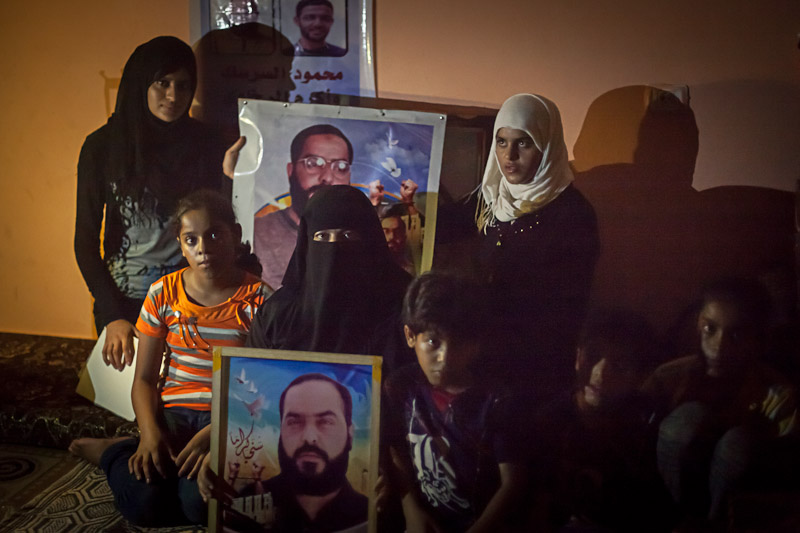
Akram Rikhawi’s family and I at their house in Rafah during the power-cut (by Magne Hagesæter)
The Palestinian football player Mahmoud Sarsak walks freely in Gaza’s streets and alleys, breathing victory among the steadfast people of the Gaza Strip. He acquired his strength to hunger for 96 days from Mahatma Gandhi’s words, “First they ignore you, then they laugh at you, then they fight you, then you win.” Gandhi’s promise came true, and Mahmoud actually won the battle of empty stomachs. Read my account of visiting Mahmoud Sarsak after his release.
Mahmoud was released from the Ramla Hospital Prison on July 10 after he revealed Israel’s crimes against humanity and made it submit to his demands. But his happiness remained incomplete. His thoughts are still in a place he described as “a hospital for torture, not for treatment,” with his comrades he left there, especially Akram Rikhawi, Palestine’s longest hunger striker in history.
About 6:00 pm on Thursday, the 99th day of Akram Rikhawi’s hunger strike, I saw a tweet: “Help us in spreading the truth about Prisoner Akram Rikhawi who might die at any moment #PalHunger”. As I read it, I felt anger at the world’s silence. I called Mahmoud Sarsak to ask for Akram Rikkawi’s home address. He kindly answered, saying, “Come to Rafah and I’ll take you there.”
Excited, I called some friends to join me, quickly got ready, and hurried to Rafah. The one-hour drive to Rafah felt like it took ages. We arrived there around 8:30 to find Mahmoud waiting. “Is it too late already to visit Akram’s family?” I asked him. He shook his head and said, “Their part of Rafah camp is filled with Yibna refugees. They stay up very late, especially Akram’s family. I don’t think they ever sleep!”
Before Mahmoud’s release, the Israeli Prison Service sent him to Akram to pressure him to break his hunger strike. Mahmoud took it as an opportunity to meet Akram for one last time, and to carry messages he wanted to deliver to his family. Akram was very happy for Mahmoud, and had faith that his victory would follow Mahmoud’s sooner or later.
The camp was very dark. I could barely follow Mahmoud’s steps. As we walked through one of the alleys, I recognized our destination from the huge banner of Akram hanging on his house. I could feel his family’s indescribable strength and faith from the way they welcomed us in with hopeful eyes and big smiles. There wasn’t any light in the house, but the smiling faces of Akram’s children filled it with light. Shortly after we arrived, we received word that Friday would be the first day of Ramadan. For Akram’s family, the news held some bitterness, as according to his wife Najah, it is “the eighth Ramadan without Akram.”
We all sat on the rug close to a lantern, the only light in a sitting room filled with photos of Akram. As his wife Najah started speaking, I learned that Akram is the son of a martyr, the brother of another martyr, and has a brother detained in Nafha Prison: a typical Palestinian family’s sacrifices for the sake of freedom and dignity. His father died in the First Intifada, while his brother was killed in the 1990s during a ground invasion by the Israeli Occupation Forces (IOF) in Rafah. His detained brother, Shady, became disabled after he refused food for 22 days during the mass hunger strike in Israeli prisons which began this year on Prisoners’ Day, April 17.
Akram Rikhawi has chosen to shoulder the responsibility for hundreds of disabled and ill political prisoners who grieve daily behind Israel’s bars and suffer its medical neglect. He also decided to rebel against the racist treatment that he received at the hands of some Ramle doctors. That was the main reason for his hunger strike. “After more than 100 days on hunger strike, Akram is in a wheelchair and cannot move either his left hand or leg,” Najah said. “Hunger has perhaps overtaken his body, but can’t easily defeat his will.”
“Before he started refusing food,” she continued, “he wrote a few articles on the suffering of sick prisoners and the medical neglect they endure, describing Israeli Prison Service violations against Palestinian detainees. He hoped they would pay his critical health conditions more attention and care. Instead, they punished him for speaking out by placing him in solitary confinement.”
Akram’s family described the Ramla Hospital Prison as “a slaughterhouse, not a hospital, with jailers wearing doctors’ uniforms,” using Akram’s situation as their best evidence. “He was detained at Ramla from the first day of his detention,” Najah said. “Before his arrest, he suffered only slightly from asthma. His health started to deteriorate when he was given the wrong medication.” She explained how this caused him severe health complications. “He had only one health problem, but medical neglect in Ramle Hospital Prison caused him six, including high blood pressure, diabetes, chronic problems, and osteoporosis, sight problems, and queasiness.”
Physicians for Human Rights-Israel (PHR-IL) previously reported that its doctors had found an “alarming deterioration of Akram’s asthma, which continues to be unstable,” adding that they believed he “has been given very high doses of steroids as treatment, which can cause severe long-term and irreversible damage.”
Najah managed to visit him twice. But since the ban on the family visits for the families of Gazan detainees in 2006, which followed the capture of Gilaad Shalit, they no longer can. “We can neither visit him, nor receive letters or phone calls from him. Our two main sources of information we rely on have been the International Committee of the Red Cross (ICRC) and released prisoners, who coincidentally met him after being sent to Ramla because of health problems they suffered.”
My admiration reached its utmost when I learned that Najah was actually the wife of Akram’s martyred brother. “I was a young widow of five children when my first husband Mo’taz was killed with cold blood by the IOF,” she said. “Akram was still single, and decided to take responsibility for his brother’s orphaned children and widow. So he married me. Allah blessed us with eight more children.”

One of Akram’s youngest twin who were born a little before his arrest and knew their Dad from photos.
Then a young woman interrupted our conversation. “I’m Yasmeen, my mother’s eldest daughter,” she said. “My father died when I was four years old. I can barely remember him. But I recall very clearly how tenderly my father Akram raised me. I never felt like an orphan around him. He always treated his children and his brother’s alike and loved us all the same.”
“He was always like a best friend to me,” Yasmine continued. “I was having my high school exams when he was arrested. During my final exams, he used to stay up with me to study. He never allowed me to prepare anything. He would bring food to my room. He used to wake me up for the Fajer prayer. Allah has made everything up to me when he guided Dad Akram to marry my mother.”
“I was the dearest to his heart, and he sometimes teased me, saying that I was the reason for his detention,” she said. “On June 7, he walked me to school in the morning before my exam. He spent the entire trip reminding me that I should have faith in Allah and not worry. Then he headed to Gaza City. On his way home in the afternoon, the IOF stopped the vehicle at the Abu Ghouli checkpoint between Gaza City and Rafah and demanded to see all the passenger’s IDs. After handing over his ID, Dad Akram was immediately arrested. In his first letters from prison, he wrote that his friends had warned him that the situation was worrying, and that he should remain in Gaza. He refused, saying he needed to check how I did in my exam.” Yasmeen said this with a slight smile on her face. After Akram’s detention, she could barely continue her examinations, and finished them with an overall score of 55.
Then a 17-year-old girl walked in, looking very upset. “This is Akram’s eldest daughter,” Yasmine said as the girl sat silently in the corner. “She’s repeating the same experience I had since Dad’s detention. This morning, the high school results were announced. She is sad that she got 75%, while she has been always one of the brightest students. It was difficult for her to concentrate on her studies while expecting that she might wake up any morning to mourn her father’s death.”
The family’s situation was heartbreaking. I listened carefully to their sad stories and struggled to hold my tears. I felt most moved when his wife pointed at her twin youngest sons and said, “A little while ago, they came to me asking what their father looked like. Was he tall or short, fat or slim? Their age equals the years Akram served in detention. They only know him from photos.”
I could feel the family’s anger and disappointment with popular and international solidarity. “What are the human rights organizations, Hamas, the PA waiting for before they move?” his daughter Yasmine asked severely. “Are they waiting for him to return to us in a coffin? Would they be happy for eight children to become fatherless, and five others to be orphaned for a second time? If Dad dies, we will never forgive anyone who could have done something, but chose to look away.”
Don’t choose to look away. Akram Rikhawi is in desperate need of your urgent actions to save his life. It is late, but it is not over. You can still do something, anything, to contribute to his survival.
Mahmoud Sarsak: “It’s not my victory, it’s yours”
It was 5:00 pm when I decided to escape my home for a place the power-cut hadn’t reached on June 18. Badia, the restaurant closest to the International Committee of the Red Cross (ICRC), is always my first option. Whenever I need to leave the sit-in tent to work on my laptop, I get there after walking less than five minutes. I was drowning in stress from my final exams. I had to double my efforts studying, as I had spent more of the last semester worrying about hunger-striking Palestinian political prisoners than my classes.
Even with stress from being unprepared for any exam, it was difficult to concentrate. My thoughts were filled with the revolution of empty stomachs inside the Israeli jails. June 18 marked the 90th day of the hunger strike Palestinian footballer Mahmoud Sarsak had launched against his unjustified three-year detention under Israel’s Unlawful Combatants Law. His hunger for freedom had pushed his life to the edge of death.
I lost track of time while alternating between news Web sites and literary ones for my class. Dad called me, reminding me to return home early. Just before I closed my laptop, I refreshed my Twitter page to see a Tweet saying, “Israel to Release Mahmoud Sarsak on July 10.” I quickly collected my things and ran toward the ICRC, so excited I even forgot to pay my bill.

Hana’ Shalabi in the sit-in tent for Mahmoud Sarsak
Even the smell of the air seemed different when I stepped outside. Freedom filled the atmosphere. The chants I heard from the ICRC at Badia’s entrance made me run. The first person I recognized at the sit-in tent was the heroine Hana’ Shalabi, the ex-detainee who hunger-struck for 43 days to win her freedom, under the condition of expulsion to the Gaza Strip for three years. I ran to her and she hugged me happily, saying, “Congratulations on Mahmoud’s freedom!” Everyone was raising victory signs and singing for freedom. Then a man with a huge tray of sweets arrived and started distributing them.
I arrived home very late to find Dad waiting in the dark garden, looking upset. I didn’t want anyone to spoil my happiness, so I walked toward him chanting happily, “We defeated the jailers!” I was sure he hadn’t heard about Mahmoud, as our power was still cut. “Mahmoud will be free on July 10,” I said while looking at Dad, whose face turned into a smile. “People are still celebrating at the ICRC. Hana’ Shalabi was even there.” I was smart enough to find a way to negate his anger.
People in Gaza waited eagerly for July 10, a day that will be commemorated in the history of Palestine. All Palestinian television and radio channels reported this magnificent event. Thousands of people welcomed Mahmoud by the Erez crossing, the same place he was arrested around three years ago. As the ambulance arrived at the Gaza Strip side of Erez, Mahmoud appeared in its window, holding a football with one hand and waving with the other to the crowd of people excitedly waiting to see him.
Despite hating long drives, last Friday, I was crazy enough to tolerate a one-hour trip to visit Mahmoud’s house in Rafah, knowing he might not even be home. A group of foreign activists joined me in my adventure. “And what if he isn’t there?” my friend Fidaa, a Palestinian-American human rights activist, asked. “We’ll wait for him to come back!” I answered immediately.
We arrived at Star Square, near where the star Mahmoud lives. Thanks to posters and graffiti spread all over the walls of the Rafah refugee camp’s alleys, it was easy to find his house. “The groom just left for Gaza City,” his neighbors told us, but we were still excited to be at the house where “the groom” grew up and to meet his parents, who raised him to be a revolutionary.
Mahmoud’s parents were very friendly and welcoming. His house was small and simple, yet full of warmth and joy. It was crowded with neighbors, relatives, and strangers who, like us, had travelled the Gaza Strip to meet Mahmoud. Many of us had no relation to him, but following his struggle since the early days of his hunger strike made us feel connected to him. Mahmoud Sarsak, a Palestinian hero, has become a symbol of our resistance.
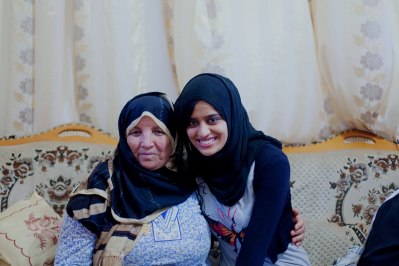
Mahmoud Sarsak’s mother and I at their house in Rafah (Magne Hagesæter)
“Words can’t describe the happiness I felt when Mahmoud regained his freedom after his unjust detention,” his mother told me. “It felt like my son had escaped the grave! But Mahmoud wasn’t afraid of his. He chose a battle that would lead him to either freedom or martyrdom.”
We asked her how she had gotten news about him during his detention. “Of course, three years passed without a single visit, the same suffering that all Gazan detainees’ families have shared since 2006,” she replied. “So we relied on the ICRC for updates on his situation.”
“We were denied any news for an entire year,” she continued. “After that, we were thankfully able to receive letters from Mahmoud through the ICRC for a short period of time, but I can’t read. Whenever we received a letter, his brother Emad would lock himself in a room and cry for hours. After pulling himself together, he would come out and tell me not to worry, as Mahmoud was doing fine and still playing soccer.”
“During Mahmoud’s strike, I was physically and psychologically exhausted. My sons had to take me to the hospital several times. But I felt like I had returned to life once I heard that Israel had agreed to free him in exchange for an end to his hunger strike. I pray for all detainees’ mothers to experience such relief and celebrate the freedom of their sons.”
The house grew increasingly crowded with visitors. So we left to give others the opportunity to talk with Mahmoud’s wonderful mother.
But I couldn’t give up on meeting Mahmoud himself so easily. We had already travelled from the northernpost point to the southern tip of the Gaza Strip looking for him! So I called his brother Emad, whom I had met frequently in the sit-in tent. When he picked up the phone, I told him I had just visited his family with a group of friends, and that we were very happy to meet his parents. He appreciated our visit, and suggested we meet them in a Gaza restaurant. Excited, we accepted his offer.
We arrived at the restaurant by sunset. My heartbeats grew faster as the time for our meeting drew closer. I could see Emad waiting for us by the entrance. He welcomed our group inside and introduced us to Mahmoud, who nicely asked us to join his table. I felt very nervous sitting directly across from him, but proud that I could look him in the eye while speaking to him. He wore two gold medals and a scarf combining the Palestinian flag and keffiyeh.

That’s when we finally made it and met with Mahmoud Sarsak at a restaurant in Gaza City.
“Thanks to Allah for your release,” I said. “How does it feel to be free again?”
“My happiness is incomplete, as the revolution of empty stomachs is still going,” he answered. “My thoughts are with my comrades Akram Rikhawi, Samer Al-Barq, and Hassan Al-Safadi, who are suffering critical conditions in the Ramla Hospital Prison. I was released from there, and know perfectly the medical neglect detainees suffer there. The Israeli Prison Service doesn’t transfer us there for treatment, but for torture.”
His humbleness added a lot to his charm. He kept repeating that he wouldn’t have achieved his victory without the popular and international solidarity he received. “It’s not my victory, it’s yours. I gained my strength and poise from you.” It was obvious that he had lost a lot of weight, but he was still healthy. Joe Catron, an American activist who has met many freed prisoners, said later that he had never seen a recent hunger striker in such good shape.
Mahmoud’s smile didn’t leave his lips the whole time. He paid us all his attention. When I asked him if Gaza seemed different after three years, he laughed and said, “It looks so different to me. Gaza is a very beautiful city despite its small size. I love its beach, its pure air, and its kind people. I missed everything about Gaza. I just missed being home.”
Fidaa asked Mahmoud if he expected to be arrested three years ago when he went to the Erez crossing. “Not at all!” he said. “I was thrilled to achieve a dream to play football in a national team contest in the West Bank, in the Balata refugee camp. When they ordered me to a security meeting, I wasn’t afraid. I expected they would ask me to collaborate with them. I was confident and prepared myself to reject them. I was shocked when they aggressively shackled me.”
I interrupted, asking, “Why do you think they arrested you if you have never participated in resistance?”
“Resistance isn’t only about armed struggle,” he said. “Resistance can be through pen, brush, voice, and sport. We are all freedom fighters, but each of us has his or her own weapon.” His eloquent, passionate answer impressed us even more than we already were.
“Sport is a form of non-violent resistance,” he continued. “Being a representative of Palestine’s national football team makes me a threat to Israel. I’ve always been passionate about building Palestine’s presence in the sports world. I represented Palestine in several football matches locally and internationally, and had the honor of waving its flag wherever I played.”
The more he spoke, the more I admired him, especially when finally I asked him what had changed in his character after his imprisonment. “My faith in our just cause has become deeper and stronger,” he replied. “My determination to unveil the Zionists’ inhumane and fascist practices, and their violations of our basic human rights, has become my reason to live.”
The time grew late, and we had to end our amazing conversation. Mahmoud Sarsak is one of the most inspiring people I have ever met. I will remember every word he said as long as I live. According to him, we all contributed to his victory. Let’s unite to achieve more victories for Akram Rikhawi, Hassan Al-Safadi, and Sammer Al-Barq. Make them reasons for your life, and fight injustice any way you can.


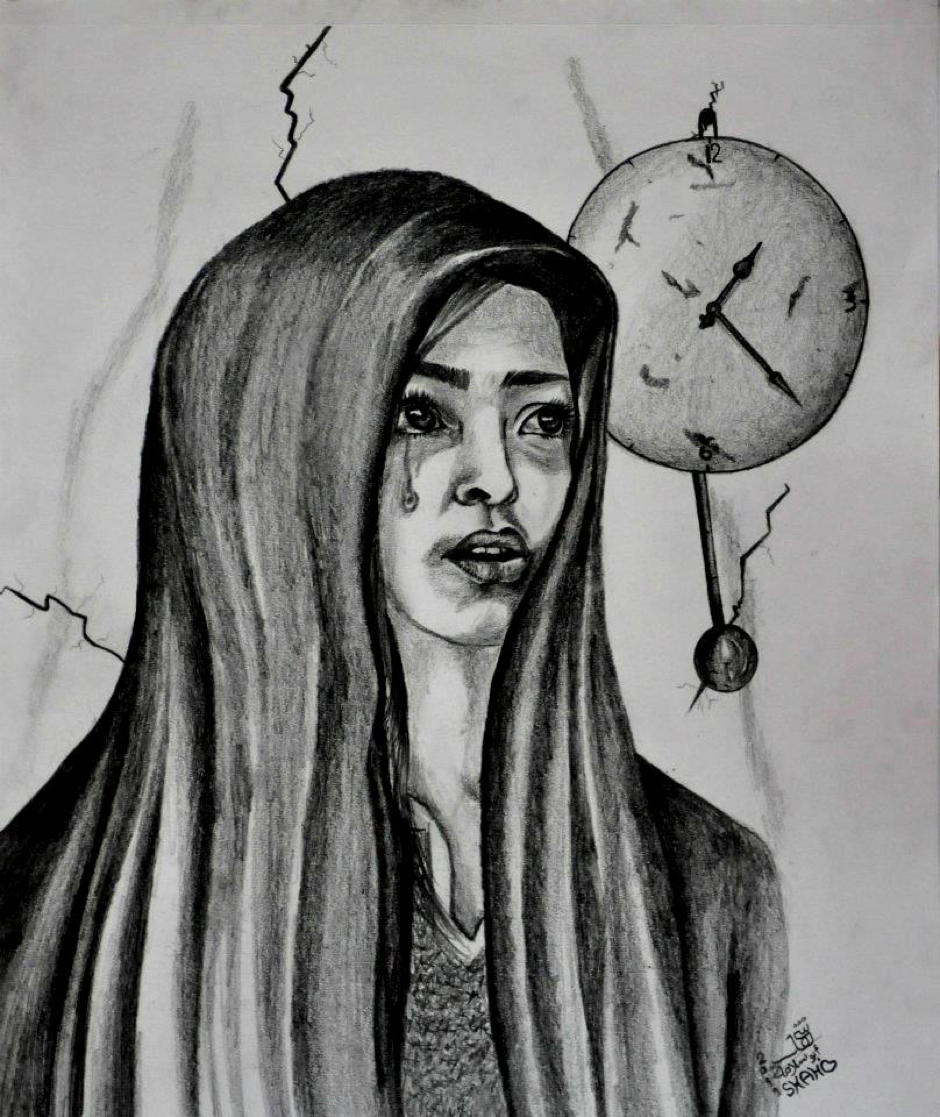


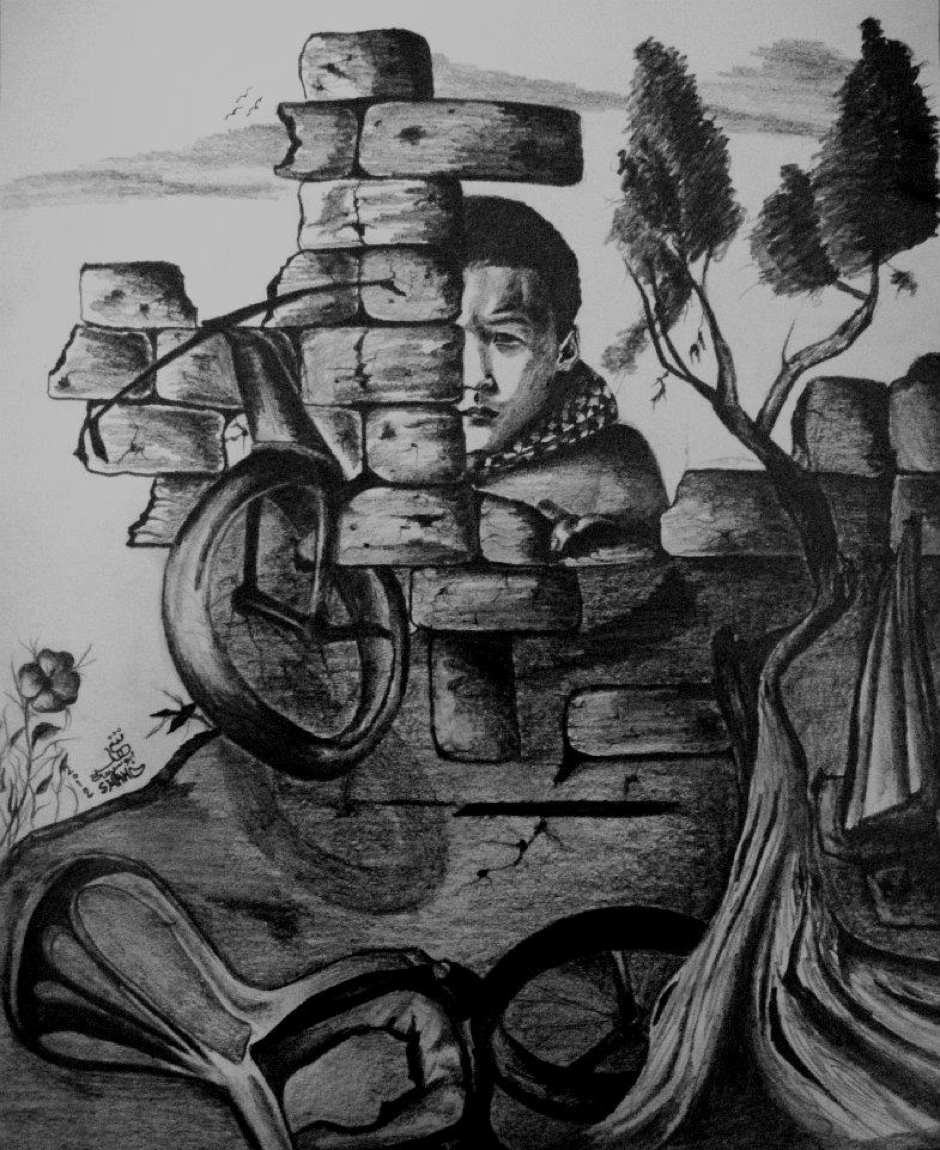
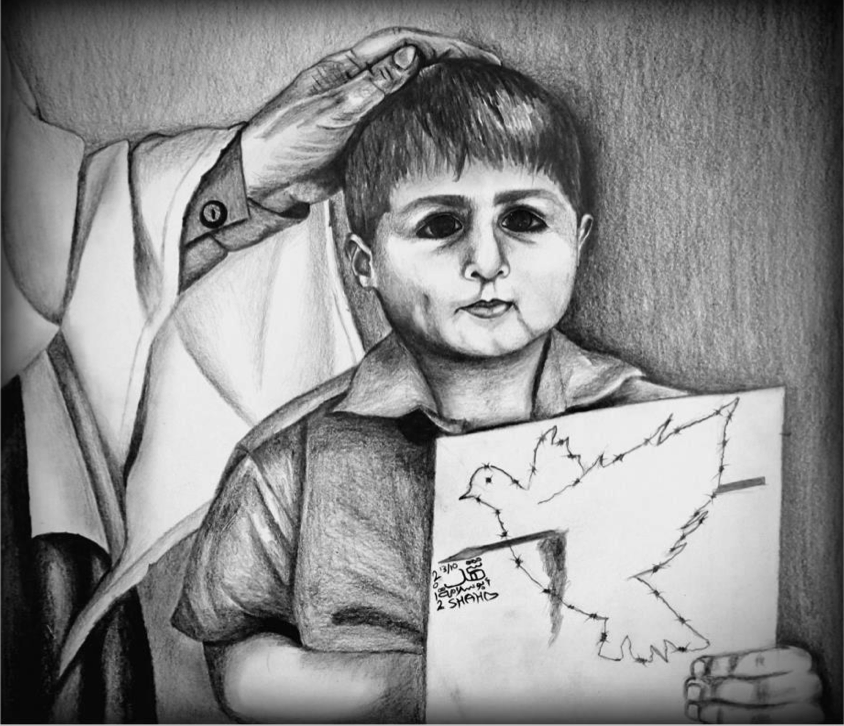
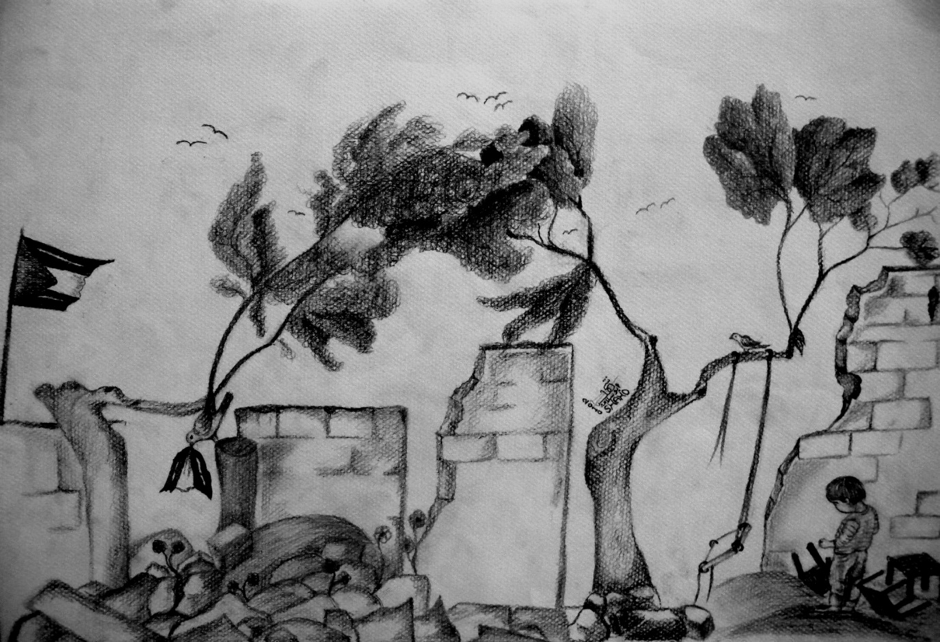

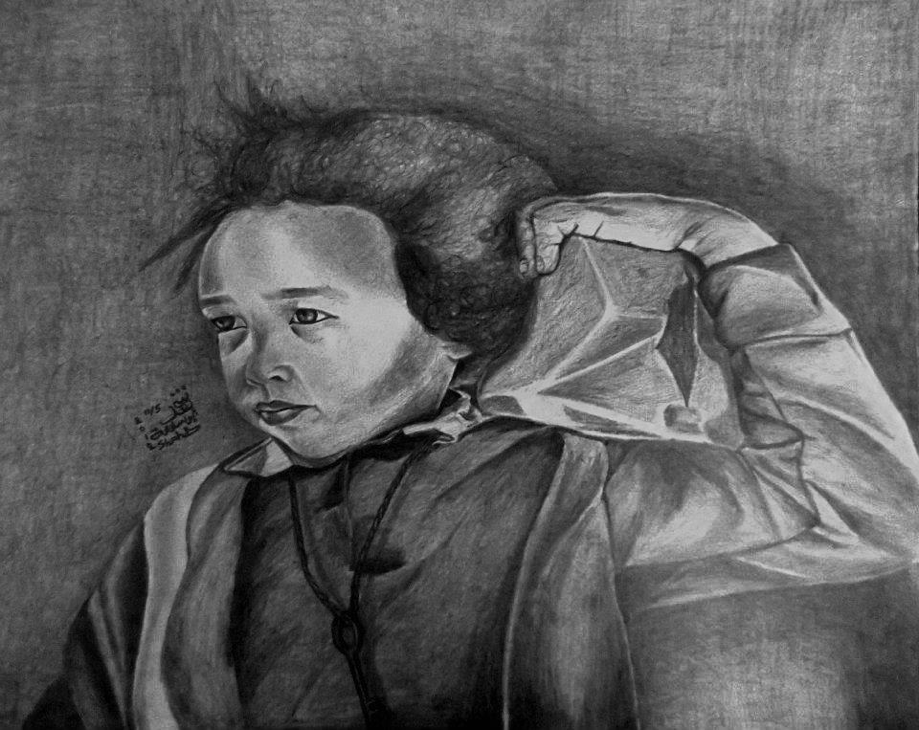


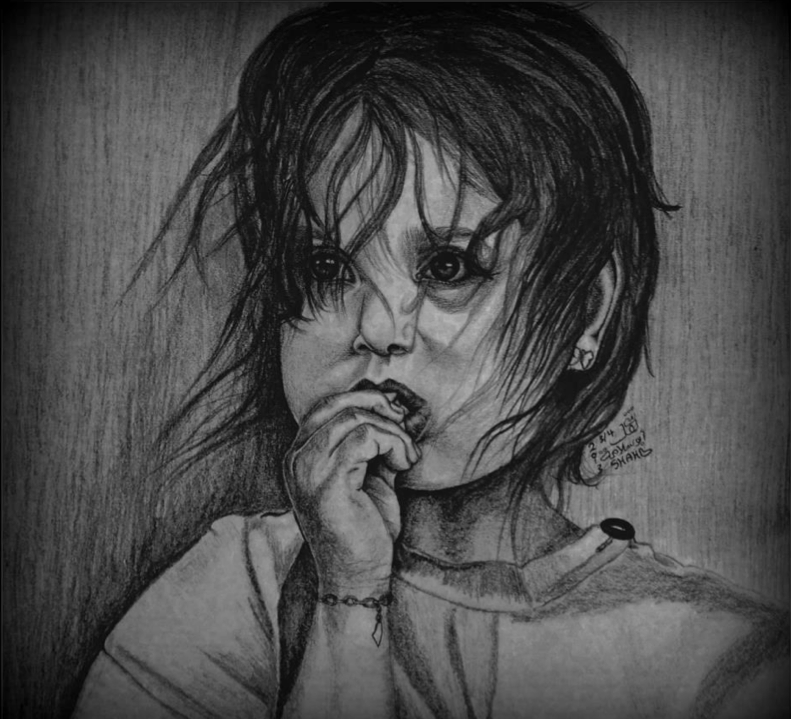
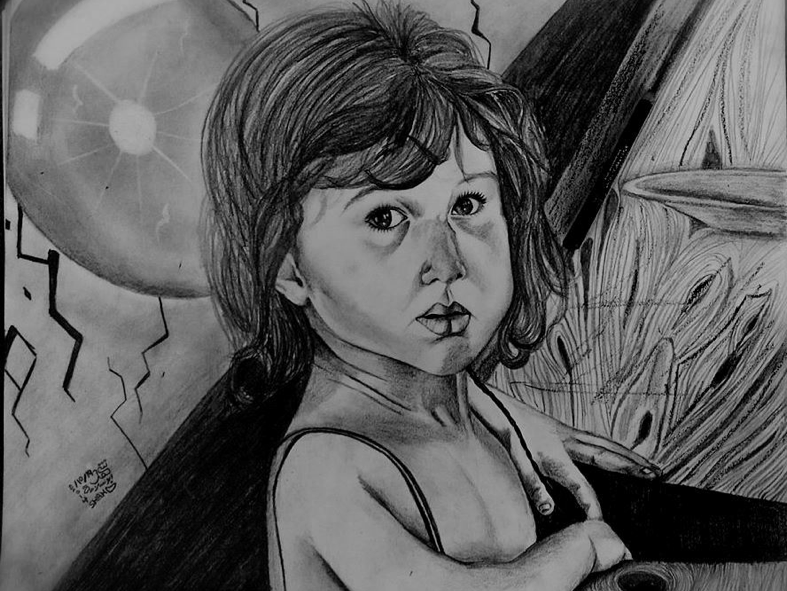
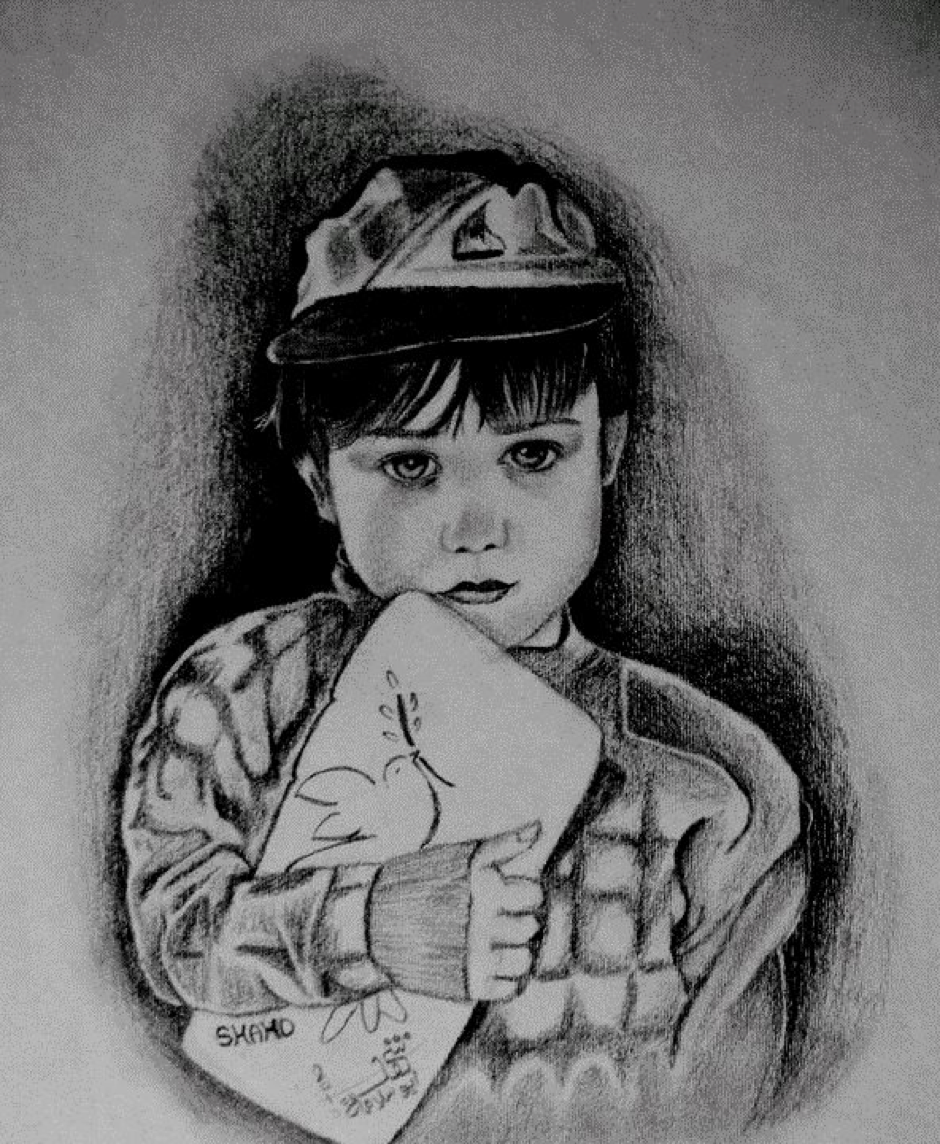


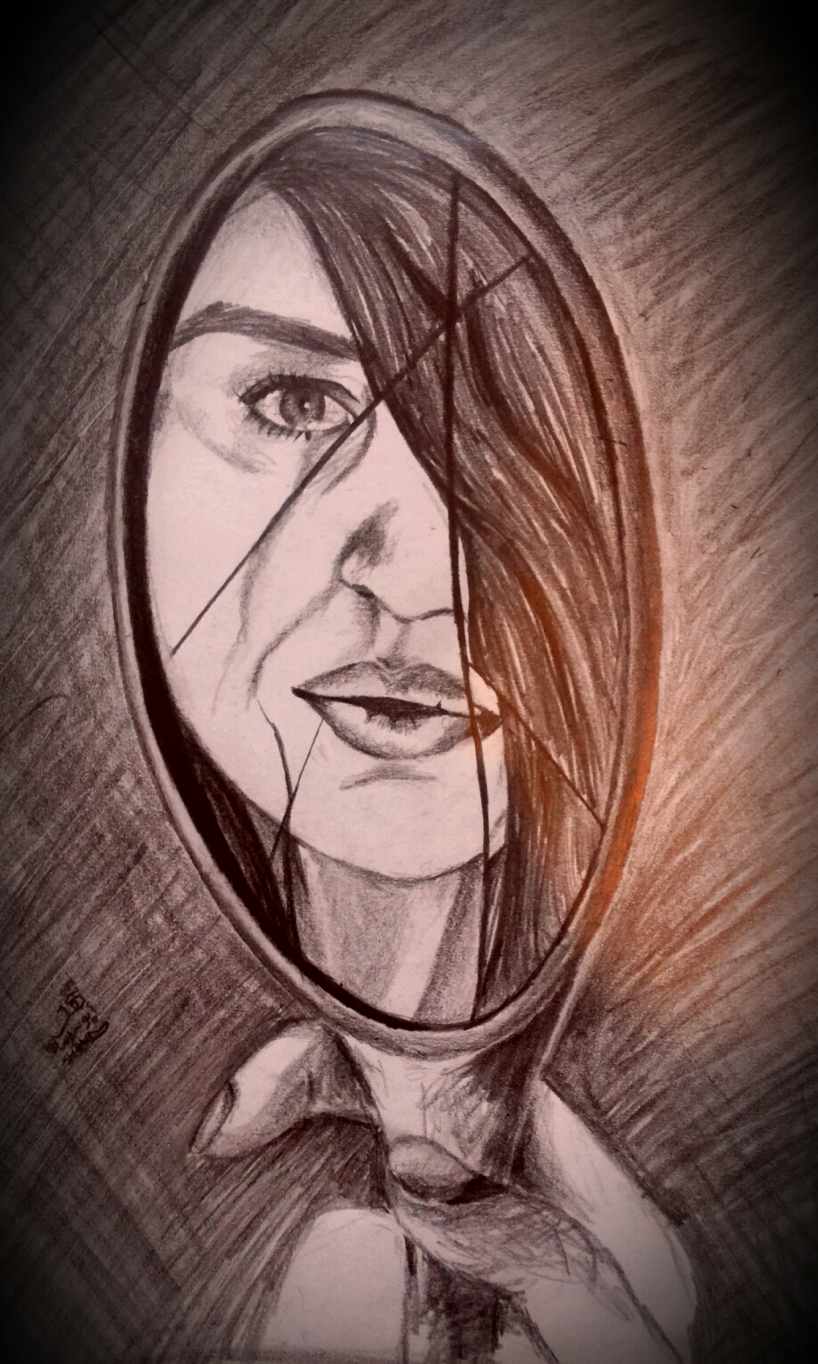
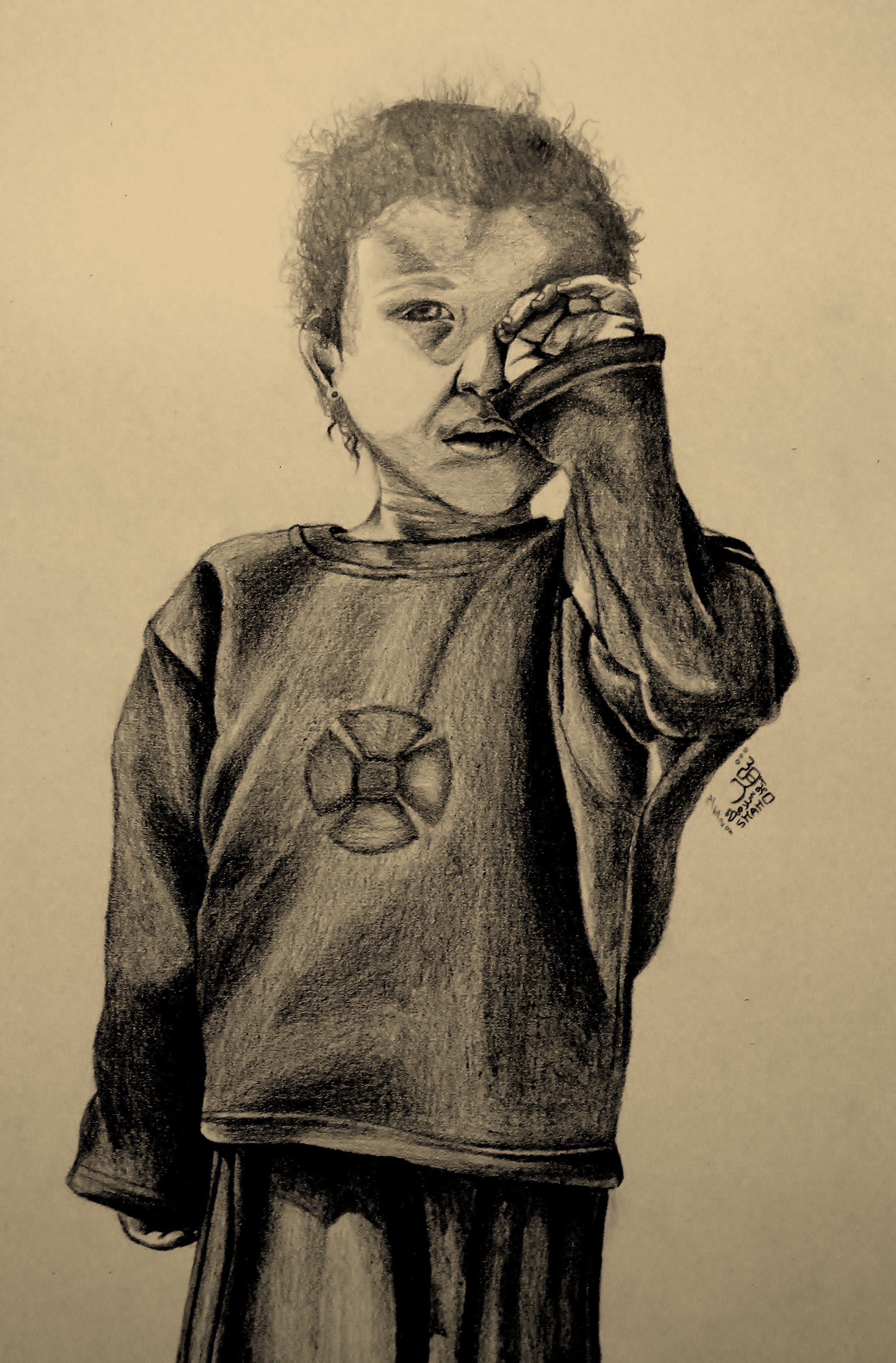


 PALESTINE FROM MY EYES
