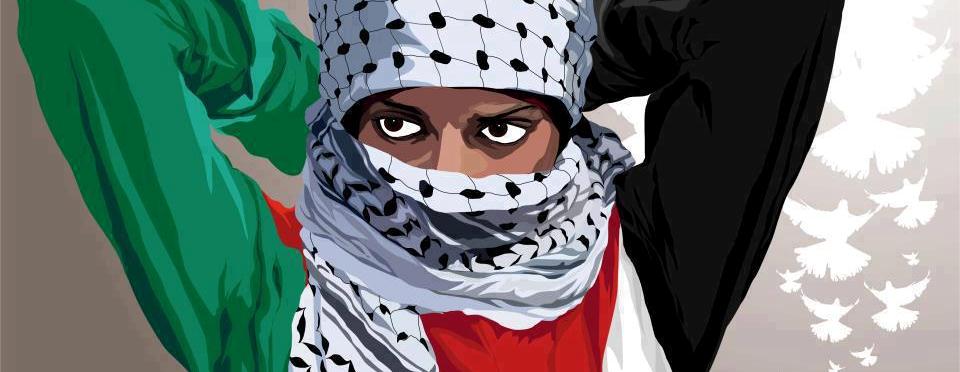
A mixture of feelings as prisoners near freedom
 A very confusing feeling passes through me after hearing about the exchange of 1,027 Palestinian detaineesfor the only Israeli soldier, Gilad Shalit, who was held captive by the Palestinian resistance fighters. I don’t know whether to feel happy or sad.Gazing at the faces of the prisoners’ families in the solidarity tent in Gaza City, I see a look that I have never seen before: eyes glittering with hope. These people have attended every event in solidarity with our detainees, have never given up hope that their freedom is inevitable someday, and have stayed strong during their loved ones’ absence inside Israeli cells. Thinking about those women whose relatives are most likely to be released and seeing their big smiles makes me happy. But at the same time, thinking about the other 5,000 detainees who will steadfastly go on with their resistance in the prisons makes my heart break for them.Hearts aching for those still in jail
When I arrived at the tent on 12 October, the wife of the prisoner Nafez Herz, who was sentenced to life-long imprisonment and has been jailed for 26 years, shook hands with me and said very excitedly that she had heard that her husband would be freed. Then she said, “But you can’t imagine how much my heart aches for those families whose prisoner will not be released in this exchange deal. All prisoners’ families have become like one big family. We meet weekly, if not daily in the Red Cross, we share our torments, and we understand each other’s suffering.” I grabbed her hands and pressed them while saying, “We will never forget them, and God willing, they will gain their freedom soon.”
While I was writing this article among the crowd of people at the Red Cross building, I suddenly heard people chanting and clapping and could see a woman jumping with joy. While on the phone, she said loudly, “My husband is going to be free!” Her husband is Abu Thaer Ghneem, who received a life sentence and spent 22 years in prison. As I watched people celebrating and singing for the freedom of the Palestinian detainees, I met his only son, Thaer. He was hugging his mother tight while giving prayers to God showing their thankfulness. I touched his shoulder, attempting to get his attention. “Congratulations! How do you feel?” I asked him. “I was only one day old when my father was arrested, and now I am 22-years-old. I’ve always known that I had a father in prison, but never had him around. Now my father is finally going to be set free and fill his place, which has been empty over the course of 22 years of my life.”
His answer was very touching and left me shocked and admiring. While he was talking to me, I sensed how he couldn’t find words to describe his happiness at his father’s freedom.
The celebration continues for an hour. Then I return to my former confusion, feeling drowned in a stream of thoughts. The families of the 1,027 detainees will celebrate the freedom of their relatives, but what about the fate of the rest of the prisoners?
Don’t forget the hunger strike
I have heard lots of information since last night concerning the names of the soon-to-be-released prisoners, but it was hard to find two sources sharing the same news, especially about Ahmad Saadat and Marwan Barghouti and whether they are involved in the exchange deal. I’ve always felt spiritually connected to them, especially Saadat, as he is my father’s friend. I can’t handle thinking that he may not be involved in this exchange deal. He has had enough merciless torment inside Israeli solitary confinement for over two and a half years.
Let’s not forget those who are still inside the Israeli occupation’s prisons and who have been on hunger strike, as this hunger strike wasn’t held for an exchange deal, but for the Israeli Prison Service to meet the prisoners’ demands. The people who joined the hunger strike in Gaza City has included those with loved ones in prison. We have to speak out loudly and tell the world that Israel must address our living martyrs’ demands. We will never stop singing for the freedom of Palestinian detainees until the Israeli prisons are emptied.
Press here to read this article in French.
Press here to read it on Electronic Intifada.
“Prisoners are the living martyrs”

I haven’t been getting enough sleep lately. Last night I was exhausted in body and mind, but tried to keep my eyes open to follow updates on the Palestinian prisoners’ conditions. My heart and mind were with them completely, in every corner of the horrible Israeli prisons where our heroes continue to display persistence and steadfastness.
Deciding to rebel against the cruel conditions they could no longer endure, hundreds of prisoners started a hunger strike on 27 September. Approximately 6,000 detainees inside Israeli prisons are forgotten about and treated as if they are less than animals.
Israel, which claims to be the only democracy in the Middle East, seems to forget that prisoners are humans and have rights. The Palestinian prisoners are on hunger strike in the hope that Israel will grant their simple demands. But while they are calling in loud voices for their rights, Israel is reacting negatively, using every method it has to force the prisoners to give up. Prisoners are being sent to isolation cells in increasing numbers, family visits and lawyers are being denied, families threatened, and identity cards, belongings and clothing confiscated. This is all in addition to the constant torment they already have to endure.
Israel is violating international law and nobody is stopping it. Oh, pardon me for forgetting that Israel is beyond any law! Approximately 285 Palestinian children are currently imprisoned, and the world is still silent. Nobody will dare challenge Israel.
I am very emotionally attached to the prisoners’ issue, especially their hunger strike, not only because I am Palestinian but also because I am the daughter of a released prisoner. I was brought up hearing my father’s sad stories, full of suffering and despair, which remain stuck in his memory and will never leave him.
My father’s experience of hunger striking
My father’s eyes would have never seen the sun if Ahmad Jibril of the Popular Front for the Liberation of Palestine — General Command (PFLP-GC) didn’t manage to make a deal exchanging three Israeli prisoners he held captive in 1985, in return for the release of 1,250 Palestinian political prisoners. My family was watching the news concerning the current prisoners’ hunger strike when Dad started telling us about his imprisonment, which lasted for 15 years.
“I witnessed and participated in the longest hunger strike in the history of Palestinian prisoners in 1982, which lasted for 33 consecutive days,” he said. “Three prisoners died and tens of cases were sent to hospital, including about 27 for dehydration, but what else could we do to pressure them to provide us with the smallest things?”
Thinking deeply about my father’s words, and trying to imagine the awful conditions of the Palestinians inside the merciless Israeli jails, broke my heart. All the unbearable treatment prisoners endure is totally unfair and against humanity.
Before I wrote this article, I took part in a Gaza City demonstration in solidarity with these prisoners, whose health is getting worse every day, but who will bravely continue. I was lucky to not have early lectures at university, so I could be there at 9:00 am protesting against the situation facing our prisoners. I had some conversations with other women protesting there, too. Most of them were either released prisoners or had sons, brothers, or husbands in prison and on hunger strike.
One of them was a mother of six children, who grew up as if they were fatherless — her husband is spending his 26th year inside a damned Israeli prison. “I was one month pregnant with my youngest girl, who is 25 years old now, when my husband was arrested,” she said. “My oldest girl was only seven years old. All my kids do have a father but they became adults without their father around, like orphans.”
She kept describing to me how hard it was to be alone without her husband taking care of six children, and how much she suffered and endured to make her husband, sentenced to lifelong imprisonment, proud of his children when he hopefully someday gets his freedom back. “I was very young, only 24 years old, when he went to prison. I stayed in this state of a married woman who has to live without a husband for 26 years for my six children. Thankfully, I now have 25 grandchildren,” she said proudly.
Miracles needed to contact prisoners
Then she burst out crying, and said that she was worried because she heard that the Israeli army attacked Ashkelon prison where her husband is held the day before. They violently attempted to force the impossible — to make the hunger strike end.
I couldn’t hide my tears anymore, despite trying so hard not to let them fall. I didn’t know what to do to calm her down. The woman told me that she and all other prisoners’ families have been denied visitation rights since Hamas won the 2006 election. They hear nothing from their imprisoned family members, except rarely, when some miracle happens; like when someone from the West Bank visits relatives who are imprisoned with her husband. Then, her husband can ask the visitor to convey a message to her that he is doing well.
I couldn’t say anything but for prayers that God provide her with patience and that her husband gets his freedom back soon.
My father has always said that prisoners are the living martyrs. I think they really deserve this honor for all the injustice and suffering they endure. This open hunger strike of the Palestinian prisoners will continue until Israel addresses their demands. International solidarity is needed now more than ever. Everyone needs to wake up and do something. We shouldn’t let the cruel conditions of the Palestinian detainees last forever.
To your living soul, Vittorio Arrigoni
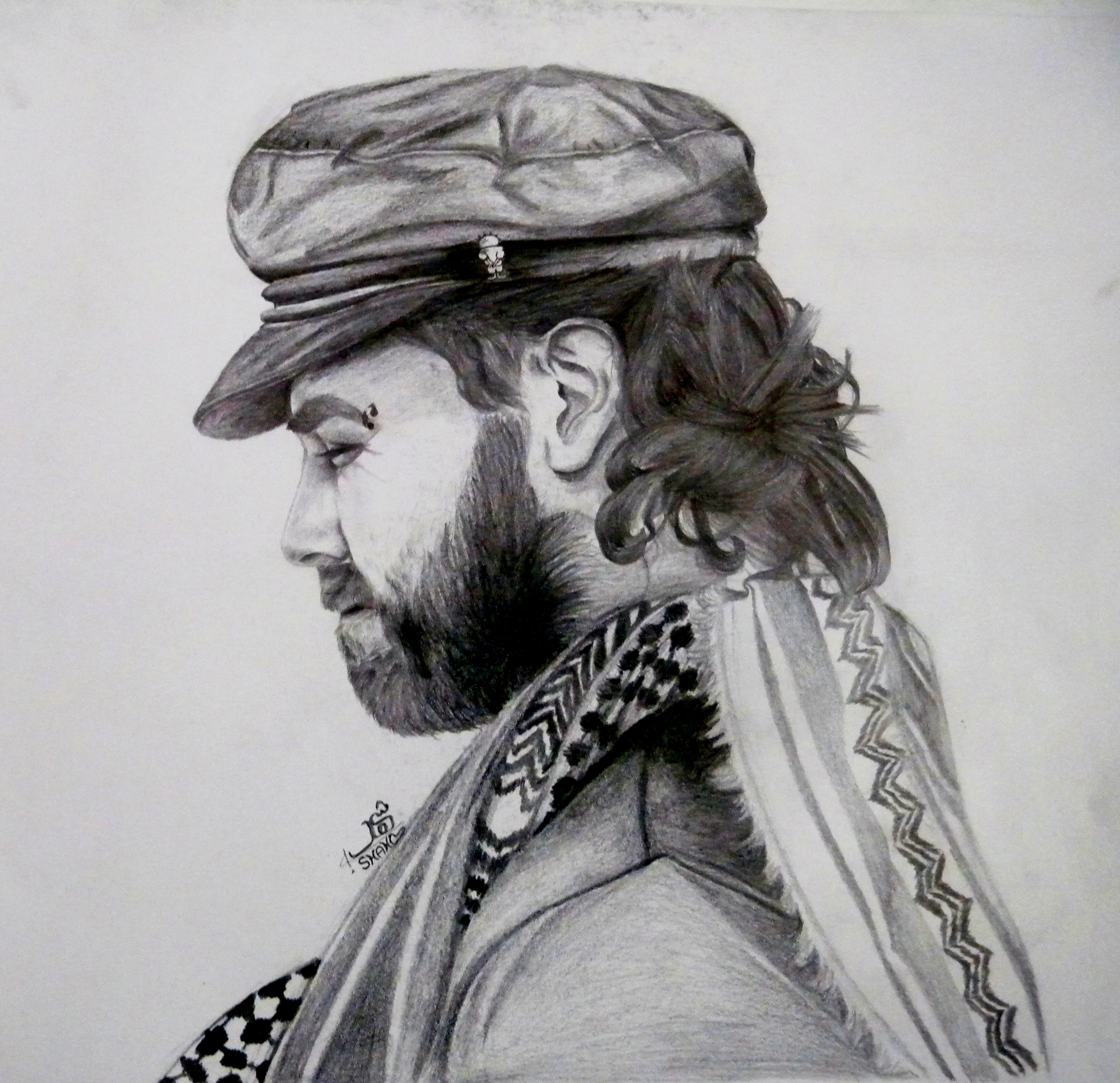
Devastated. This is me since you passed away Vittorio. This utter shock won’t leave me alone. It’s the fifth day since your heartless killers cut your life short.
When I learned that you were kidnapped on the 14th of April, we were just welcoming Majed, my brother, home, after 10 months of traveling around Europe. One hour after his arrival, my dad received a call informing him that Vittorio was kidnapped turning the festive atmosphere into sadness. I didn’t believe what I heard and I shouted, “Impossible! This can’t be true. And if so, he would be joking with his kidnappers repeating his favourite word ‘mushkili!’” I laughed but quickly paused as I read concern on everyone’s faces. I hurried to call you and I found out that your mobile was still turned off. Then my heartbeats started getting faster and faster as I tracked back my memories from the day before.
You texted me during the evening of the 13th saying, “I will be free at 16:00. Bring your drawing book to do my portrait. I have a bar of chocolate for you.” I called you multiple times since the morning of the 14th, expecting to meet you at Al-Salam Cafe, our favourite place at Gaza beach. It was turned off.
“You Italians beat Arabs when it comes to disrespecting time,” I remember thinking. I was planning to argue with you when I see you next or when you turn your mobile on again, thinking that you had cancelled on me. It didn’t come across my mind that there was any chance you could be in danger, here in Gaza where you always felt home! I am very sorry I misread the situation. You neither forgot about our meeting, nor my addiction to chocolate. And you wanted my drawing, until the day that I refuse to accept it being the last day of your life.
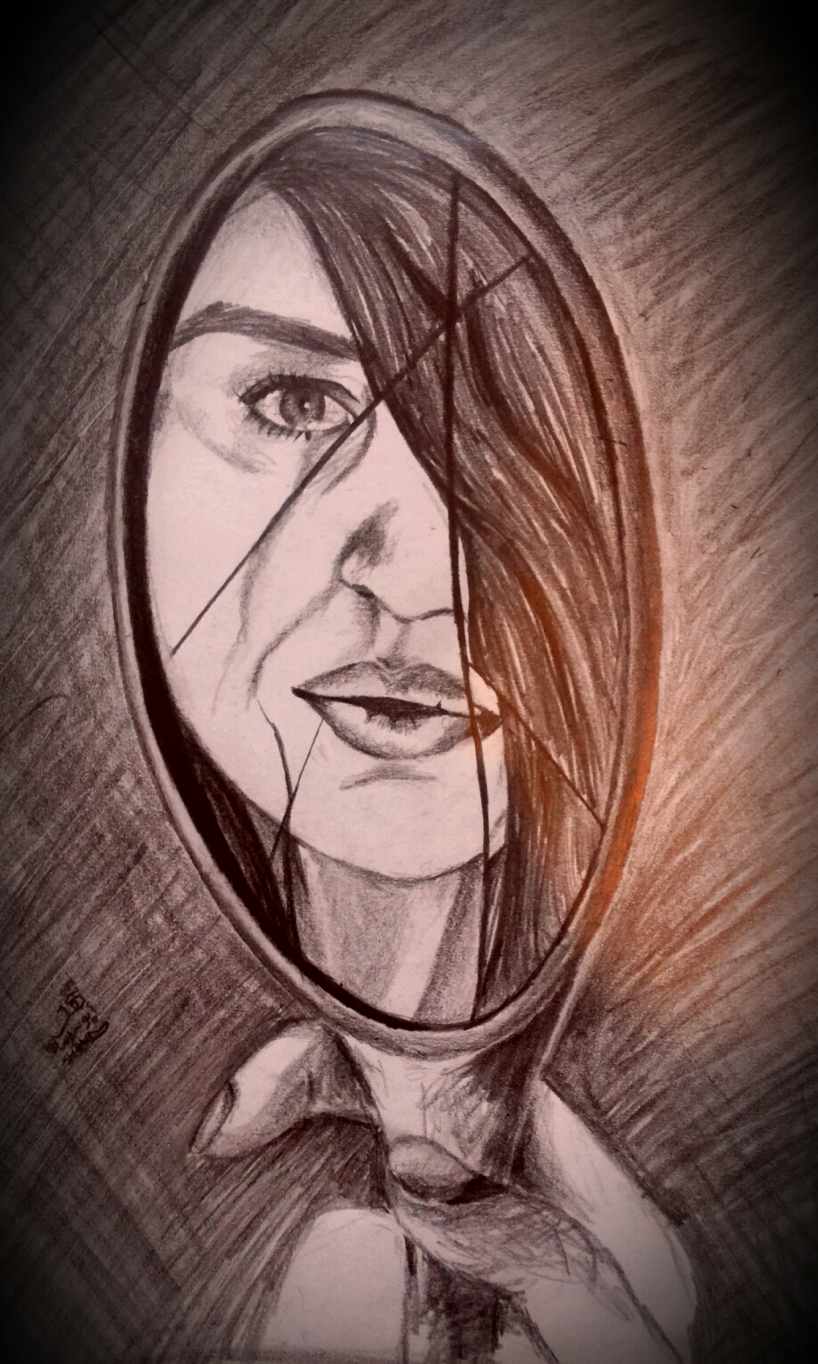
I’ve done your portrait, my dear, and I know you are smiling up there in paradise. With tears uncontrollably falling, I insisted to make it for you as I always promised. However, it breaks my heart that you weren’t able to see it. I wish I made it for you the moment you asked me to. I have to say that part of it was your fault. No. It was your humanity. You sometimes cancelled appointments with me so you go visit families of those who fell victim to the latest Israeli attack on Gaza, or to report on a new attack against fishermen by the Israeli Navy, or accompany farmers to their lands that Israel declared ‘a buffer-zone’.
You called me on the 7th of April on Friday to inform me that you delayed your travel to Italy because there were talks about another Israeli offensive on Gaza. You said then sarcastically, “Don’t worry. You have more time now to do my portrait.”
I sometimes think silently, “perhaps if you weren’t truly humane, and you didn’t care that much about the people of Gaza, this wouldn’t have happened to you, and you would be safe in Italy now.”
I know that I should not think in this way but it is my unspeakable shock over your loss that leads me to such thoughts. I went to your funeral trying to accept that you’re gone for good. I tried to be strong for you. I kept reminding myself that for a great hero like you, we shouldn’t sigh, but we should celebrate your life that you devoted in pursuit of justice for the oppressed, your courage and nobel cause.
On the third day of your funeral, your mother showed presence through a live call. Your mother is as great as you. The sorrow over your loss made Palestinians united, and your mother managed to make Italy and Gaza united, singing in one voice, “Bella Ciao.”After we finished singing “Bella Ciao” together, I spoke to your mother, assuring her that “revolutionaries never die!”
My dear Vik, I want you to know that you only left us in body but your soul will be living forever. I want you to be sure that everybody who believes in you and in justice for Palestine will keep on taking your path. I want you to know that you are our hero; you define humanity for us. ‘Stay human’ was the motto that guided every step you took. Dear Vik, you are the winner that you wanted to be. You are the dreamer who never gives up. So I hope now, my dear friend, you are resting in peace.
As I Walk on Gaza’s Streets
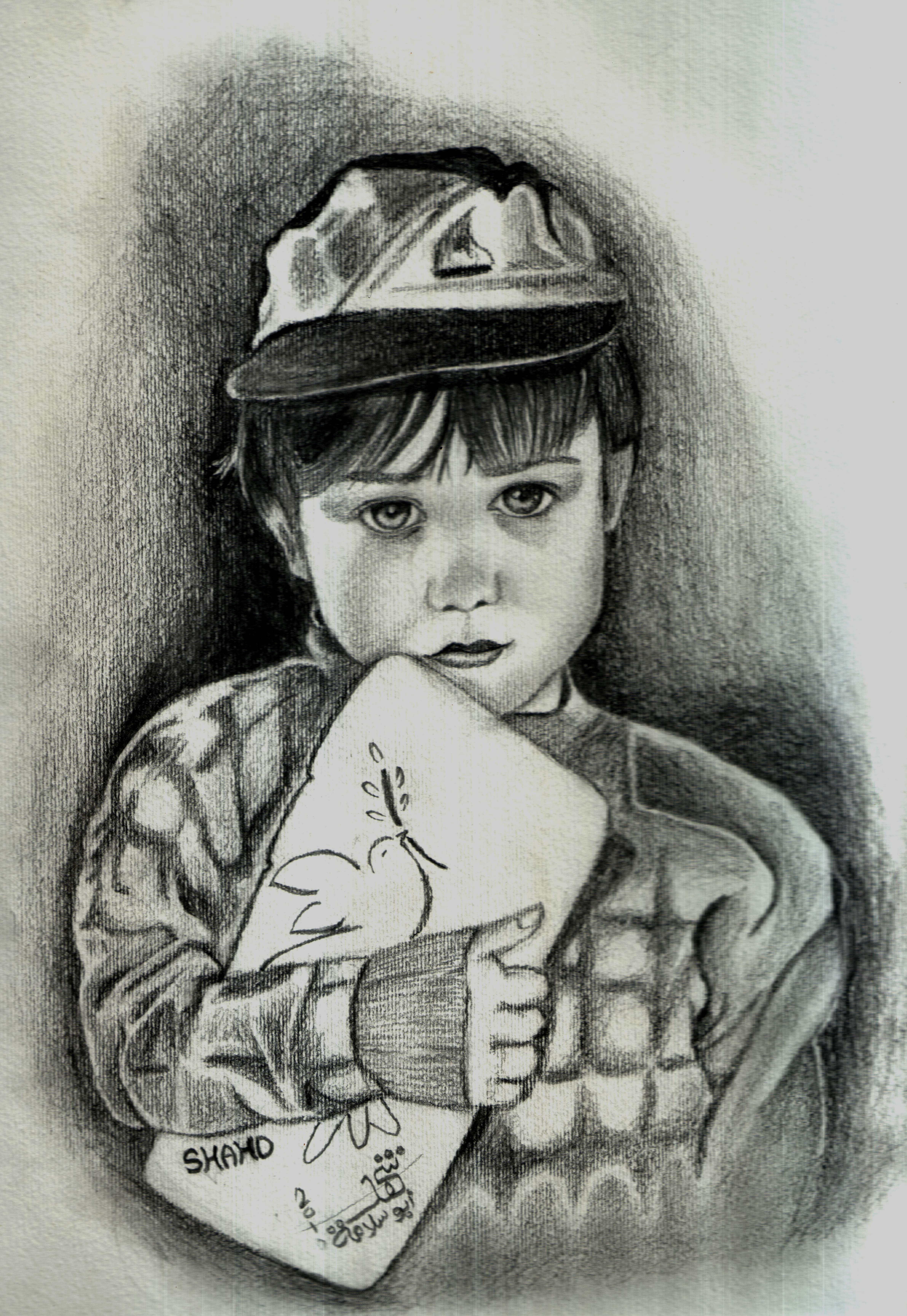 Take a walk along one of Gaza’s streets. Gaze into the eyes of its people. Try to guess what they are dreaming about. Gaza is a place full of dreamers, but too often it’s also a grave for their dreams.
As I walk in the street, I see an old man sitting by the entrance of his door looking at the movement of the sun in the sky. From the expression of his face, I imagine that he is thinking he might be dead by the next day without having another chance to see his own land—now in the land called Israel and “forbidden territory”. I see fathers seeking to earn some money to take care of their children. I see mothers carrying their babies, looking at them in sorrow, wondering whether it would have been better not to bring them to this vile world!
I see many Palestinian youth with lost futures. Some may think it is funny how enormous the number of youths is who are crowded into the cafés smoking shisha. However, it’s not surprising. There are many graduates among them who have lost hope of finding a job. Others got frustrated of getting work in the profession in which they have trained, so they are laboring as mechanics, builders or they applied for the government to work as policemen—places where they shouldn’t be!
Many 18-year-old youth work hard to earn good grades in high school so they can qualify for a scholarship for advanced education outside of Gaza, only to find the border closed to them crashing their dreams. It’s as if there is a sign at the reading, “NO, WE WON’T LET YOUR DREAMS TAKE YOU FAR AWAY.” No wonder that so many youth lose their motivation to better themselves. the siege is surrounding them in addition to many others who got their degrees and sitting hopeless, jobless, and useless. No progress, no ambition, no country.
As I walk in the Gaza streets, I see many children with bare feet, dirty clothes and pale faces carrying sweets and chasing cars to beg taxi drivers and passengers to buy some! I look at them with anger, blaming the circumstances that have led them to this early heavy responsibility. What has forced those children to working while they should be at school?! I wonder if there are similar scenes in the streets of Israel. Many questions preoccupy my mind but I still get no answers; the international community is still speechless and does nothing!
I see many fatherless children shouldering many responsibilities, too early when they should be playing games and enjoying their childhood like other children around the world! Mahmood Al-Samouni is the eldest son in his family. At the beginning of 2009, while many people were celebrating the New Year, he was crying so terribly because since that moment he must accept to continue living with his father and his youngest brother absent in his life and just keep wishing that he would see them each night in his dreams! I accompany Adie Mormech, an English activist, to help teach him and others of Al-Samouni family—which lost 30 members in the Israeli invasion. We hope that they will someday be able to make their voice heard by learning English. I heard Mahmood once say that “I want to grow older more quickly so I can handle some of the responsibilities that mum takes.” Can anyone imagine how hard it is for an 13-year-old child to wish for the wheels of life to move faster so he can replace his father and be the man of the family?
You might find it strange that children here are not really children. Gazan children become mature at very early age. Children here wait for Eid so that they can collect money from relatives to buy a fake gun, so they can play a game called “Arabs and Israelis.” I remember when I played this game with my neighbors in the evenings. It’s funny that we had a rule that “the one who plays the Israeli soldiers should die.” However, we realized that the roles were inverted in reality, the soldiers don’t die but kill.
As I walk in the Gaza’s street, I see a mountain of sad scenes; which can only be banished once Palestine is free. But, I will never give up hope that I will someday walk in the Gaza streets and look in the people’s eyes, seeing them shining from happiness, not glistening with tears.
Being a Palestinian
 It hurts when I see the people I love bleeding tears. The only thing that comforts me is the fact, that we are Palestinians. Being a Palestinian means that we have strength in spite of injustice, hope in spite of the misery, and smiles in spite of pains.
Escaping from final exams pressure, I went to a wedding with my sisters. Everyone around me was smiling, clapping and dancing for the bride and the groom except for me. My smile turned into tears.
I incidentally met an old friend, from whom I had not heard anything since the ninth grade. We had been in the same class until I moved to another school. I was so happy to see her after five years. However, her situation made me feel sad.
As I greeted her, I noticed an innocent, cute child playing in front of us. “This girl is my daughter.” My friend said with a smile. “Are you joking?” I gasped. “You are only 18 years old!” I couldn’t believe my eyes. She was a mother of a two-year-old girl! I tried to pull myself together in order not to show how surprised I was. “When was your wedding? Are you happy?” I asked.
“Thank God, I am bringing up my daughter alone,” she said. I kept silent but I am sure my face’s features showed my astonishment. Many thoughts filled my brain. I was thinking if she had broken up with her husband, or if had he left her alone and travelled. I waited for her to continue because really I couldn’t speak then expecting bad news. Suddenly, she got out her wallet and showed me her husband’s picture. “Isn’t he handsome? He is not alive anymore; he was martyred,” she said proudly.
It took me quite long time to understand that she is a widow at such a young age. I didn’t say a word. I felt helpless because I was sure that her sorrow was too deep. Yet, she hid that behind the smile of pride. “How was he martyred?” I asked.
“Two years ago,” she answered with shining eyes, I felt the tears were trying to fell from her eyes but not a tear in sight. “He was in Biet_Hanoon, visiting a friend, when suddenly a rocket shelled an empty area close to him and he was one of the victims. Israel justified this with a trivial excuse as usual, seeing that the empty area is the place where resistance groups trained.”
Just looking at her red eyes following her daughter was killing me. I was bewildered. What was his fault to die in the age of twenty-three after a week of his daughter’s birth? And what is her guilt to deserve being a widow leading hers and her life alone with her daughter? I believe that it’s their destiny, but it’s really a hard one to accept. However, she had. She buried her sorrow and for her daughter, played both the role of mother and father.
I realized that the miserable Palestinian life has some good aspects. It creates iron people able to lead their lives no matter how tough the going gets. That’s why now; I am not surprised that I met my friend at a wedding. Israel has to know that we are strong enough to handle anything no matter how hard it is. In Palestine, Life goes on despite the sorrow.
The Story of My Birth
 I am a third-generation refugee, born and raised in one of Palestine’s largest refugee camps, Jabalia, originally from Beit-Jerja village, my grandparents’ evergreen home which they had to flee under Israeli fire in 1948.
I was born a survivor- my mother’s labor occurred during a curfew that Israeli military forces imposed on Jabalia Refugee Camp from which first intifada erupted a few years earlier. While fearing for her life and her yet-to-be-born child, she walked through Jabalia refugee camp’s alleys, leaning on my grandmother who held a white piece of cloth in one hand and a lantern in the other, hoping for mercy from the Israeli soldiers who were indoctrinated to shoot ever moving being. Our family home then was one-kilometre away from the UNRWA clinic in Jabalia. There was no ambulances, no phones, and the whole neighbourhood was under blackout. “While pointing their guns at us, unscrupulous Israeli soldiers obstructed our way,” my mum recalled, “They harassed and interrogated us even though I could hardly stand.”
My mum’s memories of the day of my birth cannot easily be forgotten. My father couldn’t be around around her as an ordinary husband. The thirteen years of suffering that my father spent in Israeli jails were not enough for those terrorists. My dad had been sentenced to seven lifetimes plus ten years, but thankfully, he was released in the 1985 prisoner exchange after serving ‘only’ thirteen.
My father was born 4 years after Nakba to dispossessed parents in Jabalia Camp where refugee families survived on nothing but the dream to return. He was 15 when the Gaza Strip alongside the remainder of Palestine fell under the Israeli military occupation in 1967, and when he spent his first 2 months in jail as a child prisoner. At the age of 19, he was sentenced to seven lifetimes plus ten years. Each life sentence for a Palestinian equals 99-year-prison-term. Had he not been released in the 1985 prisoner exchange, he could have spent a total of 703 years in Israeli jails – my mother, my siblings and I would have been a dream buried alongside him in jail – a horrifying thought that haunts hundreds of Palestinian prisoners in Israeli custody.
In fact, my dad was never free. He was restricted in his movements and always anticipated his house being vandalised to rearrest him. They deprived him of the basic right of a husband, sharing with his wife some of the most difficult and intimate moments of pregnancy. She brought me into this life, where safety, freedom, and justice are denied. Assisted by my grandmother, she returned home as soon as she recovered so my father could hold me. They defiantly celebrated my advent, but in Palestine no smile could ever last.
”In the middle of the night, a month after your birth, a huge force of armed Israeli soldiers suddenly broke into our home, damaging everything before them,” my Mum recalled. “They attacked your father, bound him with chains, and dragged him to the prison, beating him the whole way.” The happiness of the new baby – me – didn’t continue for the whole family. My mum could breastfeed me until then; her grief ended her lactation.
My dad was held for six months under administrative detention, without any charge or trial, an arbitrary procedure that Israel has used against tens of thousands of Palestinians since 1967. Prior to this time, my father served this term two times during my mum’s pregnancy with my elder two siblings Majed and Majd. Although one can hardly find a positive side to their traumatic experiences, they used to amaze me by the jokes they made around my mum not needing to go on birth control, because my dad’s detention acted as such.
The day my father got his freedom back, six months later, my mum was awaiting him as if she knew he was coming. He couldn’t believe how big I was after seven months: he couldn’t stop hugging and kissing me for even one second. That time was the last time my father was taken away from him family, but my parents never stopped worrying over the future of their children whose safety they couldn’t guarantee under the Israeli colonial occupation.
Writing about my childhood experience brings a lot of tears, especially that this story is common across Palestine. Every Palestinian child is convicted to a life of uncertainty and oppression without having to commit a crime. Being a Palestinian is our only offense.
Two years after my birth, the Intifada of stones ended marked with celebration of victory and illusions of autonomy which the Palestinian National Authorities brought after signing the Oslo peace process with Israel in 1993. But this happiness or illusion, yet again, didn’t last. Another Intifada began in 2000, declaring the death of Oslo which acted as a cover for further Israeli dominance over Palestinian lands and lives. In 2000, I was 9 years old stuck with children of Palestine in a seemingly never-ending cycle of violence.
In Palestine, no smile can last as long as Israel carries on acting with impunity. However, In Palestine, no one seems to give up dreaming of a brighter future for Palestine, in a just peace that will guarantee us with freedom, justice, dignity and return
My father’s memories from the day of his release in 1985 swap deal

My parents Ismail and Halima
On 21 May 1985, my father Ismael regained his freedom, after being in the dark of Israeli prisons for 13 years.
“I was sentenced for seven lifetimes plus 10 years and I thought that Nafha Prison would be my grave. Luckily I didn’t stay that long there, and I was set free to marry your mother and to bring you to this life,” my father playfully said while my mind struggled to understand his underestimation of such an experience that is inconceivable to most. His reference point was, however, different. It is only “not that long” if compared to the original sentence to which he was bound if the deal to exchange Palestinian and Israeli prisoners didn’t proceed.
I can’t recall my Dad ever showing any regret or sorrow for the precious years of his youth that were stolen from him. He turned his prison experience into a song of life. He believes that it is the reason behind his solid principles, his strong character, his intimate friendships, and his emancipatory perception of life.
I’ve always been proud to be his daughter, and I’ll always be. He is a revolutionary to whom revolutionary thinking is an organic part of his upbringing as a Palestinian refugee. My father was born to a dispossessed family from Beit Jerja, 4 years after Israel’s ethnic cleansing of Palestine in 1948, an event we call Nakba (Catastrophe). He was born in Jabalia refugee camp where minimal means of survival did not exist, and Israeli oppression defined their daily lives with a defiant form of resistance.
“The Triumphant Power of Revolution”
As a 19 year-old detainee, this organic revolutionary thinking was voiced to his anti-Zionist Israeli lawyer Felicia Langerwho fought against the Israeli unjust judicial system throughout her 23-year career before returning to her country of origin Germany. In her book With My Own Eyes(1975), Langer recorded her encounter with my father on 6 April 1972 in Kafer Yonah, an Israeli interrogation center. Thanks to her, I have access to my dad’s earliest quote:
“I saw how children were being brutally shot dead in the camp’s streets by the Israeli border guards. I witnessed the murder of a little girl who was just leaving her school when an Israeli soldier from the border guards shot her dead. They raid the camp with their thick batons beating up everybody. They break into houses inhabited by women without knocking on the doors. They mix the flour with oil during their aggressive inspections deliberately and without any necessity.”
The systematic oppression which Palestinians live under Israeli occupation while in their unsafe homes and neighborhood chased my father to prison. “After his arrest in Jabalia Camp on January 1, 1972,” Langer states, “they dragged him to the Gaza police center while beating him with batons all the way. They showered him with extremely cold water in winter. Meanwhile, soldiers continued to attack him with batons everywhere to the extent that he lost his sense of hearing. Langer quotes my dad’s experience of this method of torture:
“This continued for 10 days… Then they threatened that unless I talked I would be banished to Amman, where I would be killed.”
Like all other Palestinians, my father was automatically trailed at an Israeli military court, where judges and prosecutors are Israeli soldiers in uniform, and the Palestinians are always guilty for challenging the authority of the military occupation regime. According to an Israeli human-rights group B’tselem, Israeli military courts “are firmly entrenched on the Israeli side of the power imbalance, and serve as one of the central systems maintaining its control over the Palestinian people.” In other words, they are an integral part of the Israeli apartheid structures.
Besides his Palestinian identity which would have automatically proved him guilty, his
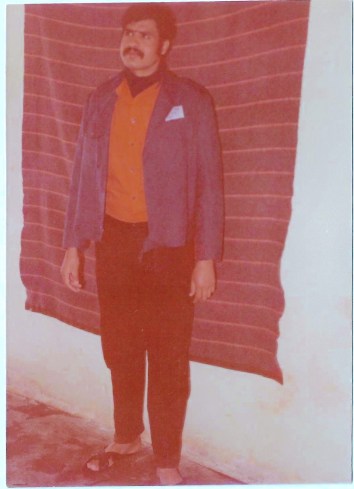
This was the first picture shot of my father Ismael in 1983 in Nafha- Negev after 12 years in Israeli jails. Due to this, not a single picture exists of my dad in his 20s.
socialist values further complicated matters. “Especially bitter is the fate of anyone suspected of holding communist values,” Langer observed. On 30 November 1972, the persecutor called the court to take part in the “serious war against terror,” in a plea upon the court to impose the harshest punishment against my father and his comrades who were charged for belonging to the Marxist-leaning Popular Front for the Liberation of Palestine. According to Langer, the persecutor claimed to be gentle in “not asking for death sentences.” Before announcing the multiple life sentences, the judge allowed my father and his comrades to say last words, but warned, “I don’t want to hear political speeches.” His comrade said there is no point since they did not recognise Israeli jurisdiction. Riot erupted as a result, and the defendants weren’t allowed to speak. But in the middle of all that, my father shouted his belief in “the triumphant power of the revolution.”
Despite his sentence that promised death in jail, my father believed an end to his living nightmare would come with the triumphant power of revolution!
Prisoners’ Exchange of 21 May 1985
The story of the exchange deal all started when Ahmad Jibril of the Popular Front for the Liberation of Palestine- General Command (PFLP-GC) captured three Israeli soldiers (Yosef Grof, Nissim Salem, Hezi Shai) in revenge for thousands of Palestinian prisoners kidnapped by Israel without any apparent reason. After a long process of negotiations, both sides struck a deal that Israel would release 1,250 prisoners in return for the three Israelis that Jibril held captive. My father was included in the deal, and fortunately, he was set free at the age of 33. Among the released prisoners were the Japanese freedom fighter Kozo Okamoto who had been sentenced to life imprisonment, and Ahmed Yassin, the leader of Hamas who was sentenced to 13 years imprisonment in 1983.
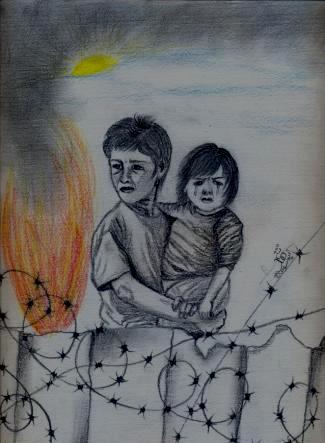
My father told me the story of 1985 prisoners exchange with tears struggling to fall. “I cannot forget the moment when the leader of the prison started calling off the names to be released,” he said while staring at a painting hung in his room that my father drew during his imprisonment of flowers blooming with the names of his family among barbed wires.
Among the prisoners was Omar al-Qassim, a leading member of the Democratic Front for the Liberation of Palestine (DFLP). Al-Qassim was asked to read the list of the names loudly. He was initially excited, hoping his freedom would be restored. Every time he said a name, a scream of happiness convulsed the walls of prison. Suddenly, his facial expression started to change, with reluctance to speak after he noticed that his name wasn’t included. My father thinks that this was a form of psychological torture by the Israeli prison manager. But Al-Qassim left him no chance for fun, and withdrew himself with dignity. Sadly, he died in an Israeli cell after 22 years of captive resistance, pride and glory.
My father described this emotionally-charged moment as bittersweet. The happiness of freed prisoners was incomplete for leaving the other prisoners in that dirty place where the sun never shines. “We were like a big family sharing everything together. We collectively handled the same pain and united to fight for one cause,” my father told me. “Although I am free now, my soul will always be with my comrades who remain in there.”
History repeats itself. On 18 October 2011, we experienced a similar historical event with a swap deal involving the Israeli soldier Gilad Shalit, who was arrested by the resistance in Gaza while he was on top of his war machine (an Israeli tank). Just like what happened with Shalit, the capture of three Israelis caused uproar in the Israeli public opinion and international media at that time, but the thousands of Palestinian prisoners behind Israeli bars were not noticed, except by the resistance groups that have always pressured Israel to meet some demands regarding the Palestinian prisoners.
The international media reaction to such events also invite anger in their emphasis on the arrested Israeli soldiers by the “terrorist” Palestinians. Thousands of Palestinian political prisoners are left behind in Israeli jails with basic rights to medical care, family and lawyer visits and fair trial are denied, and the rest of Palestinian populations endure other forms of imprisonment under Israeli structures of siege and occupation. But mainstream media chooses to look away.
My father has always said that “prisoners are the living martyrs.” He also described Israeli jails as “graves for the living.” Let’s unite and use all the means available to help thousands of Palestinian political prisoner have fewer years of suffering, especially at times the Coronavirus poses an additional danger to their lives. We share this collective responsibility. Their freedom will be a triumph for humanity.













 PALESTINE FROM MY EYES