Generating a fearless and humanising narrative on Palestine!

Latest

Aside

Hunger strike diaries: the fate of Palestinian political prisoners is “our shared responsibility”


Loai Odeh (in foreground) at a solidarity tent where supporters of Palestinian prisoners are on symbolic hunger strike. (Majd Abusalama)

Loai Odeh (in foreground) at a solidarity tent where supporters of Palestinian prisoners are on symbolic hunger strike.

(Majd Abusalama)

Loai Odeh is a former political prisoner who was released from Israeli prison in theprisoner swap deal last year and forcibly transferred from Jerusalem to Gaza; before his release, Loai took part in the 22-day mass hunger strike launched at the end of September 2011 to protest cruel conditions and an escalating series of punitive measures against Palestinian prisoners.

Loai has published on Facebook very expressive, moving and informative diaries chronicling the experience of a hunger striker (see my translation of the first eight installements of Loai’s hunger strike diaries, pubilshed on 24 April). His last status update was on the 15th day of the hunger strike, just before he went on open hunger strike along with fifty other people on the 16th day of the mass hunger strike. They have taken the sit-in tent in Gaza as their shelter, which they say they will not leave unless our prisoners stop suffering. They couldn’t stand watching our prisoners going through slow death without doing anything in solidarity, so they have gone on a symbolic hunger strike that aims to draw attention locally and internationally to the prisoners’ just cause.

I took the initiative to translate the rest of Loai’s diaries from Arabic, hoping to inspire everyone who reads it, just like they inspired me.

On April 25, Loai wrote:

Today is the ninth day of heroism. Our strikers have already endured a long time of suffering and loss of weight. The provocative practices of the Israeli Prison Service (IPS) keep escalating. The searches get more intensive and violent. But we should keep in mind that “search” policy according to Israel’s oppressive administration involves different processes.

During ordinary days, the purpose of searches is to find the contraband that our prisoners managed to smuggle in to ease their difficult lives. However, during a hunger strike, the only purpose of a search is to tire our strikers physically and psychologically. Soldiers burst into strikers’ rooms aggressively as if they were confronting armed fighters on a battleground, not hunger strikers with feeble bodies that can barely stand. Knowing that strikers are intolerant of noise, soldiers break into their rooms with loud screams and initiate a hand search in a way that one feels that he’s being beaten rather than searched. Whoever refuses to undergo these “searches” gets beaten up and is plunged directly into solitary confinement. The prisoners are then left in a yard outside with no place to sit for hours while their rooms are turned into a complete mess.  The contents of the rooms are heaped into a single pile, indiscriminate of who they belong to, disheartening the prisoners when they return and discover the pile that they are faced with sorting through and straightening out.  Moreover, they tear off their mattresses’ cover sheets that take strikers a long time to put back or replace. Even during ordinary days these searches are tiring, so imagine how they are during hunger strikes. Jailers subject prisoners to these searches several times a day, leaving them for hours under the burning sun or in the cold night air while conducting the searches.

However, our heroes’ determination and their solid commitment help them to neglect the guards’ provocative and humiliating practices as they realize that challenging is a needed weapon to go on and win over the IPS’s oppression. Solidarity movements have to use all the means available to help them have fewer days of suffering.

On April 26, Loai wrote:

Today marks the tenth day of the hunger strike. Despite the multitude of searches and the pains of hunger, our heroes manage to maintain their smiles. They are stronger as they are armed with souls that can never be submissive, even during hunger. Their sense of humor stemming from their pain becomes their sweetest memories during imprisonment. Abstaining from food for a long time doesn’t mean that they stop thinking about it. Instead, strikers start thinking about which meals they like or dislike.  Actually the meals that they don’t like come to their minds even more intensely than the meals they prefer as they regret not appreciating the blessings and satisfaction of those meals when they ate them in the past.

In fact, it does often happen that after hunger strikes, many strikers start eating foods that they have never liked. The talk about these unfavorable meals which suddenly become desirable creates a humorous atmosphere among them during their strikes. One of them acts as if he is the one whose responsibility is to cook for everyone. They start imagining the smell and taste of their favorite meals while making funny comments that uplift their spirits and make them stronger.

It’s important to know that these thoughts of food arouse their hunger and thus cause their stomachs significant pain, and the laughter gives them headaches. However, they do their best to keep smiling regardless of the heavy price they are paying, believing in the importance of keeping their spirits at ease. They are stronger than all of us because they have high spirits, armed with conviction that the smiles of Palestine’s children are worth their sacrifice.

On April 27, Loai wrote:

Today is the eleventh day of the battle, the hunger strike for the sake of dignity and freedom. Fear of an organ failure increases as the physical sores worsen. All strikers start to suffer from toothaches and backaches that worsen due to the lack of proper medical care.

During ordinary days, their demands to have dentist appointments take months to be granted. Even when one finally gets an appointment, he has his tooth pulled or receives a temporary and incorrect treatment. And then there is the waiting room, which is extremely hot in summer and freezing in winter, where a prisoner is left for hours to wait in before he is allowed in to see the dentist. The waiting room conditions make these rooms seem like rooms for torture, not for waiting, and thinking of these rooms makes prisoners avoid demanding medical appointments, except for the utmost necessity.

Tooth and back conditions intensively deteriorate during the hunger strike. Pain gets unbearable, causing them sleepless nights. Despite that strikers tend to sleep, to rest, to stretch their bodies. Their backaches are caused and exacerbated by their thin mattresses placed on iron beds, which aren’t flat, preventing them from sleeping or resting properly.

These pains make them more determined to accomplish their goals as they believe that their victory will improve the medical care they get. “Stop medical neglect” is on the top of slogans that our prisoners are demanding of the IPS with their empty stomachs. It’s  the duty of everyone whose conscience is awakened to support our prisoners so that they can achieve a victory that guarantees their simplest humanitarian rights.

On April 28, Loai wrote:

Today is the twelfth day of the hunger strike. After twelve days of hunger, our prisoners are increasingly eager to hear news regarding their strike that may contribute at ending their suffering. Usually, not all prisoners join the strike all at once. However, as more days of hunger strike pass, strikers’ number increases.

I assume that most of you wonder why all prisoners don’t join the hunger strike with their comrades. For this question to be answered, we should keep in mind that the success of the hunger strike depends on three main factors.

The first factor is the internal preparation, including the process of selecting leaders and their framework — the strategy for negotiating with the IPS, and preparing the needed publications to prepare youth for the battle by making them aware of the side-effects and the psychological circumstances that they may go through during the hunger strike.

The second factor is the external political situation. The political situation must be suitable to start the strike as it’s not logical to start it while a war, during a major international event (the World Cup, for example), or any overshadowing political event which might prevent the politicians or supporters from paying full attention to the strike.

The third factor is the popular support and the foreign pressure needed to sustain the strike. Without this factor, Israel won’t feel pressured to meet our prisoners’ demands. The 1992 hunger strike was recognized as the most successful strike in the history of the Palestinian prisoners’ cause. The reason it was so successful was that all three factors were aligned, especially the popular uprising to support detainees.

Not all prisons join the strike because the first factor – good preparation – is so important.  Poor relations with the prison leadership or coordination between prisons prevents them from adequate preparation. The IPS concentrates on adding more obstacles that negatively affect and weaken the ability to prepare, chiefly by transferring the leaders of the prisoners movement between prisons to prevent them from meeting and coordinating a strike.

It’s good that the unprepared prisons don’t join the strike as their participation may cause confusion during the strike and limit its success or cause it to fail. During a strike, strikers are deeply influenced by all news. News about the rising number of strikers raises their spirits and creates pressure on the IPS.  Conversely, news about the breaking of the hunger strike at a prison or even at a section depresses them.  This can be destructive and pose a great threat to the success of the strike.

On April 29, Loai wrote:

Today is the thirteenth day of the battle. Our heroes start thinking about the achievements that they will realize when they win. They are also preoccupied with the demands they are hoping will be met from this hunger strike.

Allowing family visits is on the top of the list of their demands. Thousands of prisoners from the Gaza Strip and the West Bank have been banned from visiting for years for security reasons.  Prisoners’ families in the Gaza Strip haven’t been allowed to see their relatives in Israel’s prisons since 2006; a source of major and persistent distress on our prisoners’ souls. Staying in touch with families is one of the most important needs for prisoners as their worries and thoughts about their families never cease.

The worry about losing a member of the family is the heaviest. Losing a member of the family while imprisoned – especially a parent – is their greatest fear. The ban on family visits ensures that the detainees’ worries about losing their beloved ones is enduring.

Moreover, the ban on family visitation separates the prisoners from the outside world and creates a barrier between them and their relatives. For those who are banned from family visits, receiving good news regarding their mothers, wives and especially their children is their biggest dream as they spend these years fantasizing about their kids growing up, and seeing them in reality becomes the most precious thing they could ever have.

Thinking about the possibility that this dream may come true after the strike strengthens the strikers’ determination and makes all the pains of their imprisonment and hunger strike bearable.  This – seeing their children – is the greatest victory they hope for.  The family visit is one of our prisoners’ basic rights and banning it is a horrible violation of all international agreements. It is our duty to support them in their quest to have this right restored.

Win and we have the honor of supporting you. We have faith in you ability and your just cause as your victory is the triumph of humanity.

On April 30, Loai wrote:

Today is the fourteenth day of the battle of empty stomachs.  The IPS begins to take the strikers seriously and begins to meet intently with the leaders of the prisoners movement. They now realize that the strike won’t be easily broken and that they have to be more flexible, unlike how they behaved in the first days of the strike. Our leaders begin to firmly demand solutions to complicated issues and the IPS accepts many of the minor demands, hoping to end the strike.  However, the strike’s leaders have determined that they won’t relent or show any flexibility unless the IPS meets as many of the demands they are hoping to achieve as possible.

Prisoners’ demands usually revolve around two or three main issues which constitute the heart of the strike. The other demands are of less importance. All these demands are ordered according to significance by the strike’s leaders in committees by the strike’s leaders in cooperation with all detainees. The preparation committees set meetings a day before the strike begins and every prisoner gives his suggestions regarding the demands. In the end, all these suggestions are collected and compiled.  These demands are given to the IPS by the leaders to study when they are informed about the launch of the hunger strike. The leaders are forthright with the IPS about their demands, and they are insistent that they are the keys to ending the hunger strike.

Negotiations between the IPS and the strike’s leaders revolve around the demands. As the strike grows longer, the negotiating becomes increasingly serious as the pressure on the IPS increases.

By today – the fourteenth day of the strike –  the need to send detainees to external hospitals increases and the number of strikers who suffer from serious medical problems increases and the severity of their conditions worsens.  Their continual medical examinations become a burden to the IPS.  Additionally, political and security pressure increases due to local and international solidarity with the prisoners’ just cause.

The withdrawal of the enemy’s administration from its initial, inhumane attitude gives our heroes the motivation to continue on their march toward victory. We have complete trust in the strike’s leaders that they will take the best offers once they are available and end the strike with a satisfactory victory that will make all of us proud.

On May 1, Loai wrote:

Today is the fifteenth day in the battle of empty stomachs. One of the most important demands that our prisoners are aiming to achieve from this strike is ending the solitary confinement policy.

The solitary confinement policy is regarded as one of the most horrible crimes and one of the most difficult punishment procedures that are committed against our brave detainees by the IPS. The segregation cell in which a prisoner lives on his own is very narrow and has a bathroom inside and is isolated from the rest of the prison’s rooms. The isolated detainee is allowed to leave the cell to a small yard for only one hour a day — foura. The jailer selects the time of this break according to his mood; it can be in the midnight or very early in the morning while the prisoner is sleeping and that indirectly aims to deprive the prisoner from having the one-hour break during these days.

Getting out to that small yard which is besieged by giant walls and is empty of people doesn’t happen before the prisoners’ hands and feet are shackled. This is another procedure to cut down their desire to leave the cell and to reach their goal to destroy the prisoner’s mind and devastate his mental, psychological and physical health as fast as possible. The prisoner’s isolation for long time means one has to eat alone, think alone, become happy or sad alone, talk to no one but himself, see nothing but walls, hear nothing but the chains’ sounds and the jailers’ loud voices — all that and even more causes that aim to be quickly achieved. Imagine how bad the situation of those prisoners who are put in isolation is when they are subjected to all that. No one can get out of this cell the same without having any damage, especially those who spent long time in isolation. One should enjoy a strong determination and an ability to do activities which contributes to maintaining his psychological and physical health to pass this difficult isolation with as little damage as possible.

We shouldn’t watch our heroes go through all of Israel’s inhumane policies and face a slow death without doing any action and here are our prisoners having the most difficult battle to get their comrades out of solitary confinement. It’s not only the political prisoners’ task to defend the isolated detainees’ rights. We share this responsibility as we can’t leave them as prey for those criminal jailers

An ex-Prisoner Loai Odeh’s Diaries of his Hunger Strike

People celebrate Loai Odeh’s freedom in October 18 and welcome him in Gaza

Loai Odeh is a former prisoner and my best friend, whom I am very proud to have met after his release. He joined the campaign of disobedience, the 22-day mass hunger strike, launched at the end of September 2011 to protest cruel conditions and an escalating series of punitive measures against Palestinian prisoners, until the swap deal by Israel and Hamas on 18 October. He was released after ten years of imprisonment and expelled from Jerusalem to Gaza, where we met at a festival. Since his release, his main concern has been the fellow prisoners he left behind. He always attends events in solidarity with them. He has been my main resource every time I had a question or needed to enrich my knowledge about prisoners’ conditions.

While following his updates on Facebook, I noticed that he had written new statuses taking the form of a hunger striker’s diary recalling his experience. This surprised me, as he has seldom posted since opening his account. His diaries are touching and vivid, giving a clear vision of the great challenge and determination that our prisoners enjoy amidst hunger and the fascist repression of the Israeli Prison Service.

The following is my translation of Loai’s day-by-day diaries from the first to eighth days:

On April 17, Loai wrote:

Today is the first day of the battle to defend our dignity. The battle’s leaders are our homeland’s  heroes who are resisting with their empty stomachs for the sake of our dignity.

The first day of a hunger strike is the hardest. Abstaining from food or drinks has a great impact on strikers during the first three days. But what distinguishes the first day is the measures that the Israeli Prison Service (IPS) takes against our prisoners, attempting to repress them. The jailers confiscate all their possessions, but are generous enough to leave them only the clothes they’re wearing. Moreover, they remove everything the cells contain in a very provocative way, damaging a lot of valuable items our prisoners have collected throughout their precious years in jail to ease the pain of their daily lives. On top of that, IPS conducts misinformation campaigns between rooms and prisons, so that no one knows whether he will be separated from his circle of friends and the environment to which he has adapted.

The journey of steadfastness and determination begins when the strikers manage to control themselves and overcome their desires and physical needs, armed with their desperate desire for freedom and victory which will bring them dignified lives.

We are all with you, as you’re our conscience.

On April 18, Loai wrote:

Today is the second day of the journey of respect and pride. Today is one of the hardest days of hunger strike as the body still isn’t used to not receiving its necessities from food and drinks, especially coffee. This causes lasting headaches. The pain of hunger is also at its peak.

The biggest challenge is for the smokers among our prisoners. For them, quitting cigarettes is more difficult than abstaining from food. It makes them lose their temper. But this condition simply vanishes once their will reminds them of their goal of defeating the jailers. Therefore, during these days, there is no place for irritation despite the constant harassments our prisoners endure at the jailers’ hands. Our prisoners prefer to not waste their energy responding to the provocations of IPS. Before the strike starts, all prisoners agree that strikers shouldn’t respond to any of the harassments and provocations they face, and that they shouldn’t exert any effort, to spare their energy for the days ahead. This battle is different from other clashes that happen on normal days between jailers and detainees. When there is no hunger strike, it’s not allowed to any detainee to accept insults, and if one is humiliated by a jailer and doesn’t reclaim his rights immediately, he faces punishment by the national committee inside the prisons.
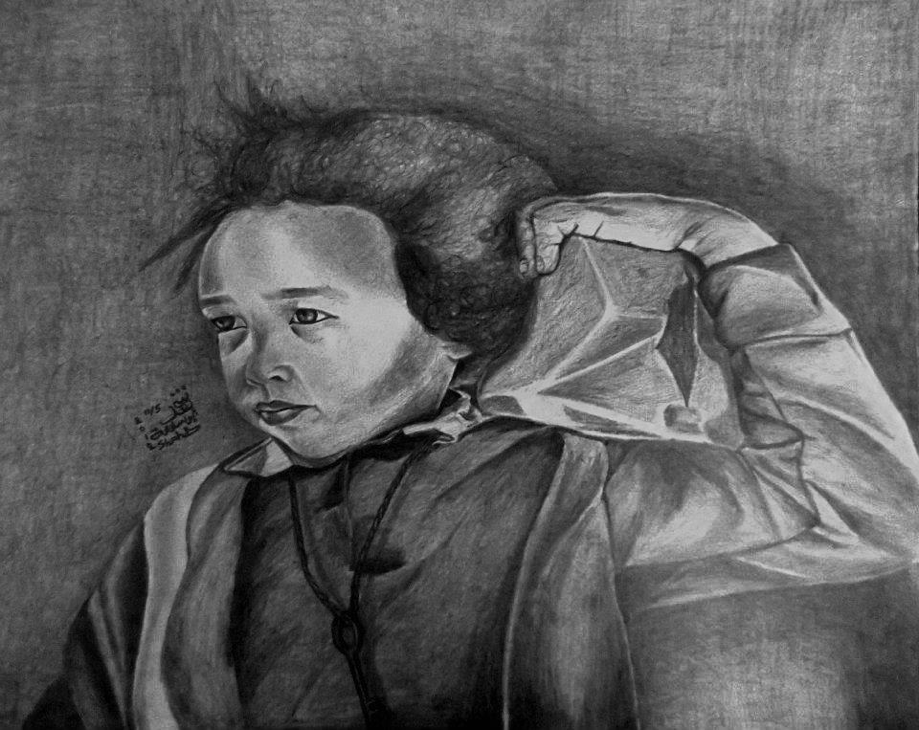
The strong will that our friends behind bars enjoy turns all their sufferings into fuel that lights their flame of victory. Their faith in the just cause they have fought for makes them solid rocks that shatter the fascism of IPS.

On April 19th, Loai wrote:

The battle of the empty stomachs still continues. It’s the third day of the strike. The hardest stage ends here as the body starts using the muscles’ reserves of food to produce energy. It stops sending signs and pains of hunger. Here, strikers feel that things are getting better, not realizing that they have begun losing around 1 kg of weight per day. Actually, by now, it has become harder for them to move.

According to law, strikers have the right to stop standing for the daily counting procedure starting from the third day, as standing causes them dizziness, and sometimes unconsciousness. Though Israel’s oppressive administration, compelled by law, exempts them from standing for counting, they overstrain our prisoners with endless searches and announcements, which are very exhausting.

Despite everything, our heroes become more steadfast from these attempts to enslave them. The more inhumane treatment they endure, the more strength and resistance they have.

As the living martyrs are the leading defenders for our dignity, we will always remain loyal to their just cause.

On April 20, Loai wrote:

Today is the fourth day of challenge and championship. Today, silence begins to spread all over. By now, the striker tends to be silent and stops talking. All the voices around him seem loud. He becomes unable to join discussions. As days pass, his ability to hear voices shrinks, expect for these which lift the spirit up and strengthen souls and hearts.  These voices are mainly the ones that bring news about popular support for their battle. This news becomes the source of energy, the strongest motivation for them to remain steadfast.

Our enemy is fully aware of that. Israel spells their fascist generosity against our heroes. They set up speakers and raise the volume to its loudest, constantly playing Hebrew music and news that will depress their spirits. They also circulate special news about them, like claims about the declining number of hunger strikers and names of those who have broken their fasts. They also do their best to give hunger strikers the impression that life outside is moving on normally and no one there cares about them.

However, all these inhumane attempts fail once a prisoner returns from a visit with his lawyer to tell them about popular events held locally and internationally to support them and their just cause. So don’t ever underestimate any activity you do, as they have small, smuggled radios with which they follow the news. Even children’s protests increase their inner determination to achieve their aims, as they feel that their responsibilities have broadened to include children, the future generation, which have spiritually joined their battle.

We have faith in your ability to win and we are with you until victory!

Loai Odeh and his childhood friend Bilal Odeh whom he saddly left behind. This photo was taken in prison.

 On April 21, Loai wrote:

Today is the fifth of the days of challenge. The battle of steadfastness goes on. What makes it more powerful is the strength of their leaders, which has a strong impact on the strikers’ spirit.  The news which informs the strikers that their heroic leaders have joined the hunger strike fills them with unspeakable and incomparable energy. Ahmad Saadat has bravely joined their battle, despite his critical medical condition after participating in the previous, exhausting mass hunger strike, which lasted for 24 days. Receiving such news supports strikers morally, strengthening their determination even more.

We will unite soon as you win the battle.

On April 22, Loai wrote:

Today is the sixth day of the battle of championship, the hunger strike for the sake of dignity and freedom. Today, the strikers’ stomachs start to get used to hunger. Strikers make sure they lick some salt several times during the day to avoid the putrefaction of their stomachs. This annoys the tyrannical Israeli Prison Administration to the extent that they sometimes confiscate even the salt prisoners keep to survive their battle. However, our prisoners hide small quantities of salt in the cracks of walls or under their mattresses.

But IPS is very generous with the fascist practices they rain on our heroes. They pump water into their mattresses and walls so they salt melts. How can they accept our heroes finishing their strike without any permanent damage? Most of our prisoners who joined long hunger strikes have sustained ulcers and gastritis (inflammation of the stomach lining) as a result.

But our prisoners have smart ways of hiding salt, small radios, and everything that helps them to survive and persist. Even if IPS stripped them of everything they own, it will never manage to break their will. Their indestructible spirit will lead them to victory, as they are starving for the sake of dignity.

Your steadfastness brings us honor!

On April 23, Loai wrote:

Today is the seventh day of the mass hunger strike, the battle of challenge. Strikers’ bodies get more accustomed to hunger than the first days of striking. However, joint pains start and a feeling of coldness pervades their bodies and increases as more days of hunger pass. Their stomachs adjust to the lack of food and stop producing the juice needed for digestion as there is no food to be digested in the first place. This avoids the negative side effects for this juice on their stomachs and helps the feeling of hunger to stop.

However, the fascist Zionist guards keep practicing their outrageous actions attempting to tempt the strikers. Inhumanely, they bring the cooking equipment in front of strikers’ cells and start frying and grilling food such as eggplants that arouses their empty stomachs to produce the digestive fluids. As a result, the hunger pangs begin anew, and having nothing for that juice to digest causes sores which accompanies strikers for many years after the hunger strike.

These fascist procedures, which we haven’t heard of even during Nazism, makes our heroes more determined to defeat the IPS with their empty stomachs.

With this battle of empty stomachs, you bring us honor. We trust in your ability to win.

Loai Odeh and his mother reunite in Gaza after his release.

On April 24, Loai wrote:

Today is the eighth day of the battle. In the eighth day of the hunger strike, the strikers’ movements start to decrease notably as the joint pain and the dizziness which result from moving prevents them from doing so. These consequences leave them stretched on their mattresses motionless, dreaming about the day the hunger strike ends with victory.

During these difficult times, our prisoners try their best to stop thinking about their families but all attempts fail. Instead, their families constantly dominate their thoughts, especially their mothers. Mothers become their central concern as strikers realize that their mothers bear more pain than they themselves do. Despite the fact that our heroes think of their mothers more than themselves, they keep looking forward to a breaking dawn when their strike will end with a satisfactory victory that befits them, a victory that makes them proud.  All respect for the mother that gave birth to and raised these heroes. Palestinian mothers are the source and root of revolution that never complain giving.

It’s our duty to tenderly embrace our prisoners’ mothers with all possible care till we celebrate the victory and the freedom of their sons.

Palestinian Detainees’ Empty Stomachs Are Stronger Than Their Jailers

Khader Adnan took the heavy weight of 320 prisoner held in administrative detention, without any charge, on his shoulders. He hunger struck for a record 66 days to protest this unjust policy. His battle of an empty stomach wasn’t only a reminder to free souls around the world that we are real people who deserve freed and dignified lives, but also a message to those who share his suffering and injustice that they have a weapon stronger than the jailers’ arms: determination. Hana’ Shalabi followed his steps and starved herself for 44 days. After defeating Israel’s inhumane policies, Khader and Hana’ have become symbols of defiance and sources of inspiration and strength for our political prisoners to continue resisting injustice.

The mother of the detainees Bilal and Azzam Diab holding Bilal’s picture who is on hunger strike for 55 days

More heroes have arisen behind bars to break all chains with their empty stomachs. Bilal Diab, a 27-year-old man from Jenin, is one of them. He was detained for 80 months in 2003. After completing his sentence, before his first year out of prison, he was re-arrested aggressively after midnight, causing panic among neighbors. Then he received an administrative detention order for six months on 25 August 2011, based on “secret information” available to neither Bilal nor his lawyer, leaving him no other lawful means to defend himself. According to his detention order, he was supposed to be released on 25 February. But it was renewed, leading Bilal to rebel and defend himself by launching an open hunger strike. Azzam Diab, Bilal’s brother who was sentenced for a life time, is on the 23rd day of his hunger strike in solidarity with his brother Bilal. It just hard to imagine how their mother manages to remain strong while two of her sons are inside Israel’s prisons and both are dying to live.

Thaer Halahla, 34 years old, from H’rsan, near Hebron, is another hunger striker who joined Bilal on the same day, February 29, to protest the renewal of an administrative detention order against him. Thaer was re-arrested after two weeks of his marriage. He had previously been held under administrative detention four times. His imprisonment forced him to leave his pregnant wife and baby girl behind. His 22-month-old daughter was born while he was in prison and since birth, she has never had a chance to meet her father. At the beginning of January 2012, his administrative detention order was extended a third consecutive time for an additional six months. Desperate to be free, re-unite with his family, and hug his daughter for the first time, he has hunger struck 55 days so far.

Addameer reported that on 21 March, Bilal and Thaer were transferred to Ramleh prison medical center after their health began to deteriorate. Both are currently being held in isolated cells, suffer from medical neglect under difficult conditions.  Thaer’s lawyer stated that he saw him vomiting blood from his nose and mouth and that he suffers a difficulty in speaking. As for Bilal, Physicians for Human Rights-Israel (PHR-Israel) noted that “after losing consciousness a number of times, Mr. Diab was hospitalized twice at Assaf Harofeh Hospital, but was subsequently returned to [Ramleh prison medical center].”

Eight other prisoners have reached dangerous stages of their hunger strikes, including Haddan Safadi (49 days), Omar Abu Shalal (47 days), Jaafar Azzedine (32 days), and Ahmad Saqer, the longest-held administrative detainee (36 days). Resistance against the administrative detention policy inside prisons has also taken other forms. Mohammed Suleiman, a thalassemia patient, is refusing medical treatment to protest his administrative detention that has been renewed three times. He also refuses to take blood tests.

Three other administrative detainees have also been moved to Ramleh prison medical center: Hassan Safadi, Omar Abu Shalal and Jaafar Azzedine, on their 45th, 43rd, and 28th days of hunger strike respectively. Ahmad Saqer, the longest-held current administrative detainee, is on the 32nd day of his hunger strike.

On Prisoners’ Day, 17 April, Palestinian political prisoners in Israeli prisons launched a mass hunger strike after a wave of individual hunger strikes over the past few months. This collective hunger strike follows the 22-day campaign of disobedienceand mass hunger strike, launched at the end of September 2011 to protest cruel conditions and an escalating series of punitive measures against Palestinian prisoners such as solitary confinement, a ban of family and lawyers’ visits, and confiscations of prisoners’ possessions. The Israeli Prison Service promised to meet prisoners’ demands within three months if they ended their hunger strike. Six months have passed without any change. So prisoners have re-launched their hunger strike to demand their most basic rights.

Loai Odeh is on the very left during a family visit (Loai Odeh)

Loai Odeh, a former prisoner and my best friend, whom I am very proud to have met after his release, joined that campaign of disobedience until the swap deal by Israel and Hamas on 18 October. Then he was released, and deported from Jerusalem to Gaza after ten years of imprisonment. Since his release, prisoners he left behind have been his main concern. He always attends events in solidarity with them. He has been my main resource every time I had a question or needed to enrich my knowledge about prisoners’ conditions.

While following his updates on Facebook, I noticed that he had written new statuses taking the form of a striker’s diaries while recalling his experience. This surprised me, as it has seldom happened since he opened his account. The diary of the fourth day was the most touching and important for everyone to read that I want to share them with my readers as a strong call for action.

“Today is the fourth day of challenge and championship,” Loai wrote. “Today, silence begins to spread all over. By now, the striker tends to be silent and stop talking. All the voices around him seem loud. He becomes unable to join their discussions. As days pass, his ability to hear voices shrinks, expect for these which lift the spirit up and strengthens souls and hearts.  These voices are mainly the ones that bring news about popular support for their battle. This news becomes the source of energy, the strongest motivation for them to remain steadfast.”

Regarding Israeli Prison Service response, he stated, “Our enemy is fully aware of that. Israel spells their fascist generosity against our heroes. They set up speakers and raise the volume to its loudest, constantly playing Hebrew music and news that will depress their spirits. They also distribute special news about them, like claims about the declining number of hunger strikers and names of those who have broken their fasts. They also do their best to give hunger strikers the impression that life outside is moving on normally and no one there cares about them.”

“However, all these inhumane attempts fail once a prisoner returns from a visit with his lawyer to tell them about popular events held locally and internationally to support them and their just cause, ” he said. “So don’t ever underestimate any activity you do, as they have small, smuggled radios with which they follow the news. Even children’s protests increase their inner determination to achieve their goals, as they feel that their responsibilities have broadened to include children, the future generation, who have spiritually joined their battle.”

He ended by saying, “We have faith in your ability to win and we are with you until victory!”

A celebration of Freedom on Prisoners’ Day in Gaza

Several thousands of Palestinians joined the marches on Prisoners’ Day in Gaza. (Joe Catron)

Last Monday, I couldn’t wait for my class to end at 10:00am. My dad doesn’t know how to send a text message, but somehow, while inside the lecture, I received one from him, urging me to come to the International Committee of the Red Cross (ICRC).  As soon as students were allowed to leave, I was the first one out the door. I walked as quickly as I could from school to the ICRC. I stopped a taxi, even though it was a ten-minute walk. I wanted to be there in time so I would not miss any of the weekly protest for Palestinian political prisoners. I expected that it would be a unique protest, especially since the following day was Prisoners’ Day. I was right.

It wasn’t the usual protest that I always see. The street was closed. No cars could pass. The hall inside the ICRC, as well as the sit-in tent in front of it, were filled with people. Artistic touches of anger, steadfastness, and hope were added.

As I arrived, I found Dad chatting cheerfully with a man I had never seen in the ICRC before. His story was worth hearing. His name is Zuhdy al-Adawi. My father and Zuhdy were both released in the 1985 swap deal after spending 15 years in Israeli jails. Dad was released to Gaza but Zuhdy, unfortunately, was deported to Syria. Since then, Dad had never met his friend. However, Zuhdy managed to return for the first time to his birth place about two weeks ago. “After 27 years of separation, we’re meeting here again,” Dad said happily with his arm on Zuhdy’s shoulder.

I could see people crowded around stands on paintings across the street. Dad grabbed my drawing book, which I had carried there to show my friends a new picture, and opened it while saying, “Shahd is an artist, too.” Zuhdy smiled at me and pointed at the exhibition saying humbly, “Awesome! Then you should look at those paintings and tell me what you think.”

“Are you the artist?” I asked excitedly. Zuhdy pulled me close to the stands and answered proudly, “All these paintings are my work from my detention in Ashqelon Prison. It was important for me to exhibit them in Gaza so your generation and the coming generations keep learning about the Palestinian prisoners’ issue through art.” My eyes were captured by his talent and creativity. Every painting told a story full of suffering and challenge. They summed up the Palestinian struggle and the pains and the injustices that Palestinian people suffer, especially the humiliating conditions our political prisoners endure.

“Expressing myself with colors was banned inside prison,” Zuhdy said angrily. “I used to cut pillowcases and use them as my canvas. I managed to smuggle some pastel and wax colors. I used to paint under fear. How could I paint while jailers surrounded me? But with my persistence and my friends’ collaboration, I managed to make these and smuggle them out of jail.”

Zuhdy Al-Adawi’s exhibition in front of the ICRC (Joe Catron)

Zuhdy’s expressive, creative paintings left me speechless. He made me feel happy, happy that the heartless jailers failed to imprison his mind or imagination. He lived in prison, but his heart and mind were free. To see more of his drawings, see Joe Catron’s album here or watch this video.
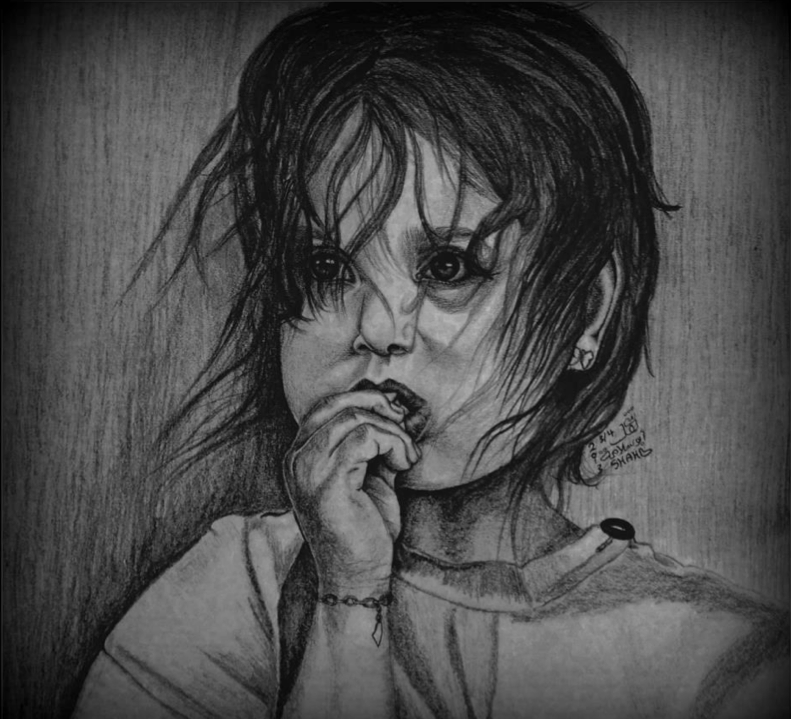
“Be sure that our prisoners resist in many different ways,” Zuhdy said. “Many writers, intellectuals, and painters arose in prison, from the unspeakable love for Palestine, and from the daily suffering, oppression, and injustice. We have full confidence that can defeat the jailers’ inhumanity. We have a just cause for which we sacrifice and in which we believe, and we are ready to use any possible means to call for our freedom and justice.” With these strong words, he ended his inspiring conversation with me. It will be stamped in my mind for as long as I live to keep on my path, using pencils, words, and every other way to make my people’s voice heard. People like Zuhdy make my pride at being Palestinian grow every day.
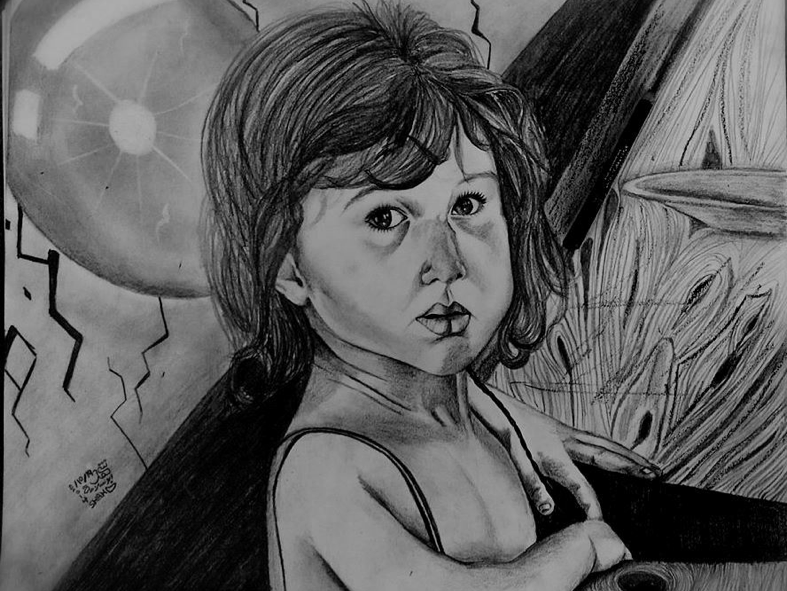
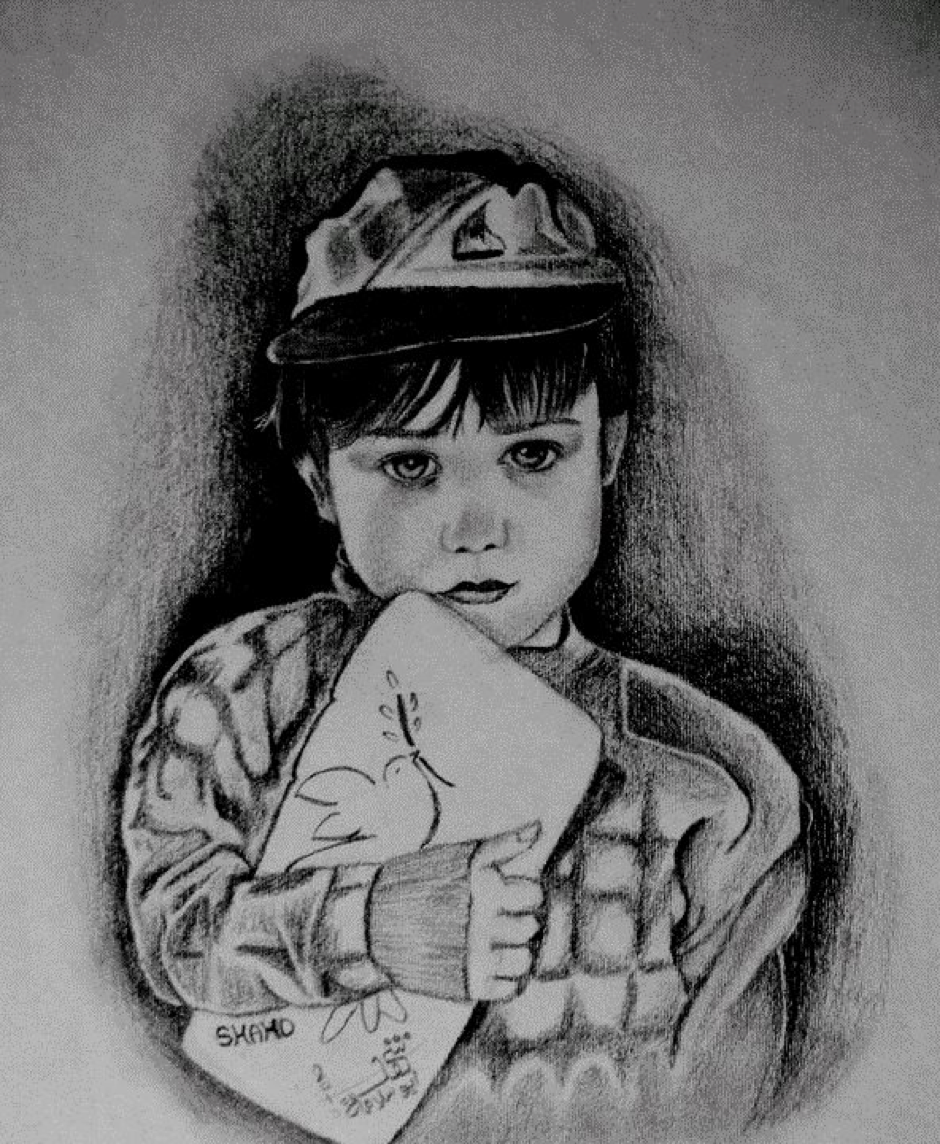
That night, we returned to the ICRC to join hundreds of people who gathered to celebrate “the flame of freedom”. Who could be more worth than Hana al-Shalabi to light this flame? She was there with her beautiful, elderly mother, who had joined her daughter on hunger strike despite her age. My heart leaped when I saw them. Excitedly, we surrounded the flame and watched the champion of empty stomachs, Hana al-Shalabi, light it to mark Prisoners’ Day with a symbol of loyalty to those who are still locked behind Israeli bars and a promise that they will be never forgotten, and that we will always call for their freedom. I hope one day, we will light up this flame when Palestine is free and Israeli prisons have been emptied.

On April 17th, many popular events were held throughout Palestine. Prisoners’ Day was different this year. It had a sweet taste as the day Israel released Khader Adnan, another hero of empty stomachs who hunger struck for a record 66 days to protest being held in administrative detention without charge. His freedom put bright smiles of hope on the angry faces of prisoners’ families.

In Gaza, Palestine’s flags colored its blue sky. I left home early, eager to join the events. Marches came from every street of Gaza. All ages and genders, and many disabled people, joined the protest. It was a remarkable scene of unity and compassion between Palestinians in Gaza. Even schoolchildren participated, with their tender voices chanting, “Rise our moon, rise and light the whole universe. We weren’t born to live in humiliation, but to live in freedom.” Marches came from all directions to unite in front of the ICRC. I felt a revolution inside me when I saw thousands of people uniting their voice: “Free, free Palestine.”

School group of scouts joined the march for Palestinian Political prisoners. (Joe Catron)

Among the protesters, ten-year-old Haitham Al-Zariey, holding a picture and chanting loudly, attracted my attention. “Who is the person in the picture?” I asked him. “This is my uncle Hussien,” he said with a smile of pride. “He has been detained for eleven years. I was born when he was in jail. A few years ago, I learned that I have an uncle held captive by Israel. I have never met him.” When I asked him what he wished he could tell his uncle, he answered, “I wish I could tell him that I am here chanting for his freedom, and the freedom of all other Palestinians in Israel’s prisons. I hope I can witness his freedom soon. I wish Israel at least allow us to visit him.”

I was thrilled by the little boy’s awareness of the prisoners’ issue. Haitham is a small example of the rising revolutionary generation who will go on demanding justice and freedom for all Palestinians. On Prisoners’ Day, we renew our promise to never forget those who sacrificed precious years for the sake of our freedom and dignity. Someday all chains must break. Freedom for all Palestinian political prisoners.

From sadness to happiness on two days in Gaza

Nadin, Sabry and Farah Unlike Monday, Tuesday was a happy day. On Monday, I woke up with eyes full of tears after I fell asleep to a tragic story, a story that was not heard widely, but happened in Gaza. Three kids lit up a candle to escape the darkness that filled their house in Al-Bureej Refugee Camp in the central Gaza Strip and slept. As the candle burned out, the candle of their lives  was extinguished, too.

Nadin, Sabry, and Farah came to this life, to the bosoms of their parents, after 17 long years of medication and Blastocyst operations. Monday night was their last in the blackness of Gaza. They died in a blink of an eye, in a fire that turned the dark sky red, leaving their small, charred bodies behind. Their parents were shocked from the biggest calamity in their lives, but continued to thank God that a son survived. Their story offered another tragic episode of suffering and pain from Gaza’s siege and its fuel and electricity crises. But it also proved how inspirational and strong Palestinian people are.

On Monday morning, the news was still fresh and hard to believe. Tragic stories of all kinds end up seeming normal. People here have learned to look back with anger, but keep going. So I had to go on, as life has had to keep moving in Gaza no matter how many obstacles we face. I had to attend my French class, even though I wasn’t in the mood to study.

I sat silently, then started drawing, seeking some relief. Our lesson was on how to say “I wish” in meaningful French phrases. I was there, but actually absent. Suddenly, one of my classmates joked that her only wish was for electricity to stop cutting off. While laughs could be heard from every corner of the class, the three kids’ deaths came to my mind. I got emotional, raised my hand, and said, “I wish these power-cuts would end so kids like Sabry, Nadin, and Farah wouldn’t die because they had to light candles in their dark rooms.” My intense emotions made me need to speak Arabic,  even if that wasn’t the reason for the class. I knew many of my classmates had slept early, because of the blackout, and wouldn’t have heard about it.

Laughs turned to silence. My professor, who has a four-year-old daughter, didn’t have a response, and his face turned sad. He stayed silent for a little while, then allowed me to leave the class, as he saw that I wasn’t in control of my emotions.  But he surprised me with a call that night, one of the kindest I’ve ever received. “I kiss my daughter every morning before she leaves for her kindergarten, and I felt terrible after hearing that story, imagining a morning could come without kissing her again. I couldn’t imagine how that family can handle losing three kids at once,” he said. “Let’s pray that God helps this family. And let’s make these stories build stronger people out of us, and try to find the bright side and stay optimistic, hoping and working for a better future with more light.”

I always feel blessed to have this great man as my teacher and friend. That day, I felt this blessing even more. He made my day. Then many beautiful and happy incidents happened.

My youngest sister, Tamam, and my eldest brother, Majed, surprised us with their arrival back in Gaza after spending a month in Europe representing Palestinian youth in some events there. The house had felt empty without them. I missed them a lot during their absence and they filled the house with happiness on their safe return.

Tuesday was very special. My family is very close, but I guess Tamam is my closest sibling. She is two years younger than me and studies at Al-Azhar University, like I do. Since her first day in university, we went to school together. It felt lonely to wake up in the morning and find her blankets well tidied on her empty bed. It didn’t feel right going to school without sharing a taxi, and without joking with her during our shared breaks. But on Tuesday morning, everything returned to normal. Having her around makes me happy to an extent she doesn’t realize.

Tuesday brought more happiness as I took the opportunity for a long break between lectures and visited the sit-in tent in front of the International Committee of Red Cross (ICRC). The shortage of taxies caused by the fuel crisis offered me with a beautiful walk to the ICRC. At 10 am, the weather was almost perfect, and the Gaza streets seemed tempting to walk on, and very full of life. The drivers’ constant honking in the streets, for any reason or none, used to bother me. But on Tuesday, it made me smile. I enjoyed it as if I was listening to music.

From 50 meters away, I realized that the sit-in tent was gone. But I kept walking, as I could see a crowd of people in the front of the ICRC. As I got closer, I realized that they were the same people whom I always meet in the solidarity events held there. There were former detainees and mothers, wives, and daughters of current prisoners who are still held in Israel’s prison. This event was organized in anticipation of April 17, Palestinian Prisoners’ Day.

I was lucky to join the event from the start without having heard of it. It was very different than the ones we usually have. It included people like Om Ibrahim Baroud, whose son has been in prison for 27 years, a mother who had four sons in prison at one time during the First Intifada, the Intifada of Stones, along with her husband, and whose house was demolished twice by the Israeli occupation forces, and who hasn’t been allowed to see her son for 9 years. People like Om Ibrahim Baroud were tired of chasing the human rights organizations and speaking endlessly for their relatives. Tuesday, they stood with pride and bright smiles full of hope, holding white doves. I felt overwhelmed with happiness watching them let these doves fly free in Gaza’s blue sky.  I don’t know where they settled, but hope they convey our message to our prisoners that they are never forgotten and to the world that Palestinian people are real people who dream of living freed and dignified, like free birds.

A convoy of great Irish solidarity activists joined that event. I could tell they were very moved. Two of them were detained inside British prisons during 1980s. They joined Bobby Sands’ hunger strike, and witnessed his death after 66 days of starvation for the sake of freedom and dignity for the Irish people. “I can’t forget the photo that I saw during my imprisonment of a Palestinian women calling for our freedom,” one of them said. “She didn’t have any relation to us, but she was one of the oppressed, so she stood for the oppressed. When I was freed, I promised to dedicate my life for the sake of humanity, for the oppressed, for Palestine, and to support Palestinian political prisoners until a dawn comes bringing freedom to all of them.”

I can’t describe the positive energy, optimism, and cheerfulness I felt with all these incidents happening one after another. My happiness doubled as I visited my new female heroine, Hana’ Shalabi, who challenged these oppressors with her empty stomach for 43 days and defeated their illimitable tyranny. I couldn’t believe I was sitting next to her. I was actually speechless from her inspiring strength and will. No words could express how much admiration and appreciation I felt for this Palestinian woman. I felt sorry that she was forced outside her land, Jenin, to Gaza, away from her family. But I was thrilled at her high spirit, enthusiasm, and determination to recover so she could be the tongue of detainees until the last breath of her life.

“I was released on the condition of deportation to Gaza for three years,” she said smiling. “I don’t trust Israel, though.”Then a released prisoner, who was deported from Bethlehem in 2002, interrupted, saying, “Previously in 2002, the people who were besieged inside the Church of Nativity were deported to Gaza, but promised that it would be for two years. It’s been eleven years now, and we still can’t return.”  “Thankfully, every part of Palestine is my home, Gaza will be my home, and its people are my family,” Hana’ continued passionately. I am so sad that she has to deal with this situation, but feel very lucky and proud to have her among us.

This is the spirit of Palestinian people. No matter how much Israel escalates their attempts to depress us, their plans are bound to fail and turn against them. They can’t break our dream to live in freedom and dignity. Their inhumanity does nothing but increase our humanity and make us stronger people, ready to take the challenge, to fight with all means to gain what we have always deserved: justice, freedom, and equality.

On Land Day, Palestinians Remember the Price of Freedom

“The ruins of my homeland”

“We didn’t cry during farewell!
For we didn’t have time, nor tears, Nor was it farewell
We didn’t realize that the moment of farewell was farewell
So how could we cry?”

Said Taha Muhammad Ali, one of the leading poets on the contemporary Palestinian literary scene, describing his expulsion from his homeland. He was 17 years old, old enough to remember the gloomy day when he was ethnically cleansed from his original village, Saffuriya, together with most of its inhabitants and more than 600,000 Palestinian from 512 other village, during the 1948 Nakbha. But in 1949, Taha returned to Nazareth, making it his home.
However, my grandparents and hundreds of thousands couldn’t. They had fled to Gaza. They thought that it would be a matter of two weeks and then they would be back. But ever since then, they lived and died in Gaza’s refugee camps.

Ethnic cleansing has continued in many forms. On March 30, 1976, more Palestinian land in the north was confiscated so that Jewish settlements could be built on its ruins. But Palestinian people rebelled against the Israeli occupation and confronted its forces. A popular uprising took the form of marches and a unique general strike that provoked the Israeli occupation forces, causing their murders of six heroes, together with the wounding or detention of hundreds of other people. Their only crime was that they refused to give up their land and protested non-violently, but powerfully, against dispossession.

It is significant as the first time since 1948 that Arabs in Israel organized a strong response to Israeli policies as a Palestinian national collective. That’s why this day was etched in the history of the Palestinian struggle and ever since, Palestinians have commemorated March 30 as “Land Day”, to emphasize our embrace of Palestinian land and our rejection of the criminal occupation and its illegal settlement.

We are about to observe the 47th anniversary of Land Day. As I welcome this immortal day, a flood of memories flows through my mind. I can’t remember my grandfather well, as he died when I was very young. But I can very clearly recall my memories of my grandmother, who played a key role in forming the person who I am.

“Twinkle, twinkle, little star,
How I wonder what you are!
Up above the world so high,
Like a diamond in the sky! ”

Only when I got older did I learn that lullabies are songs sung to kids until they fall asleep. I never slept to a lullaby. Yet I can’t count the times I slept while listening to my grandmother telling her favorite, most touching story, the story of Nakba, the story of her raped lands. Unlike other kids around the world, the Nakba was my lullaby.

“Behind every great man there is a woman.” This proverb could not find a better example than my father. He always said, “I have God in the sky and my mother on the ground.” She had been always his role model and the reason he embraced resistance as his choice during his youth. Now his resistance is centered on planting his patriotic values and his love for the homeland in his children, in us, so we, the third generation, carry on demanding our people’s stolen rights.

I vividly recall how her steady, wide eyes struggled with tears every time she narrated that story. She must have repeated it thousands of times, and I am sure she would never have stopped if she were still alive. My siblings and I heard it many times. And, every time, her wrinkles evoked the same feeling, her voice shook the same way, calmly flowing with memories, then suddenly rising in anger as she said the same proverb: “The homeland is ours and the strangers fire us.”

“Your grandfather used to go every day to a high hill in north Gaza called Alkashef,” I remember her saying. “People used to see him sitting on the top, pondering his raped homeland, Beit Jerja, and crying.” Their wound was too deep to be healed or forgotten.

In Beit Gerga, my grandparents were farmers, living for the glories of the land as the majority of Palestinians did then. Every single day after their expulsion, they said, “Tomorrow we will return.” They were simple and uneducated people who didn’t understand the political games of Israel and its allies. They died before smelling their precious sand again.

The generation of the Nakba is dying. But another revolutionary generation was born, the generation of Intifadas, to which my parents belong. My father has always described his resistance, and his 15 years of youth inside Israeli prisons, as “the price of homeland and the cost of freedom and dignity.”

I love sitting with elderly people who witnessed the Nakba to listen to their stories, even if they are mostly alike. They remind me of my grandmother and my memories of her, which I cherish very much. Jabber is another example of a man born from a great woman’s womb.  He is my father’s friend who was released in the same 1985 swap deal. He devoted his life to raise awareness about the daily human rights violations committed by the Israeli Occupation against our people, and he now heads the Palestinian Centre for Human Rights and always prioritizes the political prisoners’ issue.

I met Jaber’s mother once in a festival for the prisoners released in the Shalit exchange. His mother does not know her own date of birth, but assumes she is in her 80s. I heard her telling the story of when her son Jabber was sentenced to two lifetimes. She described how she stood, proudly and strongly, and confronted the Israeli court for being unfair to her son, then started singing for Palestine, for resistance. “I didn’t cry nor scream,” she said. “If Netanyahu is hardheaded, we are even more so. We’ll never stop resisting. Resistance will continue until we restore out rights.  I had four sons in prison at that time, and I walked to prison every day for 15 years hoping to meet them.”

She made me proud to be the daughter of a Palestinian mother when she said, while pointing to her breast, “My milk was fed to my sons, the milk of our homelands.” She continued firmly, “As long as there are Palestinian women giving birth and bringing up new generations, we will breastfeed them the milk of our homeland, we will breastfeed them with toughness and resistance.” Then she smiled and said that she told a CIA officer the same thing while looking at him in the eye, adding, “The land of Palestine is for her people, not for you!”

Palestinians have spent more than six decades sacrificing, paying the price of freedom for themselves and their lands that were stolen by the Zionist entity. You can rarely find a Palestinian family from whom none were killed, or have experienced imprisonment or deportation, or have had their houses demolished or lands confiscated. Not only people have paid the price for the freedom of the lands, but even the trees, stones, and even sands.

Israel continues to build more and more illegal settlements on what is left of our lands. They openly violate all international agreements, but no agreements, nor human rights organizations, can limit Israel’s daily violations and crimes against Palestinians and their lands. That’s why the Palestinian resistance will never die. Many more Land Days will happen, and they will be celebrated in one way or another, every day of every coming year, inside or outside the occupied lands, until we restore our stolen rights.

For this 46th anniversary of Land Day, I’d like to share a poem with you. I wrote it last May, speaking for every Palestinian refugee whose nostalgia grows with every passing day. This is to emphasize our spiritual attachment to our stolen lands, from which our grandparents were ethnically cleansed, and to stress our right to return.

My village, in which I didn’t live a single day
Has been living inside me everyday
Since I was born, I grow and my nostalgia
Grows more and more till it tears me up
It wasn’t me who chose to live far away
And neither my grandparents did
They were beaten, cleansed and dispossessed
Into tents of exile their souls were left
Gone with their olive groves and citrus fields
Leaving a wound to never be healed
Since my grandparents fled away
They thought they would return the next day
They died, but no need to sigh
As, their heritage, their songs and memories persist
They say that elderly people die
And after that the young will forget
But no way
Until return, Palestinians will resist
Our tears of hope will never dry
And when we return to our homelands
From ashes, trees will rise high
And white doves will over fly
And we’ll caress with our bare hands
Every precious berry of sand
This dream might not happen soon
But it absolutely will one day

Part 3: A Night of Dreams: From Jericho to Jerusalem and Jaffa

If you didn’t read Part 1and Part 2 of my story, kindly press these links!

The long hours of waiting inside the bus without moving gave me a backache, but I couldn’t complain with many elderly and sick people surrounding me. An old woman sat to my right. I could read many stories of struggle and suffering in her wrinkles, her traditional Palestinian dress, and her tight eyes. She wore a  brace around her neck. I could hear her muttering prayers.

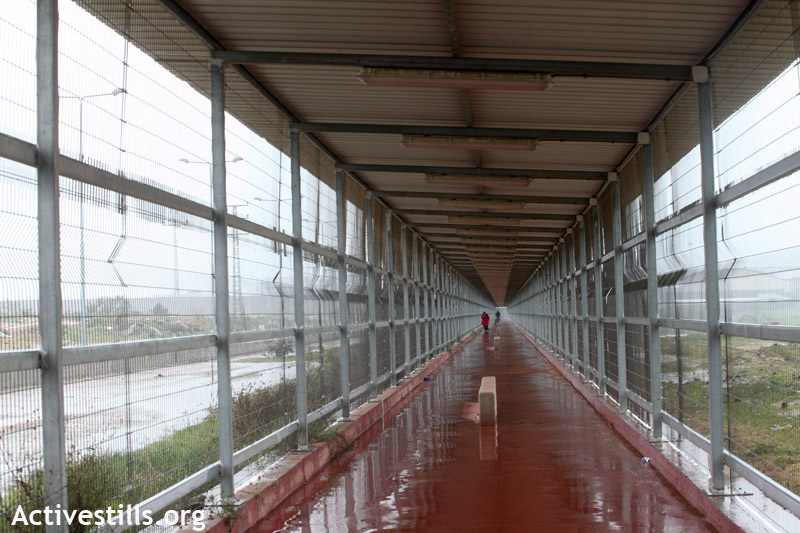
Due to Israel’s apartheid checkpoints, it took us a day to reach Jericho, which is roughly one hour from Allenby Bridge. I waited eagerly, imagining myself walking around the old city of Jerusalem before heading to Gaza. We wasted over four hours waiting for the Israeli soldiers to let us pass through their checkpoints. Being from Gaza made my crossing procedures even more complicated. I spent the whole trip to Jericho counting minutes and hours. The more time we wasted, the less likely it became for me to tour Jerusalem. The time limit that Israel imposed by closing Erez at 7:00 pm made me stressful.

At sunset, I finished all the crossing and security procedures. I hurried to the exit to find my taxi driver sweating, standing by his parked car next to the door waiting for us. He rushed me inside the car, saying that he had to drive me to the District Coordination Offices (DCO) right away to get a permit to leave before it was too late. People from Gaza get permits to cross through Erez back to Gaza there, and people from West Bank get permits to enter Jerusalem and other “Israeli” territory.  

On the way to Jordan, I tried my hardest to stop in Jerusalem and visit the Odeh family, whose son Loai was deported to Gaza after his release in the Shalit swap deal. Loai and I became close friends as soon as we met. Before I left Gaza, I promised him that I would do my best to visit his family and give them a hug on his behalf. I couldn’t on my way to Jordan. But I  was persistent to make it happen when I returned.

I endured a stream of silence and frustration. Then my telephone rang. It was our travel coordinator from Gaza. 

“Listen carefully,” he said in a very serious tone. “The DCO closes at 4:00 pm, and now it’s 5:30 pm. You won’t be able to go home tonight. You’ll have to stay at a hotel, or at a relative’s or friend’s house in Jericho. Keep in mind that you’re only allowed to move within Jericho. No one but you will pay its price for anything outside its limits.”

I said nothing in response and acted as if I was taking his words seriously, but smiled, because only then did I sense how lucky I was. I hung up, turned to the driver excitedly, and said,  “I won’t go home tonight. I’m supposed to stay in Jericho, but I’m not going to fear anyone. This night will come once in a lifetime, and I’m not going to spend it restricting my footsteps and worrying about Israel’s racist rules or anyone’s orders.”

He smiled and said, “I’m dropping you in Jericho.” I screamed, refusing to accept what he said, but he interrupted me, raised his voice, and continued, “This is what ‘they’ will assume, but not what will happen! I’ll pick you up from Jerusalem tomorrow morning to go to the DCO.” I made sure he meant it before I got too excited, then I burst into screams and tears of happiness. We drove toward Jerusalem while singing one of my favorite Fairouz songs, about Jerusalem: “For you, the city of prayers, I pray.”

The driver warned me of the dangers I might face if I entered Jerusalem. We knew there were risks, but we decided to take them . The checkpoint between Jerusalem and Jericho was the problem. No car can enter Jerusalem without going through it. If we passed it without being stopped by Israeli soldiers, then we were safe.

We put sunglasses on and began chatting and laughing as if everything was normal. We passed without the soldiers noticing anything “wrong”. When the checkpoints disappeared from sight, we shouted, “We made it!” The first person I called was Loai. “I’m now heading to Jerusalem, to meet your family!” I screamed with happiness. “Let the driver drop you at the Jerusalem Hotel, where my brother Obay is waiting for you,” Loai said laughing.

I couldn’t be more grateful to a person than the driver, who put himself at risk to make my dream come true. He dropped me near the hotel, made sure that I was safe, and left me to enjoy the rest of my time in Jerusalem, before the next morning when my adventure would end.

I had never met Obay, but I felt like I already knew him. We talked briefly once when Loai was in Egypt. He introduced us on Skype. Loai had told how special their relationship was, especially after they were reunited in prison. They shared a cell together for over two years before Obay, who was detained in 2002 as a child at the age of 17, was released in 2006. They met again in Egypt last January. I could see many similarities Obay shared with Loai – appearance, behavior, way of thinking and even their expressions –  that made me feel closer to him.

The first thing we did was take a walking tour inside the old city of Jerusalem. I can’t describe how good it felt to be there. I took a short noon tour there last June, but the city is even more magnificent at night. I could hear history, authenticity, and solidity narrated by every stone, every wall, every street, everything. But at the same time, I recalled how Loai once described his city: “Jerusalem is a sad town.” It’s true. I could touch the anger, the sorrow, and the challenge everywhere while wandering its ancient alleys.

The people who remained in Jerusalem suffer the most from Israeli occupation and apartheid. While wandering around, we saw many people sitting outside their homes chatting. I passed by a group of girls in a courtyard. They were very welcoming and loving when they learned I came from Gaza. I asked them about the occupation, with which they interact daily. “We will never leave our homes even if it costs us our lives,” one of them replied. “Israel offered to buy these old, small houses with unbelievable amounts of money, but we never gave them up and never will. Our resistance is to stay here, despite all the mocking, humiliation, and violations of our rights.”

I was thrilled by her answer. A young girl among them grabbed me to introduce me to her family. I was shocked to see how narrow her house was. They had only one room, where nine people, including her parents, live.

I kept walking. I could see Hebrew graffiti on the walls and Israeli flags. It’s not only a sad city, but also an angry one. I could sense its anger shaking the floor beneath me, as if it was saying, “My tongue is  Arab and my identity is Palestinian.”

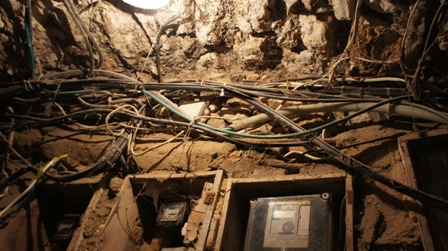
In the old city of Jerusalem, it is easy to tell where Palestinians and settlers live, even without Israeli flags flying on roofs or Hebrew written on the walls. The Palestinian homes are very old and narrow. They’re not permitted to be renovated. Electrical wires are uncovered and tied to the ceiling. Israel tries every way to pressure Palestinians to leave their houses with the neglect of the civil services and the increase of taxes. On the other hand, the settlers’ homes appeared to be in good shape and enjoyed good electricity and other public services. Settlers are allowed to extend and refurbish their houses.

I followed Obay wherever he went. We climbed snaky stairs until we reached a roof, where an Israeli soldier suddenly came outside to ask why we were there. Obay answered calmly, “Just to see the city from the top.”

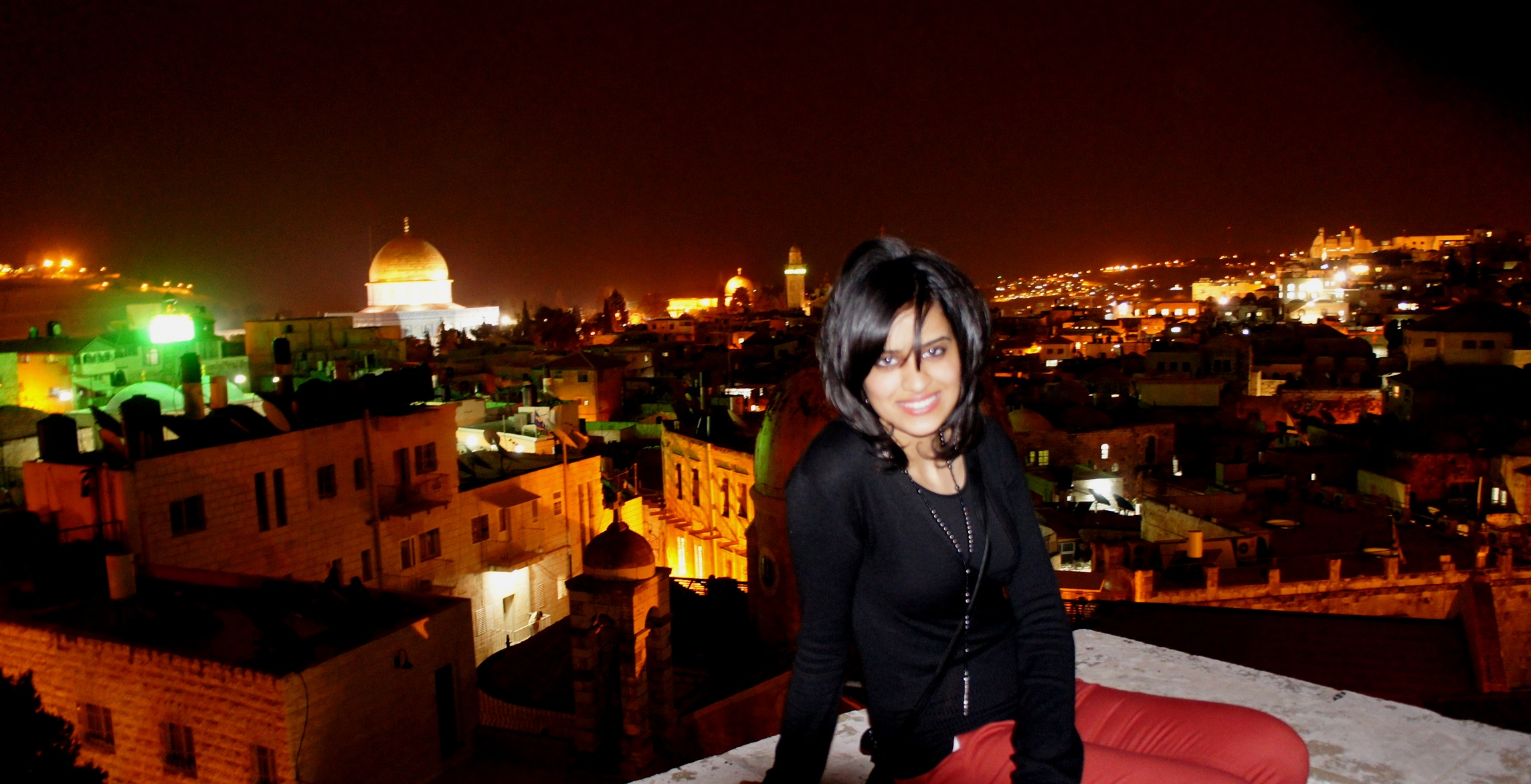
I didn’t know exactly where I was, and the soldier, who was monitoring screens connected with cameras spread all over the city, made me nervous. Then Obay pointed. I turned to where his finger stopped to discover that the Dome of the Rock and Al-Aqsa Mosque were right in front of me. I opened my eyes wide and sighed. The exceptional beauty of the golden dome glittered and lit up the dark sky.

No matter how long I meditate on this magnificent view, my eyes will stay thirsty. But we had to leave. Obay had a nice plan to make use of my only night there. I couldn’t believe my ears  when I heard that our next destination was Jaffa. It was always a dream, but one in the back of my mind, which I thought would be impossible to reach. We headed there in the car. Being in Jaffa increased my longing to return to Beit-Jerja, my original village, where my grandparents were ethnically cleansed in 1948. The refugees’ return is a right, not just a dream, and it will be fulfilled someday.

The first thing we did in Jaffa was have dinner in a restaurant that overlooking the beach. We were starving after an hour driving and over two hours wandering around Jerusalem. In Gaza, the last thing I would order is fish, as even it is imported. The Israeli Navy occupies our sea and prevents fishermen from going farther than three nautical miles, cutting down Gaza’s wealth of fish. In Jaffa, I didn’t hesitate for even a second to try the fish of our Mediterranean sea, and I didn’t regret it! I can’t tell you how succulent it tasted.

Immediately after we finished eating, I ran toward the seashore in my bare feet to wet them and feel the warm waves. I kept walking, paying no attention to time or distance, while breathing Jaffa’s pure air and collecting beautiful seashells to keep as souvenirs. It felt so harmonic and spiritual. I never stopped thinking about my people in Gaza, who were very near, but could never reach this side of the Palestinian beach.

I wished I could watch the sunrise there, but we had to go back to Jerusalem a little earlier, as Loai’s father was worried about us. I couldn’t complain about anything. I received more than I expected. I repeatedly described how happy I was this way: “I am afraid I will die from too much happiness.”  I hoped for at least an hour in Jerusalem, and unexpectedly, I had a whole night in both Jerusalem and Jaffa. Alhamdullah, God was very generous to me.

It meant a lot to be at Loai’s house. His pictures hung everywhere, even in the garden. I caught only two hours of sleep before I had to leave the house to get a permit from the DCO. Before I said goodbye to Loai’s family, I took pictures of every corner of the house to show Loai the place where he was raised, since he had almost forgotten its appearance after ten years of detention. I also picked two branches from a beautiful tree in their garden.  He was very happy to receive these photos and branches.

All these adventures felt like a dream, one so happy that I never wanted to wake up. But my return to Gaza was obligatory. I spent seven hours in the DCO, waiting for the Israeli soldiers to issue my permit to return to Gaza through Erez. As I arrived in a Gaza blackout, I was welcomed by a very loud bomb that exploded near Beit Hanoun. I was scared at first, but then I burst out laughing and shouted, “Welcome back to Gaza!”

Part 2: My Journey in Jordan

If you didn’t read the first part of my story, kindly press this link to read it first.

I left Gaza at 10:00am and arrived in Jordan by sunset. The weather was freezing. I couldn’t wait to climb into the warm taxi that would drop me near the Marriott Hotel, where the reunion was held. I wrapped my body with my kuffiyeh, the traditional Palestinian checkered scarf, and slept. The hour-long drive passed without my notice. When we drew near to the hotel, the driver woke me up. I rose quickly to the window and took in my surroundings. The place exceeded my expectations. I was truly tired, and very sleepy and hungry, but as I saw the beauty around me, I felt refreshed and excited once again.

As I entered the lobby, my first glances fell on my friends, who were the main reason I decided to attend the reunion. I spent all my time in the US with them. Seeing them again filled me with happiness. After an hour of greetings and exchanging stories, the time came to check into my room. A hotel worker helped me with my luggage and showed me my room. Once I got in, I left the responsibility for my luggage to the worker and eagerly hurried to the balcony.

I stood motionless, with my eyes wandering around my surroundings. I had ever seen a landscape that so deserved to be painted. I was captivated by the beauty of the big garden behind the building. Dim lights spread nicely amongst the colorful trees, flowers and swimming pool. Behind the beautiful backyard, the Dead Sea lay peacefully. It was cold and the sky wasn’t very clear, so more beauty lay hidden behind its dark clouds. I had never seen the Dead Sea before then, but my parents had told me many times about its breathtaking beauty. They used to tease me and my siblings, since they had gotten to swim there and walk on Jericho’s beach, while we couldn’t. The movement restrictions got more intense during the latest couple of decades of the Israeli Occupation. I smiled while remembering these memories and wished they were there.

The next day, during our break, everyone else preferred to stay inside to avoid the cold winds. But I didn’t want to let that hold me back from meditating on the beach of the Dead Sea. So I put my jacket and my kuffiyeh on and eagerly went to the closest point to the shore. As I got closer, my gaze grew longer and my heart beats got faster. I lost my breath as I saw the wind forming small waves, tenderly wetting the golden sand, and hitting the rocks, colors and sizes, that lay on the shoreline.

It was a bittersweet feeling to be on the other side of Jericho. I could see Jericho’s hills in the horizon line. I was so close yet so far away, since Israel’s apartheid regime deprives me as a Palestinian from Gaza from reaching it.

The reunion schedule was very busy. We had tasks to accomplish and workshops and lectures to attend. One was about democracy, which is not my favorite to discuss. I was obliged to sit and listen to a professor whom I didn’t like. I argued with him once, about Israel and Palestine, when I briefly met him after he defended Israel’s crimes and illegal existence and occupation by saying, “I believe in Israel’s right to exist.” I remember our heated discussion about that, which left him trapped. Then he became mad and tried to get himself out of the debate by raising his voice. After his speech about “democracy,” we were given a chance to share our points of view and tell stories of democracy in our homelands.

I had been waiting anxiously for the moment to speak up, so I raised my hand. “In 2006 in Palestine, we experienced this democracy,” I said angrily. “We had a democratic election, which Hamas won. But because the result of this ‘democracy’ didn’t satisfy Israel and its friend America, they imposed a siege on the Gaza Strip as a collective punishment for everyone, whether they voted for the ‘terrorist’ Hamas or not.”

The professor didn’t like what I said, but I went on speaking. “I don’t think democracy exists in reality. There is no such thing. In fact, this definition should be replaced in the dictionaries with HYPOCRICY.” He interrupted me by saying that I should give others a chance to speak. I stopped, but could no longer listen to more hypocrisy and left.

On the fourth day, we had an exhibit. Posters by all participants, briefly describing the projects they were planning to implement in their home countries to seek change, were hung on the walls. Having a passion for art, I decided to focus on artists in Palestine. For more regarding my project, you can see me presenting about it here.EQxqnvWhnGQ

That was basically the end of the reunion. Only then did I have a chance to enjoy the beauty of the Dead Sea again. The weather became a little better, but was still cold. A single day was left for me in the Dead Sea, and this opportunity might not come again. Therefore, I joined a group of my friends who decided to challenge the weather and swim for the same reason. We encouraged each other to go crazy and take the plunge. I dyed my skin with the famous Dead Sea mud -— it looked scary. Then I slowly and carefully got into the water. It was torture before my body adjusted to the coldness of the water. Suddenly I found myself floating and oh my God! It felt like heaven. It seemed like I had no control over my body. But I felt safe and peaceful in the bosom of nature.

I was scheduled to leave the hotel on March,5 to Amman. I enjoyed its archeological sites that speak of the history and culture of the Roman Empire. I went to many interesting places like the Roman theater and the citadel. I had a great time with my friends there, but I also felt homesick, especially after I heard about the Israeli attacks on Gaza that had resulted in 15 martyrs by then. Watching these attacks from outside is different than being inside. I felt so much panic. I was very worried about my family and my people, and wished I could be there, sharing their difficult times.

11 March is the day when my permit in Jordan went invalid. Thus, my awesome Jordanian friends offered to drop me at Allenby bridge to go through more checkpoints on the way back to Gaza.

My journey in Jordan ended like that but another journey, or risky adventures, inside the occupied lands started.   To read more about come tomorrow!

Part 1: My trip through Israel’s apartheid barriers to Jordan


I should have been filled with eagerness to join a reunion of the leadership program I attended in the United States, and once again gather with my friends from there and all over the Middle East and North Africa in Jordan.

But something inside made me want to stay in Gaza. When my friends asked me if I was excited to leave, I hesitated to answer. Part of me was certainly thrilled to travel, especially since if I missed this reunion, I didn’t know if there would ever be another chance to meet my friends I met in the US. Simply put, I have no control over my movement. Israel occupies our land, sea and air, and even occupies our footsteps. But thanks to the US’ alliance with Israel, the American embassy could guarantee permission for me to leave.

“You deserve a break” — my friends told me this frequently, trying to convince me to make the most of my travel. Yet I couldn’t separate myself from the harsh circumstances my people are bound to live in.  My hesitance came from a feeling of guilt about leaving the Gaza Strip amidst the tension my people suffer due to the continuing blackout, the fuel crisis and the unstable political situation under the constant threat of more Israeli attacks.

I applied for a permit to leave on 23 February, but the Israeli occupation was only generous enough to allow me to cross through Erez on 1 March, not even a day before my reunion started. Only Israel decides when I should leave.

It was my third experience crossing Erez, so I was familiar with the humiliating procedures Palestinians are subjected to at the checkpoint. One of my worst memories is attached to this place. Many people have no idea about how we are humiliated, how badly we are treated, as if we are less than human beings.

Imagine how deep the pain feels when you go through nude inspection. I went through this psychological torture, but thankfully I was strong enough to keep my pain inside, hold my head held high, and go on. But this memory sticks in my head, which made it difficult for me to imagine that I might go through this again.

I prayed that my third crossing would be less difficult. Thankfully, it was. I could pass without being forced to take off my clothes, but there was no way I could pass without having my suitcase turned inside out. I was ready at around 10am to continue my journey through more checkpoints and the Allenby crossing between the occupied West Bank and Jordan.

Mustafa, a taxi driver originally from Jerusalem, was waiting for me on the Israeli side of Erez. When I discovered that he was sent by the American embassy to take me to Jericho, my smile became very big.

Last June, on my way to the US, I crossed through Erez for the second time. After considerable nagging, I managed to convince the taxi driver, who was Mustafa’s uncle, to let me walk in Jerusalem. Mustafa accompanied me for my first tour inside the Old City of Jerusalem, and I kept him walking for an hour and a half. I hoped that I would get to have another tour, especially since we crossed with relatively little waiting.

I thought I was a very good nagger, but I actually failed that time. I felt bad, but he felt worse for leaving me disappointed, since the US embassy’s orders were too strict for him to disobey.

I knew that it would take triple the time actually needed to arrive in Jordan due to barriers that Israel puts in our way, hoping to humiliate us and make us feel low. They never succeed.

I witnessed the degrading treatment of an old woman from Nablus, who lives in Balata Refugee Camp. She wore a jilbab, a long, loose-flowing dress that devout Muslim women wear. She stood in front of me in line. When she passed through the door, the alarm started ringing, since she had forgotten some coins in her pocket. Then she stepped backward and set them aside. She tried again and passed without the alarm sounding. However, the Israeli soldiers called her out of the line and ordered her, with loud voices, to go back through and take off her jilbab. She tried to argue with them, but they left her no choice.

She stood and fixed her eyes full of anger straight at the soldiers, took it off, and kept walking with pride. When I told her that I was sorry for what she had been through, she replied, “Don’t be sorry, darling. Those Israeli soldiers should be sorry for themselves. They think they humiliate us, but they actually remind us of our passionate desire as Palestinians for dignity and freedom. We’ll go on resisting and giving birth to heroes. Israel’s end will be at their hands. No matter how long the oppressed people remain oppressed, one day they’ll be victorious!”

This is the typical Palestinian woman, whose role in the popular resistance is without limit. They believe that the struggle is cumulative. If one doesn’t witness the impact of his or her sacrifice, the following generations will feel it, and enjoy its resulting victory. Their core role is to raise strong leaders, who will carry the responsibility for bringing freedom and dignity to Palestinians.

After meeting with this inspiring and strong woman, I felt more determined than ever to continue my peaceful resistance against the tyranny and oppression of the Israeli occupation. I also sensed how large my duty to my homeland will be as a Palestinian mother.

She impressed me, and her strength inspired me and put a smile on my face. I stayed with her to help her with her luggage, then rode the last bus to take us to our final destination, the Jordanian border, where our tiring travel through checkpoints and crossings ended.

Come back tomorrow to read about my journey in Jordan.

A letter to Gandhi’s Grandchildren in India to Support Palestine’s Gandhi Khader Adnan

Representitives of General Union of Disabled Paelstinians arrived to the red cross on Wedneday with a bannar combines Khader’s photo with Gandhi’s to send a strong message to the world and Gandhi’s grandchildren (Tamer Hamam)

On Wednesday’s afternoon, as usual, I was sitting in the tent in solidarity with Khader Adnan. There were a few people there but I am always not satisfied with the number of people joining the protest for this person who is dying to live, this legend that no hunger, pain or pressure could break his determination to live free and dignified. Every day my dissatisfaction gets greater as I wake up without hearing of his release.

Around 2 pm, the number of people usually declines and that means that there are not many things to do. Making sure that I’d be one of the last people who left the tent, I stayed there thinking of Khader’s health, which is deteriorating as time passes. Time couldn’t matter more than it does now. According to a doctor from Physicians for Human Rights-Israel, who was able to visit Khader the night of February 14, for his fifth medical examination since his arrest, Khader is under a very direct threat of death. All of his muscles, including his heart and his stomach, are under threat of disintegrating, and his immune system could cease to function at any moment. Khader’s body is at high risk of sudden heart attack or total organ failure, which would cause imminent death.

I was busy brainstorming about what I would do next to raise the awareness about his case and get people to move. Suddenly, 3 physically disabled people including a woman entered the tent on a cart designed for people with such disabilities, attracting all eyes on them. Each one was sticking a Palestinian flag to their carts and brought a beautiful banner combined with photos of Khader’s with Mahatma Gandhi’s. What can be more meaningful, expressive, touching and true than the message this banner delivers? Those disabled came to send a message to the whole world in general and India in specific on behalf the General Union of Disabled Palestinians (GUDP).

Impressed by this scene of solidarity, silence overcame the place, but all eyes kept following those three amazing humans.  Awny Matar, one of the three and the head of GUDP in the Gaza Strip, moved his cart forward and stretched his arm to collect the microphone. While the audience was captivated, Awny’s voice filled the place with these words that was worth my efforts to translate it to you:

The decision of the Israeli military court of our brother Khader Adnan’s case is an illegal and racist one. It has failed all the efforts that were done by whoever tried to contribute. The Israeli courts still refuses to follow the rules and the international and humanitarian demands and still sticks to the prejudiced system of administrative detention, which contradicts human rights. Khader Adnan continues his illegal detention in Zeif hospital in Safed after two months on hunger strike.

In accordance to Yasir Arafat, Abu Ammar said “this revolution is not only the revolution of Palestine but it’s also of every free human around the world.” Thus, we, the General Union for Disabled Palestinians, announce February the 15th as patriotic, democratic and international day of solidarity with the detainee Khader Adnan.

We appeal to the grandchildren of Mahatma Gandhi generally and our brothers in the General Union of Palestinian Students in India specifically to do whatever they can to help Khader Adnan be freed. We should remember what our role model of peace Gandhi said and put it into serious and practical actions. “Whatever you do will be insignificant, but it is very important that you do it.”

What the hero Gandhi and his supporters did using peaceful resistance, Khader Adnan is doing with his battle of hunger striking since December 17. We proudly declare Khader Adnan as the Gandhi of 2012.

Our brave prisoners have always challenged the policies of repression and injustice and confronted with their bare chests and their empty stomachs all forms of torture and persecution that were exercised against them. It’s important that you know that there are more than 50 disabled Palestinians behind Israeli bars, despite their permanent disabilities caused by the Israeli occupation.  Moreover, more than 250 children are held captive by Israel, committing scandalous violations of their rights, since their arrests have led to varying brutalities, from tying hands and legs, preventing them of sleep and taking breaks and standing a military trial, violating the fourth article of Geneve agreement. They exercise all these inhumane actions against prisoners including children and disabled under what they fabricate as the emergency law.

Isn’t that an obvious evidence of Israeli Occupation’s condemnation against children and disabled detainees? However, we have complete faith that those who paid their freedom as a price for all our freedoms will be free with their heads held high to celebrate their people’s glories and steadfastness.

Khader Adnan, the Gandhi of Palestine, equals Gandhi, the founder of the Indian country, in his battle of empty stomach and peaceful resistance. We strongly call for Gandhi’s grandchildren and the Arab league to stand with our people’s issues, especially the prisoners’ issue, and to put the release of Khader, detained children and the disabled on the top of your priorities in the international, Arabic and Islamic forums to rescue our prisoners’ lives, and most important, Khader’s life.

We should learn from Gandhi when he said “when a slave decides to no longer be a slave, his chains break down. Whatever crime or wound, no matter what the cause, that is made against another person is a crime against humanity. And depriving a person of his natural freedom is worse that starving the body.”

In conclusion, we appeal to every free human around the world not to forget Palestinian prisoners inside the unjust Israeli jails while making your breakfast, or returning home peacefully.

Freedom to the prisoners of freedom

Glory and mortality for all martyrs

Speed recovery for our injured heroes.